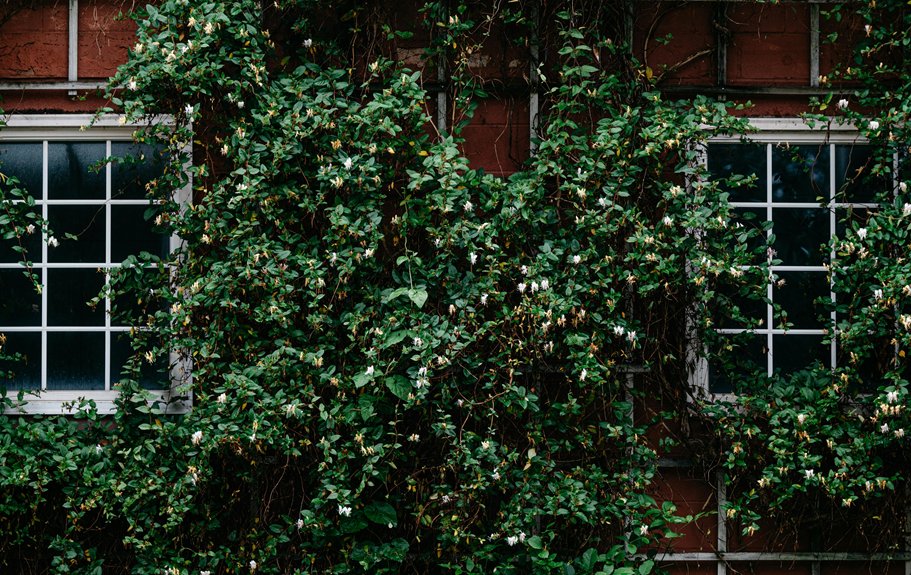
I’ve tested honeysuckle, morning glory, black-eyed Susan vine, trumpet vine, and climbing roses on various trellises. Honeysuckle wins for low-maintenance speed and fragrance. Morning glory delivers the fastest single-season coverage from seed. Black-eyed Susan vine blooms continuously while climbing. Trumpet vine grows bold and fast for hummingbirds, though it needs sturdy support. Climbing roses demand regular pruning but offer consistent, rapid blooms. Each plant solves different trellis challenges—speed, scent, or visual drama. Knowing their growth habits keeps your trellis in good condition.
Assess Your Trellis Before Choosing a Plant
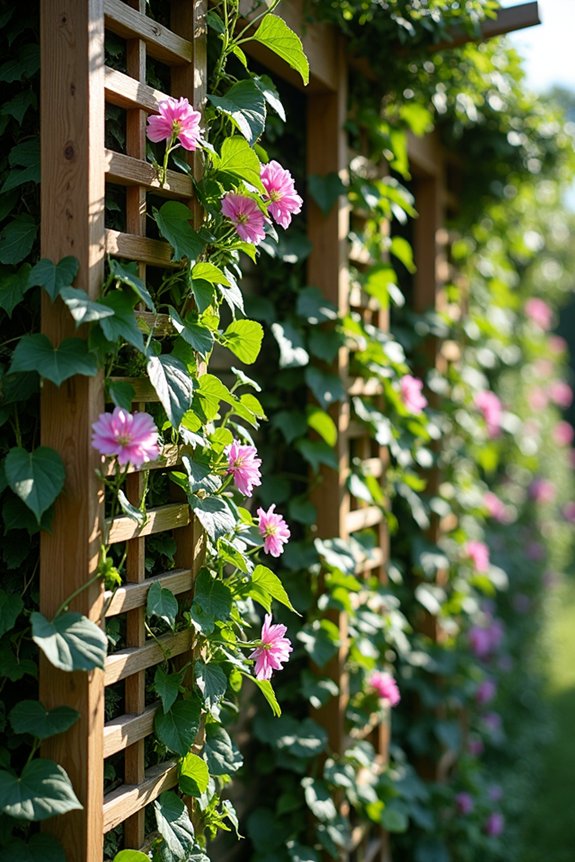
Check your location’s sun exposure—full sun, part sun, or shade. This determines which climbers will do well there.
Consider your maintenance needs and the plant’s growth rate. Evergreen climber options provide year-round coverage for privacy, though they need regular attention.
Finally, match the vine’s traits to your intended function. This assessment ensures your trellis becomes a lasting, functional garden feature.
Five Climbing Plants Ranked by Speed and Maintenance
Now that you’ve assessed your trellis location and maintenance capacity, it’s time to pick the right climber for your space. Matching plants to your commitment level is important.
Honeysuckle demands the least attention—it needs minimal training and grows fast without fussing. Morning Glory offers the quickest trellis coverage from seed, ideal for gardeners wanting rapid growth. Black-eyed Susan Vine provides continuous blooms and speedy coverage as an annual climber.
For hummingbird lovers, Trumpet Vine delivers bold, fast-growing results on sturdy structures. If you’re willing to invest effort, Climbing Roses reward regular pruning with consistent, rapid blooming.
I recommend starting with Honeysuckle or Morning Glory if you’re new to trellises. These fast-growing climbers build confidence while delivering the trellis coverage you’re seeking without overwhelming maintenance demands.
Fragrant Climbers vs. Dramatic Bloomers: Which Matters to You?
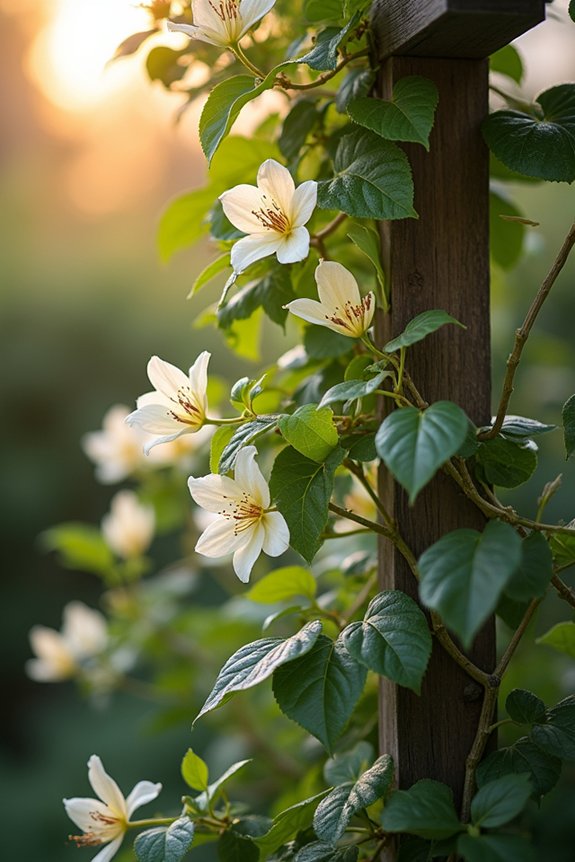
When you’re choosing a climbing plant for your trellis, one of the biggest decisions you’ll face is whether fragrance or visual drama matters more to you.
Fragrant climbers and dramatic bloomers each bring distinct charm to your garden space. Here’s what sets them apart:
- Fragrant climbers like Honeysuckle and Jasmine fill your outdoor area with sensory richness during blooming seasons
- Dramatic bloomers such as Wisteria and Trumpet Vine create focal points with large flower clusters
- Specialty options like Passiflora offer intricate blooms that deliver both visual interest and unique character
If you want the best of both worlds, Honeysuckle gives you reliable scent with seasonal blossoms. Wisteria provides that eye-catching, long-lived floral canopy when properly supported. The choice depends on whether you’re prioritizing scent or bloom in your garden design.
Which Plant Solves Your Trellis Challenge?
Every trellis presents its own set of demands—some need fast coverage, others require year-round greenery, and a few call for spring displays.
If you’re after quick results, Morning Glory delivers fast coverage from seed within a single season. Want something that’ll stick around permanently? Ivy’s your evergreen climber, staying green year-round once established, though you’ll need to manage its vigorous growth.
For fragrance paired with ease, Honeysuckle requires minimal training while providing rapid growth. Seeking visual impact? Wisteria offers notable spring canopies but demands a sturdy trellis to handle vigorous vine development.
Got challenging conditions? Crossvine’s drought-tolerant nature means it’ll quickly cover areas within a few seasons while attracting hummingbirds. Match your situation to the right plant, and you’ll create a trellis that works for you.
Caring for Your Climber: Growth Habits and Pruning Needs
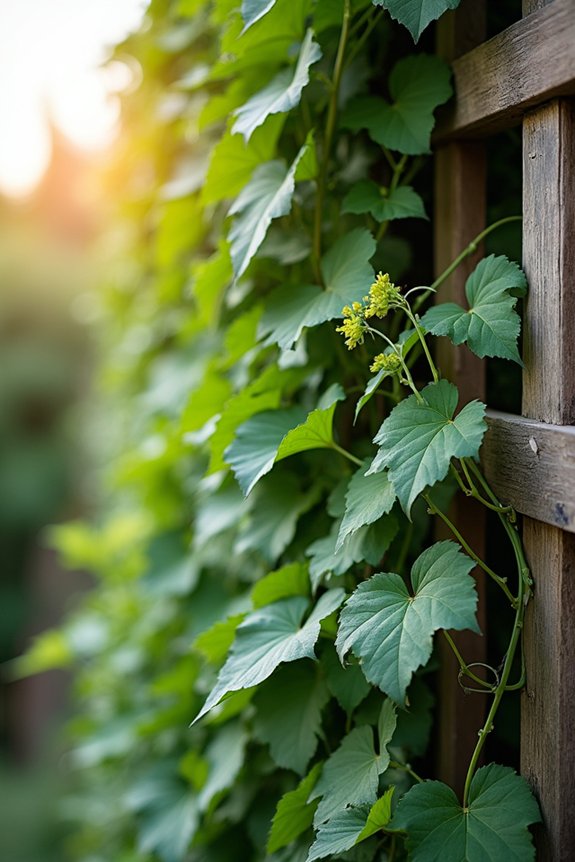
How much growth can you actually handle on your trellis?
Understanding your climbing vines’ growth habits helps you plan realistic training and maintenance schedules. Different plants demand different care levels, and matching them to your lifestyle is practical.
Growth patterns vary widely:
- Fast growers like honeysuckle and jasmine need regular pruning to maintain shape and airflow
- Vigorous climbers such as wisteria require sturdy, thick posts to support their mature weight
- Clematis establishes good coverage within two seasons using leaf stems for climbing
Your light conditions matter too. Full sun plants often respond well to heavier seasonal pruning after flowering, while evergreen climbers need lighter, more frequent touch-ups. Assess your trellis support strength before planting vigorous varieties. Start with seasonal pruning schedules aligned to your climate, and you’ll develop intuition for what works best.