
Before building your trellis extension, check local height regulations—most areas allow 2 meters without permission, but rules vary.
Talk with neighbors about how it’ll affect their views and sunlight.
Choose your material: wire fencing, lattice, or cattle panels work well.
Dig posts two feet deep, space them eight feet apart, and attach your base securely with poultry staples.
Pre-stain everything flat on a workbench, then assemble in manageable eight-foot sections.
Train climbing vines upward with soft ties, prune regularly, and inspect seasonally.
The specifics of foundation depth, fastening techniques, and vine management reveal themselves in the details ahead.
Understand Local Height Regulations Before You Start
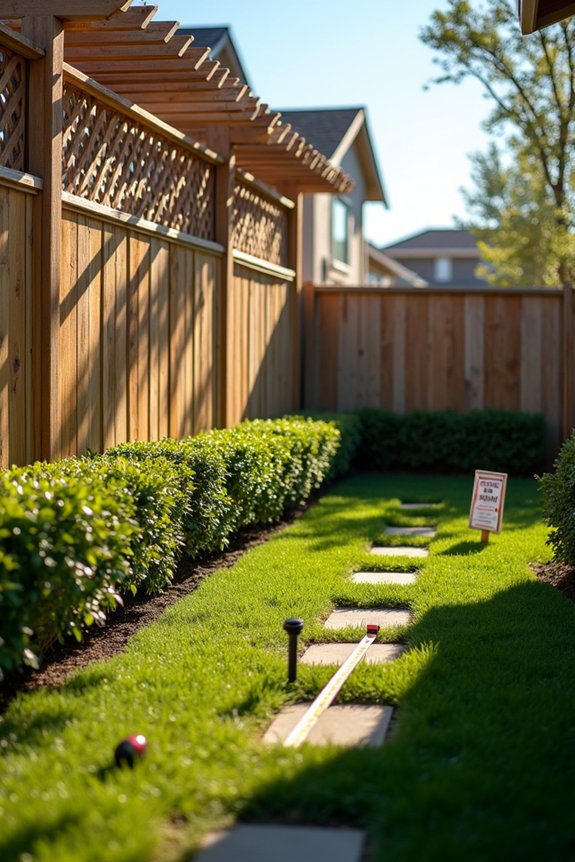
Why would you build a trellis only to discover it violates your local codes? I’ve learned that understanding fencing regulations before starting is necessary. Most areas permit structures up to 2 meters without planning permission, but yours might differ. Some locations classify tall trellises as fences or walls, triggering different height limits. I recommend contacting your local authority approval office first—it’s straightforward and prevents problems later. They’ll clarify what applies in your neighborhood. Consider whether your trellis sits near highways, footpaths, or listed properties, as these locations have stricter rules. Chat with neighbors too; they’ll appreciate the courtesy. Getting approval upfront means you’ll build confidently, knowing your project works within regulations without complications.
Talk to Your Neighbors About Fence Changes
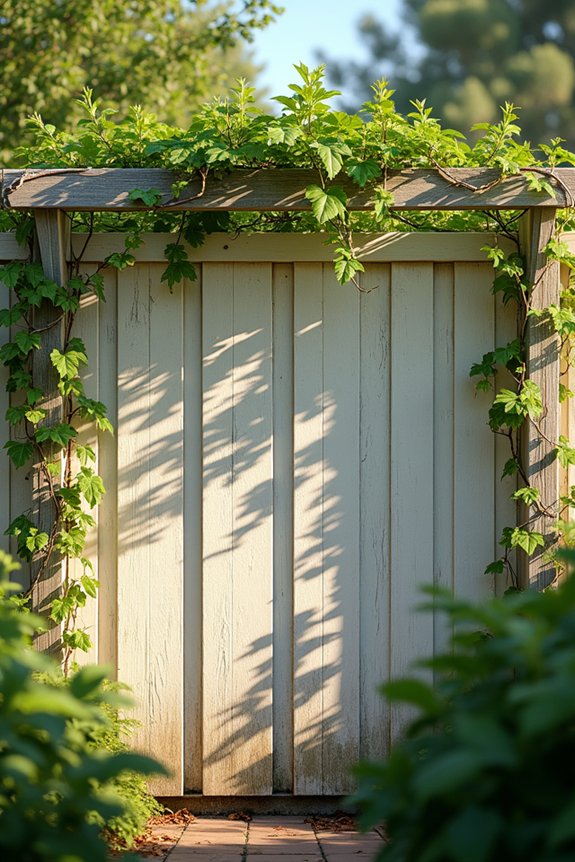
Before you build that trellis, you’ll want to talk with your neighbors about how it might affect their views, shade, and privacy—it’s a conversation that prevents problems later. Getting their input early shows respect for the shared boundary and gives you a chance to work out a design you can all accept. Putting any agreements in writing protects everyone and creates a clear reference for the future.
Neighbor Agreement And Permission
How you approach your neighbors about building a trellis higher than your fence line often determines whether your project moves forward smoothly or gets bogged down in conflict.
Start with honest communication about your plans. Explain exactly how tall your trellis will be and where it’ll sit on your property. Discuss how it might affect their views, privacy, and sunlight. Listen to their concerns.
Getting written permissions protects everyone. Document what you’ve agreed to—whether they approve the height, what materials you’re using, and how you’ll maintain everything. Include your construction timeline and any noise they can expect.
This neighbor agreement becomes your project foundation. You’re not just getting approval; you’re building trust and preventing future disputes.
Discussing Height Impact Concerns
Once you’ve secured written agreement from your neighbors, the real conversation begins—one that focuses on the specific ways your trellis will change their experience of the shared boundary.
Your trellis’s height impact matters more than you might think. When you extend above your fence line, you’re affecting light, views, and wind patterns on their property. That’s why neighbor consent isn’t just polite—it’s necessary for a boundary agreement that actually works.
| Concern | Your Trellis Impact |
|---|---|
| Afternoon sunlight | Potential shade on their garden |
| Property views | Visual obstruction from windows |
| Wind patterns | Possible wind resistance or channeling |
| Maintenance access | Space needed along boundary line |
Discuss these specifics openly. Ask what heights they’re comfortable with. Listen to their concerns about debris or climbing plants spreading onto their side. This collaborative approach builds the trust that prevents future conflicts.
Maintaining Positive Property Relations
Why wait until construction begins to have the conversation that matters most? I’ve learned that early neighbor consultation prevents headaches later. Before you build, I share my trellis plans with neighbors, explaining how the height might affect their views or privacy.
I discuss specific measurements and timelines, asking for their honest feedback. This fence height conversation opens dialogue about property line agreements too. When neighbors feel heard, they’re far more likely to support your project.
I document everything in writing—emails work perfectly. This protects both of us and clarifies expectations. I’m also flexible about adjusting installation schedules if they need more time to respond.
Building something higher than your fence doesn’t mean building walls between you and your neighbors. It means strengthening relationships through respect and transparency.
Choose Your Trellis Material: Wire Fencing, Lattice, or Panels
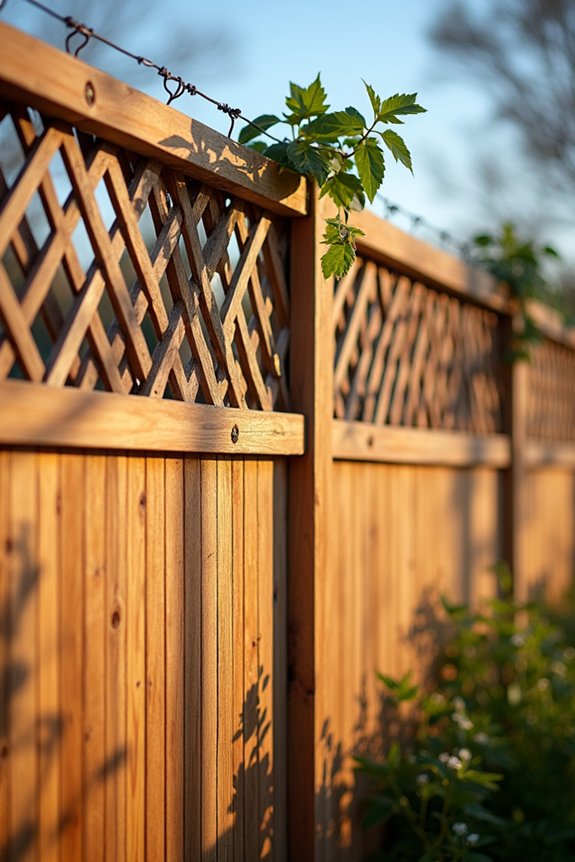
When you’re ready to build upward, your choice of material will determine everything from how sturdy your trellis feels to which plants it can support. You’ve got solid options for your fence extension.
Wire fencing offers rigidity and excellent visibility—you’ll see right through it. Hardware cloth provides similar support with tighter mesh. Lattice gives you classic aesthetics while still supporting climbing plants like cucumbers and pole beans.
Consider cattle panels too. They’re robust and you can zip-tie them together for extra height. For something lighter, netting or shoelace-style mesh works great when stapled to your fence line.
Think about your specific plants’ needs and your local wind conditions. Each trellis material handles airflow differently, so match your choice to what will work best in your garden space.
Sketch Your Design and Measure the Space
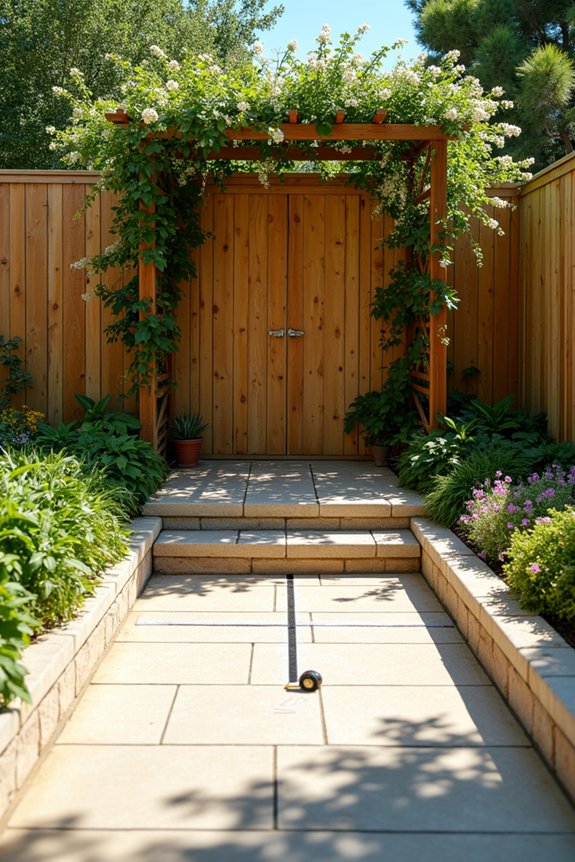
How will your trellis actually look once it’s built? Sketching a simple front view and side profile helps you visualize the complete picture before purchasing materials. Start by measuring your available space along the fencing, noting exact fence height and the distance from ground to your desired trellis height.
Take these steps:
- Record precise measurements of your fence, including top rail height and any existing caps
- Account for clearance by planning extra space for plant growth and hardware installation
- Check local zoning limits that may restrict how high your trellis extends above the fence line
Create a scaled measurement plan showing where posts and panels attach. This detailed approach prevents costly mistakes and ensures your trellis fits perfectly within your space constraints.
Stain and Cut All Materials Before Assembly
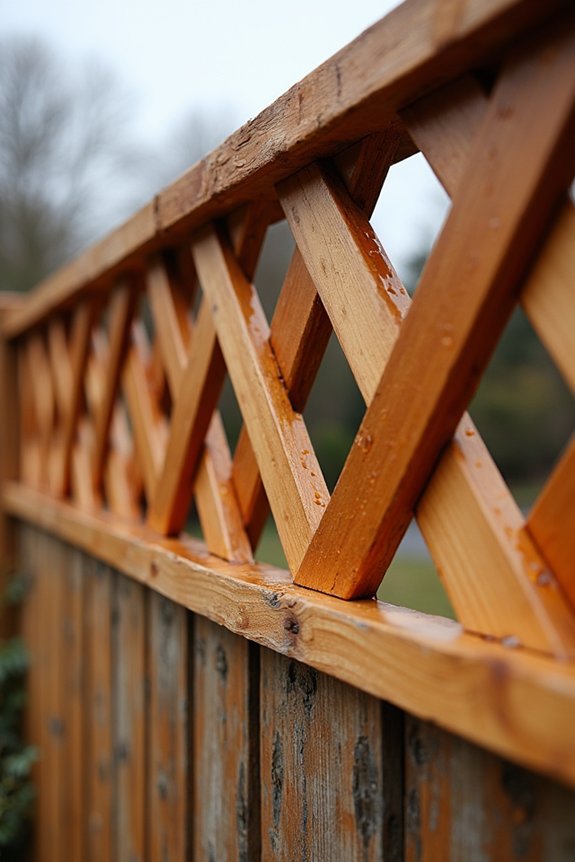
Before you pick up your tools, stain and cut all your materials. This approach saves you time and prevents mistakes when pieces are easier to handle individually. Getting everything prepped on a flat workbench means you can apply stain evenly without worrying about runs or drips once the trellis is assembled and standing tall. Organizing cut pieces and fully stained boards sets you up for a smooth assembly process that will keep your trellis straight and strong.
Preparation Before Assembly
Preparation Before Assembly
Why rush into assembly when you can set yourself up for success from the start?
Proper preparation makes the entire build smoother and more satisfying. Here’s what I do before touching any fasteners:
- Stain all pieces on a flat workbench – This ensures even color coverage and keeps your hands clean during assembly, making the whole project feel more professional.
- Test your lattice patterns and design choices – Use scrap wood to experiment with patterns before committing to full construction, which saves materials and reduces frustration.
- Plan panel assembly in manageable sections – I work through eight-foot segments one at a time, which prevents warping and simplifies edge alignment considerably.
Cutting materials to exact measurements beforehand eliminates guesswork during assembly. This groundwork creates a foundation for confident, precise construction.
Staining Materials Flat
Once you’ve mapped out your assembly strategy, it’s time to prep your materials—and staining comes first. I apply stain to flat stock on my workbench before cutting or assembling anything. This approach gives you uniform coverage and makes handling easier during construction.
Lay each piece flat on your workbench to prevent drips and ensure even color distribution. Use a brush or roller rather than spraying—you’ll waste less material and avoid overspray mess. If you’re matching an existing fence, bring leftover stain from that project for a consistent finished look.
For larger components like lattice panels and trim, I prep them in manageable sections, typically eight-foot lengths. This strategy keeps everything workable while maintaining quality results throughout your build.
Assembly Ready Organization
How you organize your prep work affects the quality of your build.
I complete all staining before assembly. Here’s my process:
- Stain every piece individually before any fastening happens, ensuring even color coverage and easier handling throughout construction.
- Work in manageable sections—I tackle eight-foot segments at a time, planning my staining routine to keep the workload reasonable and maintain adequate workspace.
- Sand, stain, and organize by component type, grouping lattice panels, trim boards, and top pieces separately so inventory is clear and ready for assembly.
When I’m ready to pre-assemble lattice panels flat on my workbench, all materials are prepared. I’ll attach the top trim next, ensuring perfect alignment with the lattice edge for a clean finish.
Build a Strong Foundation With Posts and Anchors
Before you extend your trellis skyward, you’ll need to anchor it properly—and that means starting with sturdy posts set deep into the ground. I make sure to dig holes at least two feet deep, spacing posts about eight feet apart along your fence line.
Use concrete or well-anchored footings to lock those posts in place permanently. You’re building the backbone that’ll support your trellis to the top of your fence and beyond.
For raising an extension panel, I position two metal stakes about a foot above ground level. This creates the stable tie-in you need while maintaining proper clearance from your existing fence. The stronger your foundation, the straighter your trellis climbs. Take time with this step—it’s what keeps everything secure and level as you build upward.
Attach the Base Trellis to Your Existing Fence
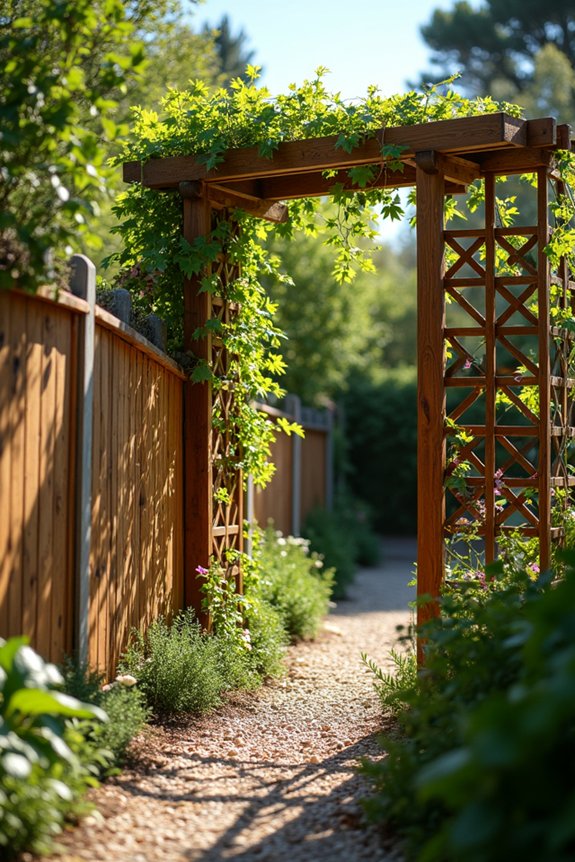
Now that you’ve got your posts anchored solid, you’ll want to attach your base trellis to the fence itself. Getting the fastening right is important. Use proper wire fencing installation techniques, maintain correct spacing and tension so everything stays taut and level, and fasten everything down with poultry staples or exterior screws that won’t rust out on you. Work in manageable sections, clamping as you go, to keep that base trellis flush against your fence line without any bowing or sagging.
Secure Wire Fencing Installation
Once you’ve got your base trellis ready, it’s time to attach it securely to your existing fence. Proper installation prevents problems later.
Here’s the approach:
- Prepare your fence surface by removing sharp edges and securing loose boards, then trim seams to create a stable mounting plane for the trellis.
- Use poultry staples driven through the trellis into fence panels at regular intervals, ensuring even support across the entire structure.
- Leave a small gap between the trellis and wood fence—about a quarter-inch works well—allowing slight outward ballooning and airflow that reduces warping.
Test fit sections first and clamp before permanently fastening. This prevents bowing or fence damage. Align everything using your measuring tape, checking that heights remain consistent throughout.
Proper Spacing And Tension
With your fasteners holding the trellis to the fence, you have more work to do—how you space and tension that attachment affects long-term performance.
I always leave a small gap—roughly half an inch—between the trellis and fence. This breathing room prevents moisture from getting trapped and rotting your fence over time. You’ll want multiple attachment points spaced evenly along the trellis length rather than relying on just one or two fasteners. This distributes stress better and prevents sagging.
Here’s what matters: maintain slight outward tension in the base trellis itself. This gentle ballooning gives climbing plants room to grow without constricting them. Avoid overtightening fasteners—that’ll warp both materials. Think of it as creating a supportive framework, not a vise. This balanced approach keeps everything stable against wind while protecting your investment.
Fastening With Poultry Staples
Poultry staples are your best choice for securing the base trellis to wood fencing—they grip wood studs and horizontal rails firmly without the slip that nails can create. I’ve found this method delivers reliable, long-lasting results you can trust.
Here’s my approach for fastening:
- Trim sharp edges first – smooth any cut wire ends before stapling to prevent injuries
- Space staples evenly – avoid gaps that allow sagging by distributing staples along the contact edge
- Leave breathing room – maintain a small gap between trellis and fence for airflow, protecting against moisture rot
I work methodically from one end across, keeping everything level and flush. This systematic approach prevents shifting and keeps your trellis securely anchored through seasons of growth and weather changes.
Raise Your Trellis With Panels or Twine
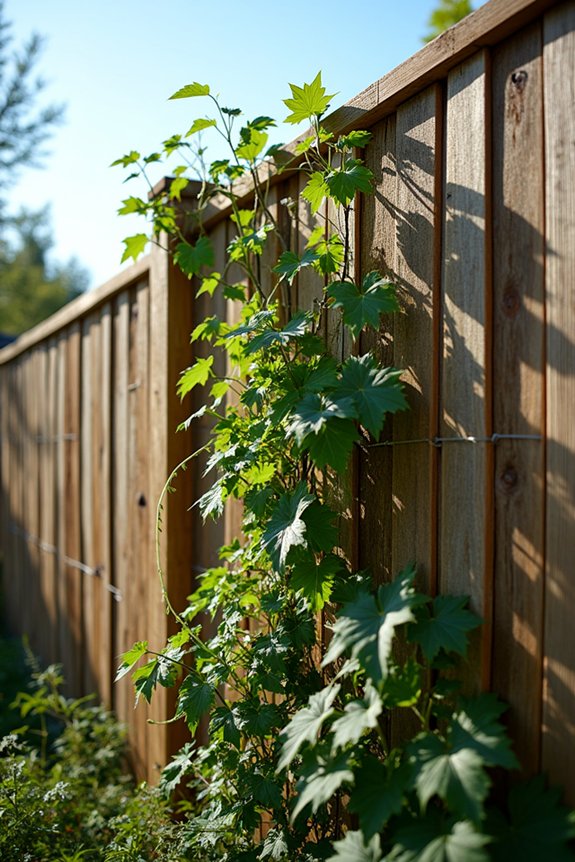
How do you extend growing space when your plants have already claimed every inch of your fence?
I’ve found several reliable methods to push your trellis upward. You can raise a cattle panel about a foot using two metal stakes, then secure it to posts with wire. Alternatively, run twine from the panel up to your fence line’s top, creating continuous tension that supports climbing plants effectively. A third option uses zip ties to attach trellis extensions directly to existing panels.
| Method | Materials | Height Gain |
|---|---|---|
| Metal stakes | Stakes, wire | 12 inches |
| Twine system | Twine, fasteners | Variable |
| Zip tie extension | Zip ties, panels | 4-8 feet |
Each approach keeps your trellis taut without overtightening it. You’ll maximize vertical growing space while keeping everything secure and functional for your climbing vegetables and flowers.
Hide Seams and Finish the Top Edge
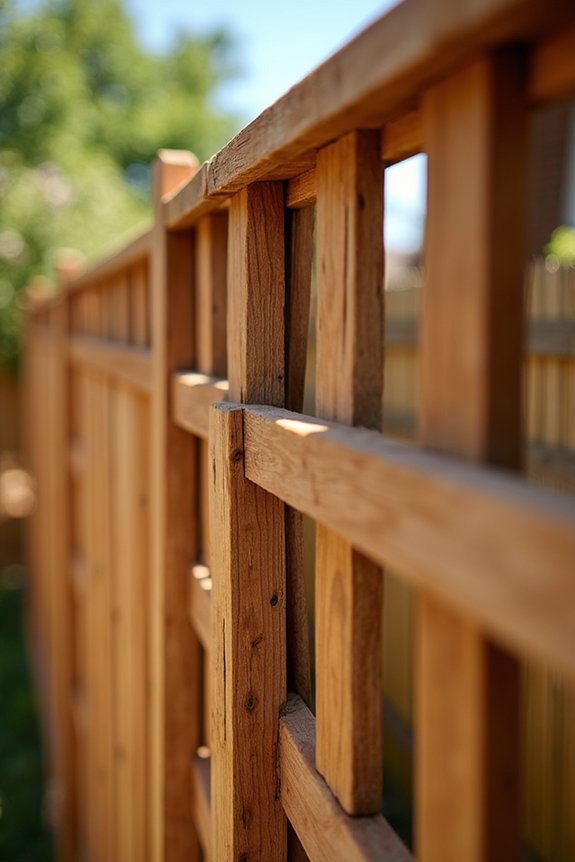
Your trellis is nearly complete, but those visible seams and rough edges at the top tell the story of assembly rather than craftsmanship. Let’s finish this project right.
I’m tackling three essential steps to hide seams and create a polished top edge:
- Attach trim boards strategically – Use 3/4 inch exterior screws or stainless steel brad nails, countersinking as needed to conceal fasteners and maintain clean lines.
- Align trim with panel seams – Position trim pieces to cover seams on both front and back sides while keeping lattice flush against your fence.
- Straighten the top edge – Clamp any warped boards and pull trim tight from the back side, creating that finished border you’re after.
These details transform your trellis from functional to professional-quality. The polished look is within reach.
Pick Climbing Plants for Your Climate and Sun Exposure
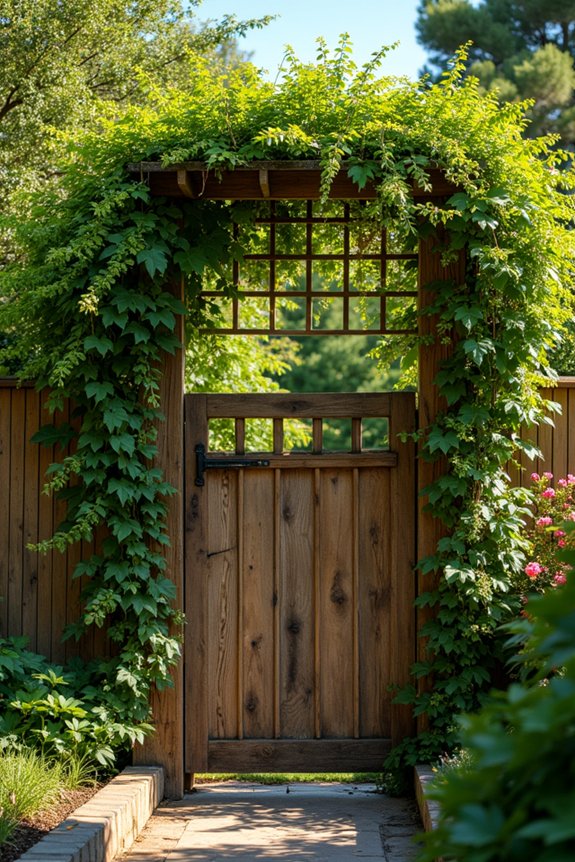
Now comes the most rewarding part—selecting the right plants to bring your trellis to life. I’ve found that matching plants to your climate and sun exposure is important for success. Sun-loving options like cucumbers and pole beans do well in full light and quickly cover your trellis—sometimes in just weeks! If you’re working with partial sun, raspberries are an excellent choice and develop well with proper support. For temperate regions with ample sunlight, wisteria creates.
The key is honest assessment: measure your available sunlight hours and check your growing zone. This groundwork helps you select climbers that will perform well rather than struggle. You’re building something lasting here, and the right plant choice improves your entire project!
Guide Vines Up the Trellis and Tie Them as They Grow
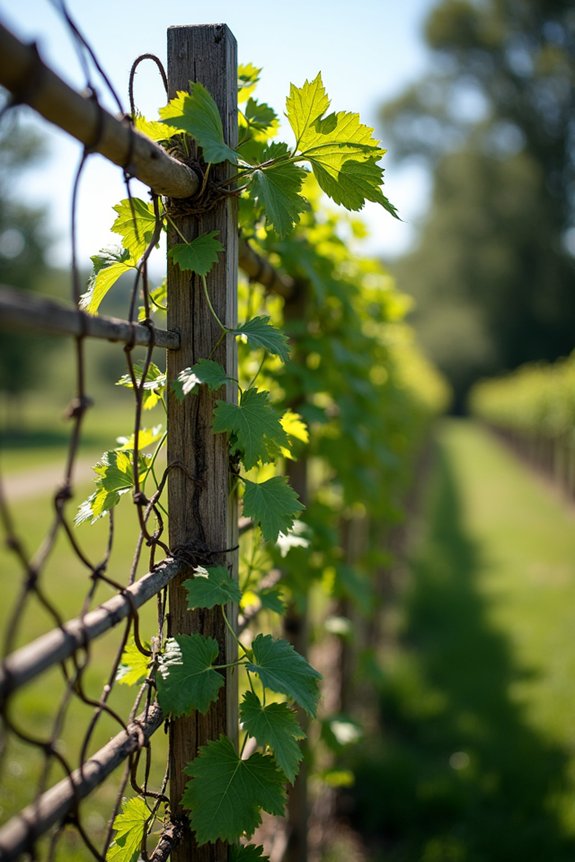
Once your vines start their climb, the real work of training begins—and I’ve found it’s what separates a haphazard tangle from a well-organized canopy. You’ll guide growth strategically from the center outward, creating even coverage that extends above your fence line.
Once vines start climbing, training separates a tangled mess from an intentional, well-organized canopy that extends above your fence.
Here’s what I do to keep my vines on track:
- Tie regularly using Velcro garden ties or soft ties to avoid damaging tender shoots as they ascend
- Prune lateral shoots periodically to direct energy toward main climbing stems reaching higher
- Check trellis stability frequently, ensuring it stays taut and doesn’t sag under accumulated growth
This hands-on approach transforms scattered growth into intentional architecture. You’re not just letting vines ramble—you’re partnering with them to create structure above that fence line.
Prune and Inspect Your Trellis Seasonally
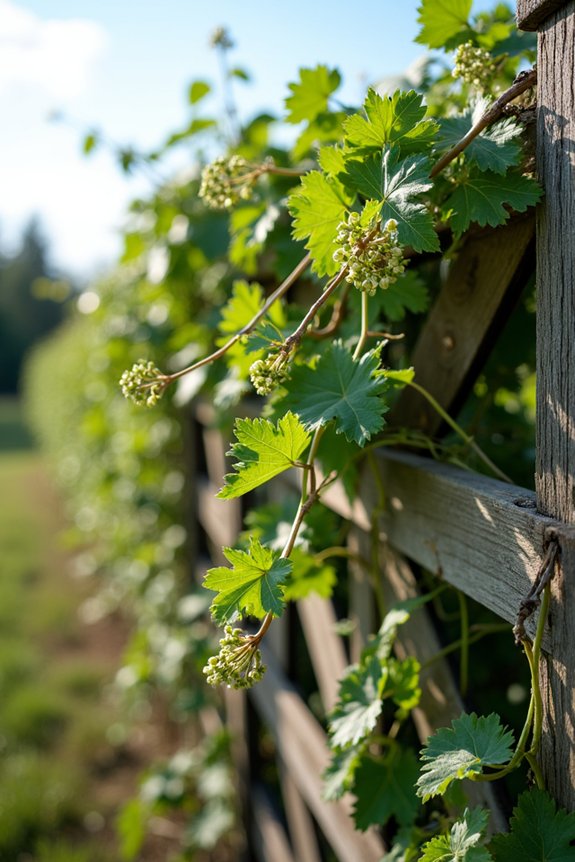
How often do you actually look at what’s happening inside that thick wall of vines? Seasonal maintenance keeps your trellis in good condition and your vines healthy. You’ll want to prune strategically, thin dense growth to boost airflow, and prevent the structure from becoming overloaded. I schedule formal inspections each spring before peak growth kicks in, checking for loose wires, damaged staples, and sagging panels.
| Season | Key Task | Signs to Watch |
|---|---|---|
| Spring | Formal inspection | Wood rot, moisture damage |
| Summer | Prune shoots | Sagging, protruding wires |
| Fall | Trim for alignment | Storm damage, loose staples |
| Winter | Reseal components | Attachment point deterioration |
After storms, I always inspect immediately. Check attachment points carefully—they’re vulnerable spots where moisture settles. Trim back shoots to keep your trellis visually aligned with your fence line. This routine protects your investment!