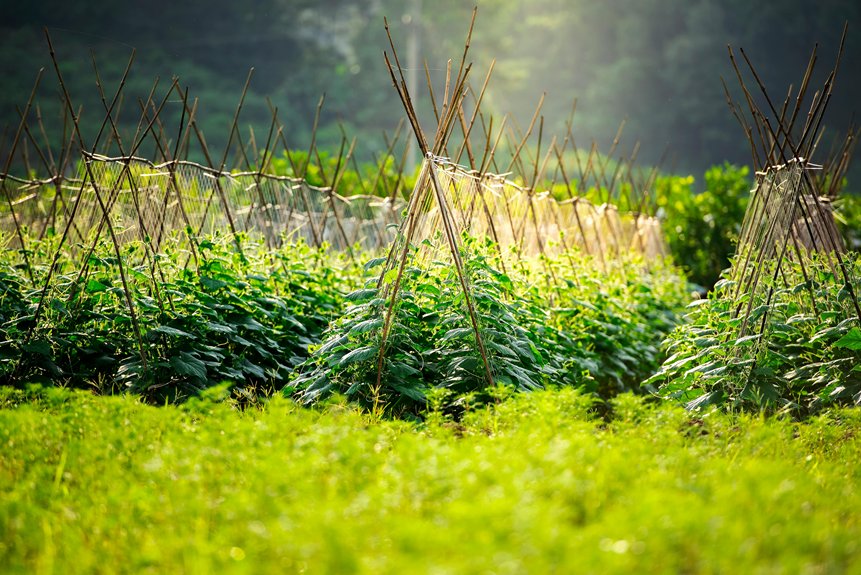
You don’t have to trellis tomatoes, but I’d strongly encourage it.
Trellising improves airflow around plants, which reduces disease and prevents rot from ground contact. Without support, dense vines bury fruit, complicate harvesting, and trap moisture that breeds fungal problems.
Determinate varieties need modest stakes, while indeterminate types require sturdy trellises.
The setup’s worth it—you’ll get healthier plants, easier harvests, and better fruit quality.
There’s more to know about choosing the right support system for your specific situation.
The Short Answer: It’s Not Required, But Benefits Are Real
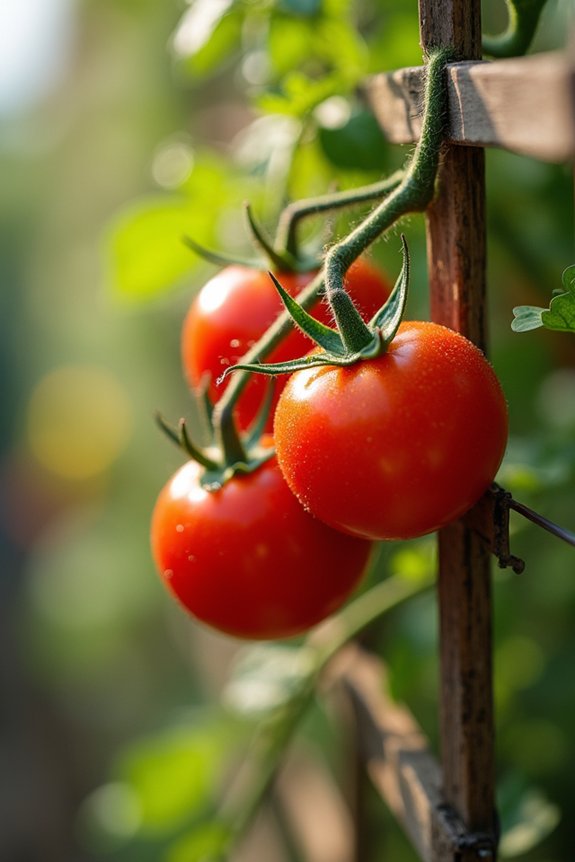
Why do so many gardeners reach for stakes and string when growing tomatoes? The honest answer: you don’t have to. Trellising isn’t strictly required, but here’s what I’ve learned—the benefits are worth considering.
When you support your tomatoes vertically, you’re not just saving space. You’re creating better air flow around the plants, which reduces disease pressure significantly. I’ve noticed that staked tomatoes stay healthier because moisture doesn’t linger on leaves as much. Plus, keeping fruit off the ground prevents rot and soil-borne pathogens from reaching your harvest.
You’ll also find pruning and spotting problems easier when plants are elevated. Even without a trellis, many gardeners succeed. But adding support improves your results—faster ripening, cleaner fruit, and real disease reduction. That’s worth the modest effort.
What Happens When You Skip Trellising
If you skip trellising, you’re likely to face two major challenges that can seriously impact your harvest. First, your plants become vulnerable to disease and pest problems—ground-spreading vines create dense foliage where moisture lingers, fungal diseases develop, and pests hide from your detection efforts. Second, you’ll deal with difficult harvesting and lower yields, since fruits sitting on soil rot more easily, air circulation suffers, and the sheer tangle of vines makes picking fruit both time-consuming and frustrating.
Disease And Pest Problems
When you leave tomatoes unsupported on the ground, you’re basically rolling out a welcome mat for disease and pest trouble.
Skipping trellising creates three major problems for your tomato patch:
- Increased soil-borne diseases – Ground contact exposes fruit and foliage to pathogens, causing fruit rot and leaf spot infections that spread quickly through wet conditions.
- Poor pest detection – Dense, sprawling vines hide pests effectively, giving insects easier access to foliage and fruit while making your pest management efforts nearly impossible.
- Reduced airflow – Without supports, humidity builds around the canopy, creating perfect conditions for fungal diseases like Septoria leaf spot to develop.
Additionally, unsupported plants are prone to lodging or breakage, creating wounds that become entry points for pathogens and pests. Trellising your tomatoes prevents these cascading problems.
Difficult Harvesting And Yields
you’ll spend twice as long hunting for ripe tomatoes buried under sprawling vines. Dense ground-level growth makes harvesting frustrating and time-consuming, especially when fruit hides beneath leaves and stems.
When you skip trellising, you’re also compromising your yields. Untrellised plants require significantly more ground space, making fruit harder to access and manage. This sprawl prevents you from monitoring plants effectively, so you’ll miss pest issues and disease problems that directly impact production.
Ground contact creates another problem—fruit touching soil develops rot and soil-borne diseases more readily. These issues reduce both quality and total harvest. Indeterminate varieties without support often become brittle and inefficient at fruiting. Trellising keeps your plants organized, accessible, and productive.
Why Airflow Matters: Disease, Pests, and Rot
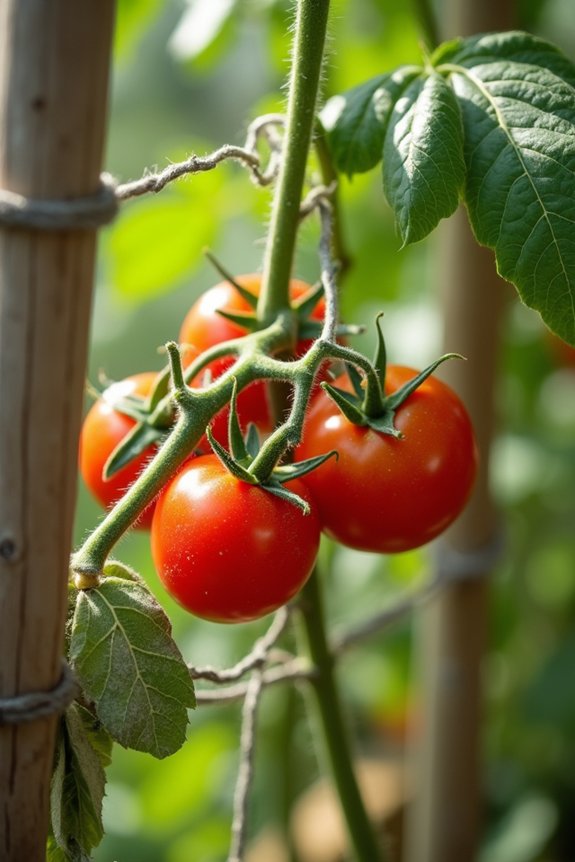
When you trellis your tomatoes, you’re creating space for air to move freely through the canopy. This directly impacts disease prevention and plant performance.
Here’s what improved airflow does for you:
- Reduces humidity on leaves, deterring early blight, late blight, and Septoria Leaf Spot
- Accelerates drying after rain or dew, preventing fungal spore germination
- Lowers soil contact, minimizing pathogen and pest pressure from ground moisture
Dense, crowded growth creates microclimates where fungal infections spread in both fruit and foliage. Pruning and training open your canopy, enhancing airflow while making pest detection easier. Plants with adequate spacing show better yields and fewer disease problems when you prioritize this practice.
Do Determinate and Indeterminate Types Need Different Support?
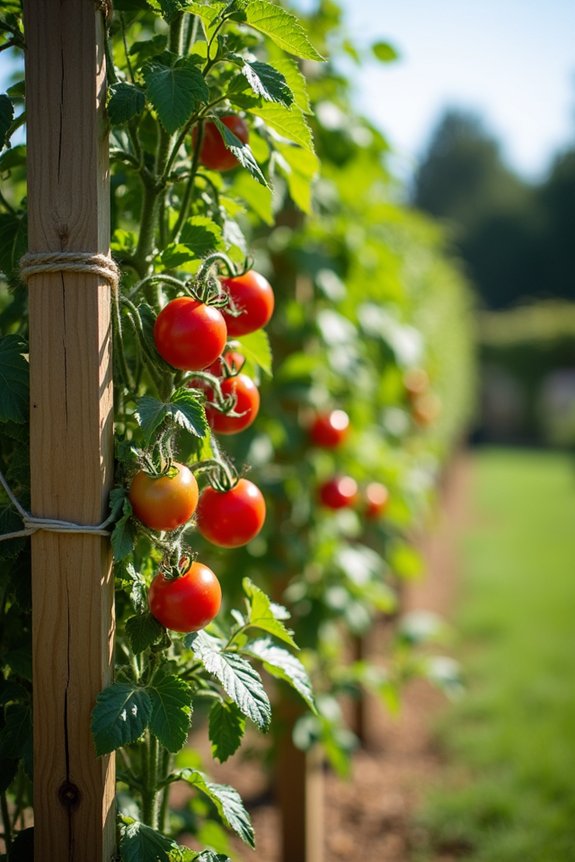
If you’re growing both determinate and indeterminate tomatoes, you’ll want to match your support system to each plant’s growth habit—determinate varieties stay compact and bushy, so they need modest stakes or cages, while indeterminate types grow tall and vine-like all season, demanding sturdy, taller trellises or cages you can train them onto. The key difference is that indeterminate plants require ongoing pruning and consistent upward training throughout the growing season, whereas determinate types finish their growth cycle faster and need less active management. You can solve this by using tall panels or robust cages that support both types, giving indeterminates the structure they need to climb while still anchoring your determinate plants firmly in place.
Determinate Growth Habits
The support needs for determinate and indeterminate tomatoes aren’t quite the same, and understanding the difference can save you time and money.
Determinate varieties are bushier plants that naturally stop growing at a set height, typically reaching 3-4 feet. Here’s what you should know:
- Less vertical support needed – determinate types don’t require the constant re-securing that indeterminate varieties demand
- Shorter growing season – their concentrated fruiting means you’re done supporting earlier in the season
- Still benefit from cages or stakes – even compact plants appreciate some support to keep branches off soil and improve air circulation
While indeterminate vs determinate plants have different support needs, don’t skip staking versus cages altogether. Determinate tomatoes may need lighter support, but that modest effort reduces disease and makes harvesting easier.
Indeterminate Vine Management
Indeterminate tomatoes grow continuously upward throughout the entire season, requiring different support than determinate varieties. These indeterminate vines keep producing new growth and fruit until frost arrives, so a simple cage won’t suffice.
Invest in sturdy 5-foot supports or taller. Many experienced growers choose panel trellises combined with staking for maximum stability and airflow. This approach keeps sprawling vines manageable while reducing disease.
Indeterminate management requires ongoing pruning and regular tying throughout summer. As your indeterminate vines climb, remove lower leaves and tie stems securely every few weeks. This work results in better air circulation, reduced rot, and easier harvesting across your tall plants.
Support Type Selection
Support Type Selection
Determinate and indeterminate tomatoes need different support strategies because they grow so differently.
What works best:
- Indeterminate varieties benefit from sturdy staking or trellising systems that handle continuous growth and heavy fruit loads throughout the season.
- Determinate types typically need shorter tomato cages or minimal staking since they reach a set height and produce all their fruit at once.
- Combined systems like panel trellises work well for mixed plantings, accommodating both growth patterns.
Why support matters:
Some form of support prevents wind damage and keeps fruit off soil. Quality cages or stakes provide:
- Better airflow around plants
- Easier harvesting
- Reduced disease pressure from soil contact
Match your support method to your tomato variety for optimal results.
Cages vs. Stakes vs. Panels: Which Method Suits Your Garden?
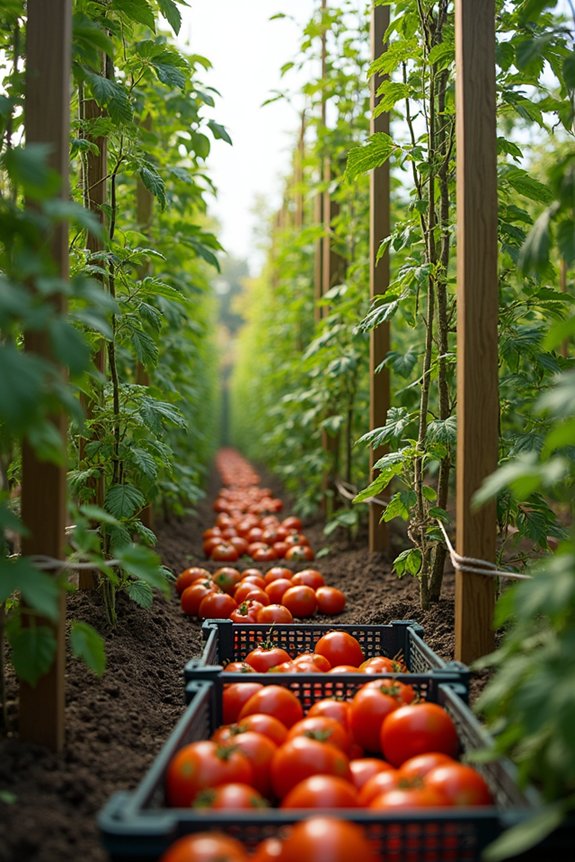
When you’re deciding how to support your tomatoes, you’ve got three main options, and each one offers different advantages depending on your space, budget, and tomato variety.
Stakes demand constant tying and pruning, especially for indeterminate varieties, but they maximize space and produce solid harvests. Cages require less maintenance, though sturdy ones cost more and can obstruct harvesting when plants grow tall. Metal fence panels—a hybrid approach—deliver the best of both worlds: excellent airflow, durability, and minimal fussing.
Budget matters too. Flimsy metal cages start cheap but rarely last beyond two seasons. Fencing panels and posts demand higher upfront investment but last for years of dependable use. Whatever method you choose, supporting your tomatoes improves air circulation, reduces disease, and manages fruit weight effectively.
Build a Metal Panel Trellis for Tomatoes
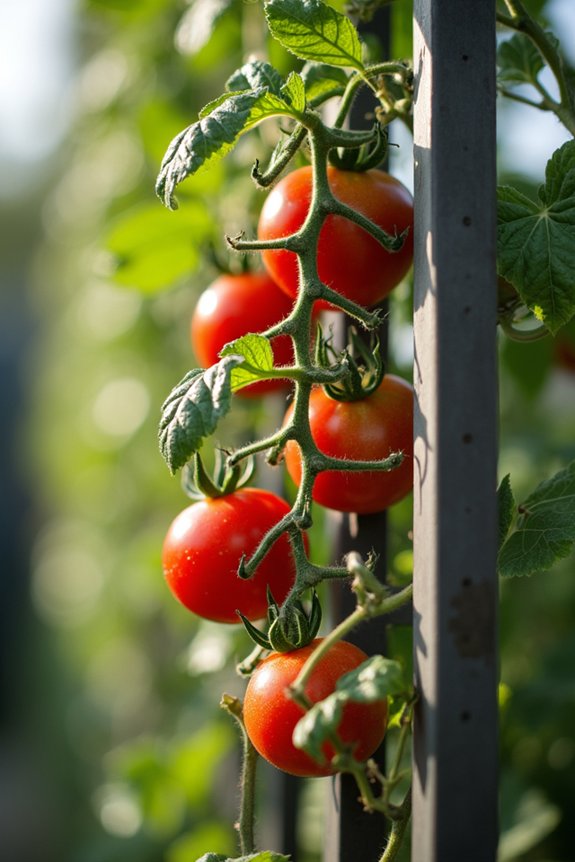
If you’re ready to move beyond cages and stakes, a metal panel trellis offers a reliable setup that’ll support your tomatoes for years.
I build mine using cattle panels (8–16 ft long) mounted on 6 ft posts spaced about 6 ft apart, then secure everything with zip ties. Here’s what makes this system effective:
- Durability – Reusable panels last season after season, eliminating constant replacements
- Strong support – The sturdy metal structure reduces pruning needs while maintaining airflow
- Easy training – Bungee cords guide vines upward as plants grow taller
Start tomatoes on one side of the metal panel trellis to simplify harvesting and access. As your vines extend, add higher or stronger bungees. This hybrid approach combines staking and caging benefits, giving you reliable tomato support that works.
Training, Pruning, and Mistakes That Kill Your Harvest
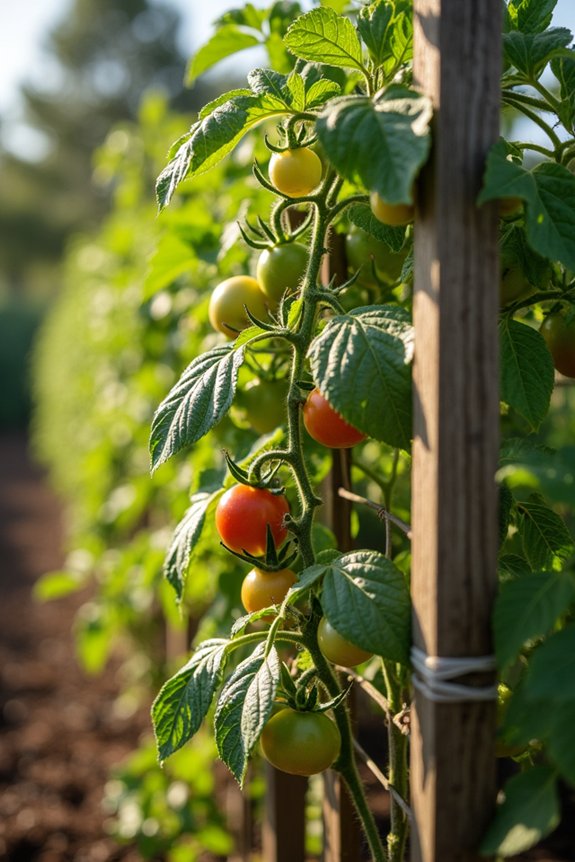
How much of your tomato plant’s energy actually goes toward fruit instead of leaves?
When you train and prune your tomatoes, you’re redirecting that energy straight to ripening fruit. I remove suckers and lower leaves regularly—especially beneath the lowest fruit clusters—to prevent dense interiors where pests hide and disease spreads. This improves airflow and exposes fruit to sunlight, reducing ripening time significantly.
| Pruning Task | Timing | Result |
|---|---|---|
| Remove suckers | Weekly during growth | Stronger main stems |
| Strip lower leaves | Before flowering | Better air circulation |
| Cut new growth | End of season | Faster fruit ripening |
Inadequate training leads to tangled, ground-sprawling growth that increases rot and pest access. I use sturdy cages or string systems for consistent support, adjusting weekly during peak growth. This keeps your harvest accessible and your plants healthy—the practical outcome that matters.