Not really—it depends on your variety.
Bush beans stay compact and self-supporting, so they don’t require a trellis. However, pole beans can reach eight feet and absolutely need vertical training for best yields.
Even bush beans sometimes benefit from lightweight supports when they’re heavily loaded with pods or planted densely, since strong winds or heavy rain can lodge them.
Simple bamboo stakes and twine work perfectly. Understanding which type you’re growing is important for your setup.
Pole Beans or Bush Beans? Do Green Beans Need a Trellis?
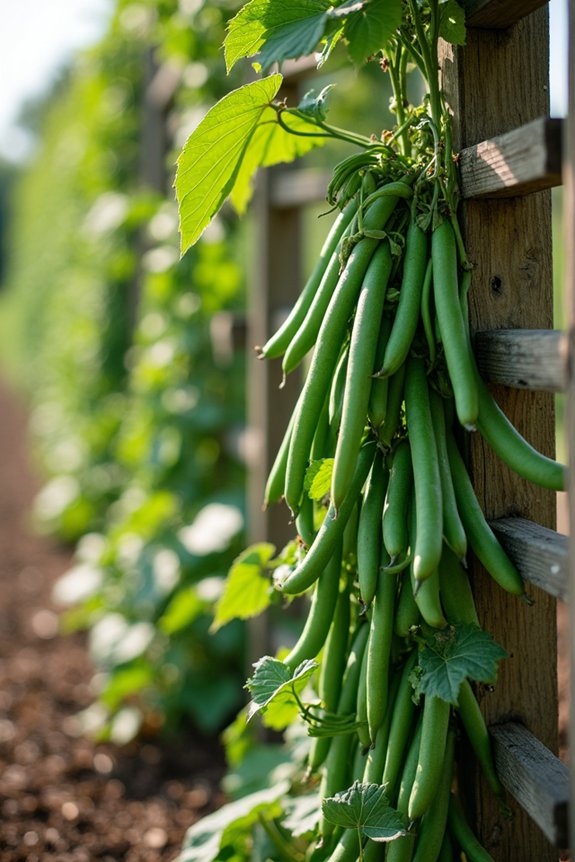
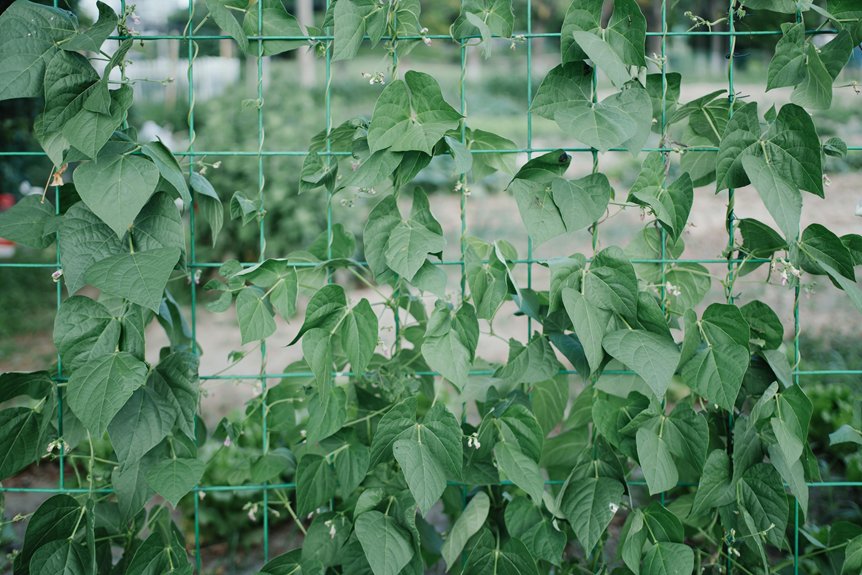
The answer to whether your green beans need a trellis depends entirely on which variety you’re growing. If you’ve chosen bush beans, you’re in luck—they stay compact and don’t require a trellis at all. They grow outward rather than upward, making them wonderfully low-maintenance. However, if you’ve selected pole beans, you’ll definitely want to install support structures. Pole beans can reach up to 8 feet high and need vertical training for optimum yields. I’ve found that trellising pole beans improves your harvest posture considerably and makes picking easier since the beans grow upward. Some gardeners use light bamboo supports for bush beans during heavy fruiting, but it’s truly optional. Understanding your bean variety helps you plan your garden layout effectively and ensures your gardening success!
Bush Beans Don’t Need Support: Here’s Why
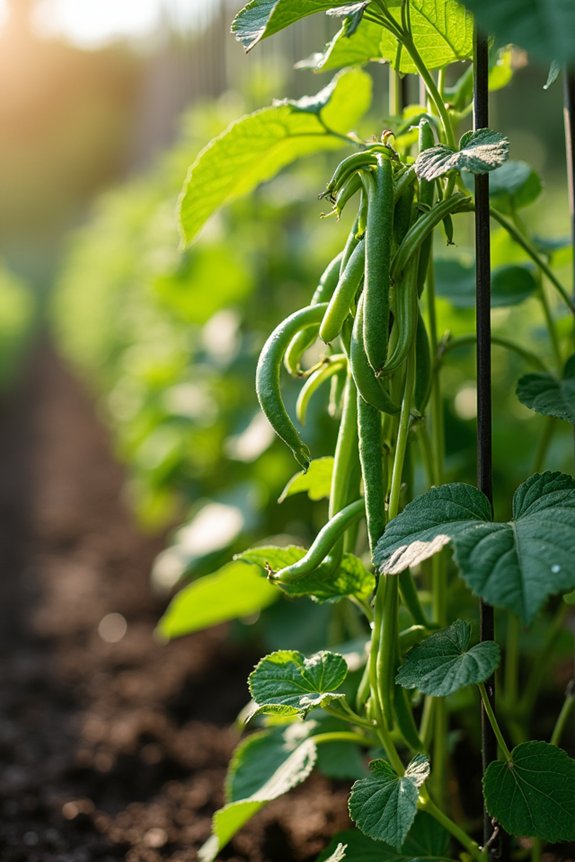
Why do bush beans stay upright without any help? These compact plants have naturally sturdy stems that keep them standing tall on their own. Unlike pole beans that climb and sprawl, bush beans grow in a compact mound shape, distributing their weight evenly across a shorter frame.
You won’t need a trellis for bush beans because their structure provides natural stability. However, when heavy fruiting happens, you might add lightweight supports like short bamboo sticks to prevent lodging. This simple step keeps your plants looking neat and makes harvesting easier.
The benefit of bush beans is their self-sufficiency. They’re perfect if you want low-maintenance gardening without complicated support systems cluttering your space!
When Should You Add Support to Bush Beans?
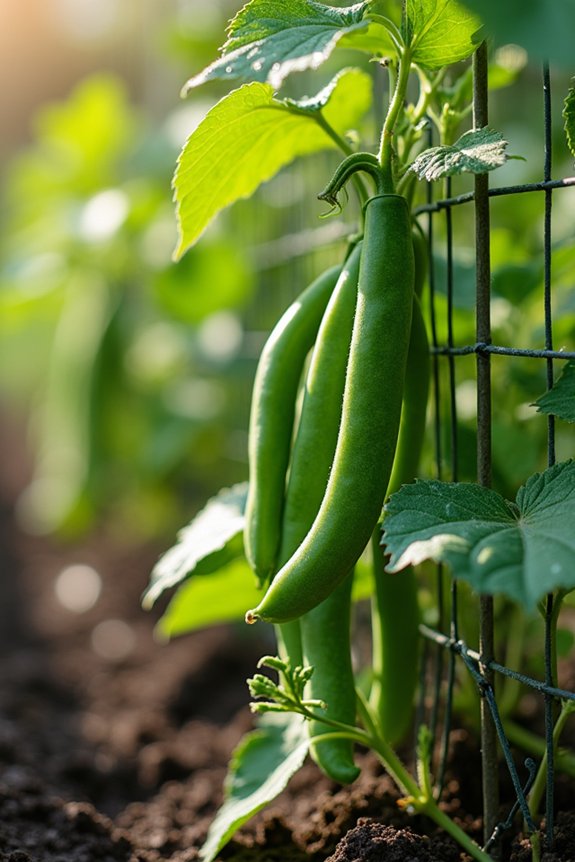
When do you actually need to step in and prop up your bush beans?
You don’t require a full trellis for bush beans, but lightweight supports become helpful in specific situations. Here’s when I add them:
- Heavy yields – When your plants produce abundantly, the weight of beans can bend stems downward, making harvesting awkward and risking crop damage.
- Plant density – If you’ve planted closely together for maximum production, lightweight supports help keep foliage upright and improve air circulation around plants.
- Weather challenges – Strong winds or heavy rain can lodge bush beans, so simple sticks or twine prevent this naturally.
I use short bamboo sticks or minimal twine setups—nothing elaborate. This keeps your plants standing tall and makes picking easier without converting to a full trellis system.
Seven Trellis Styles That Work (And How to Pick One)
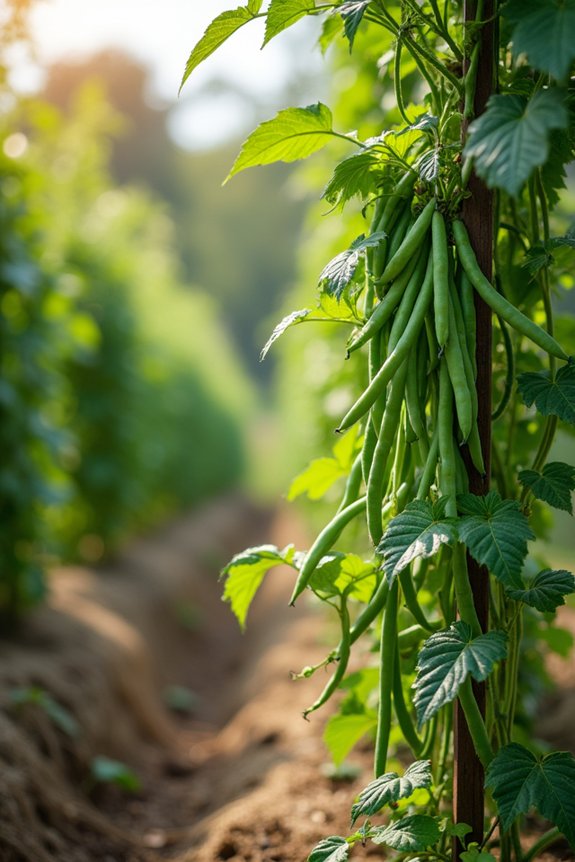
How do you choose the right support system for your climbing beans? Your choice depends on your garden setup and what materials you already have on hand.
A general garden trellis works great for most situations. You might also build a teepee from on-site sticks—it’s budget-friendly and charming. Bamboo poles offer durability, while cedar uprights provide long-lasting strength against wind and weather.
For container gardens, smaller trellises fit perfectly. Raised beds work well with repurposed arbors too.
Use twine rather than nylon netting. Twine attaches easily to uprights, won’t entangle your beans, and cleanup after harvest is straightforward. Vertical strings trained upward make harvesting simpler and save valuable garden space. Pick whatever style matches your garden’s character.
Simple Supports: Bamboo, Stakes, and Twine
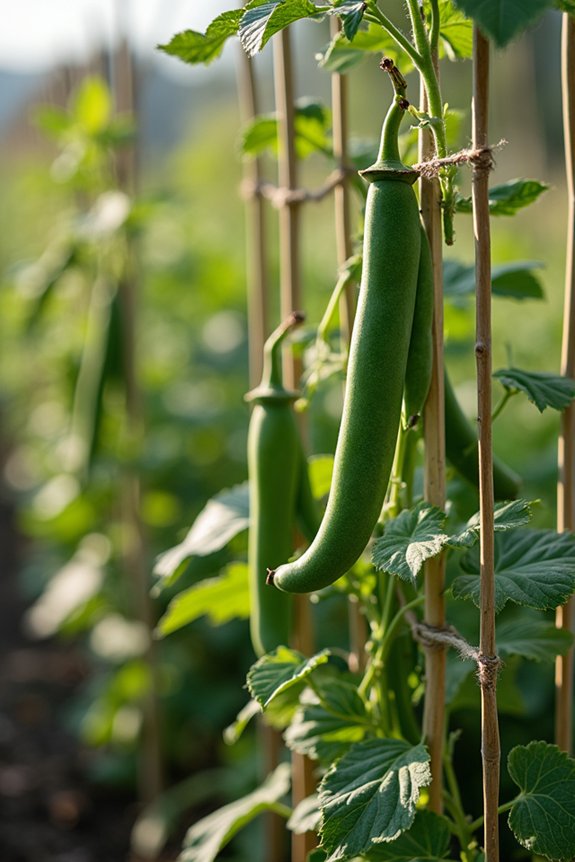
If you’re growing bush beans, you might wonder whether a full trellis is really necessary—and the answer is often no. I’ve found that simple supports work well for keeping plants stable and making harvest easier during peak production.
Here’s what I use:
- Short bamboo sticks – I insert 12-18 inch stakes around plants, which prevents pods from dragging on soil without requiring complex structures.
- Lightweight twine – I run string between stakes for quick vertical guidance, offering support without the hassle of building elaborate frames.
- Single stakes – I place individual supports where wind exposure or heavy bean production demands extra stability.
These minimal supports address real concerns—plant weight and wind damage—while keeping your setup straightforward. You’re part of a community of growers who know that practical beats fancy!
Choosing Your Support (Or Skipping It)
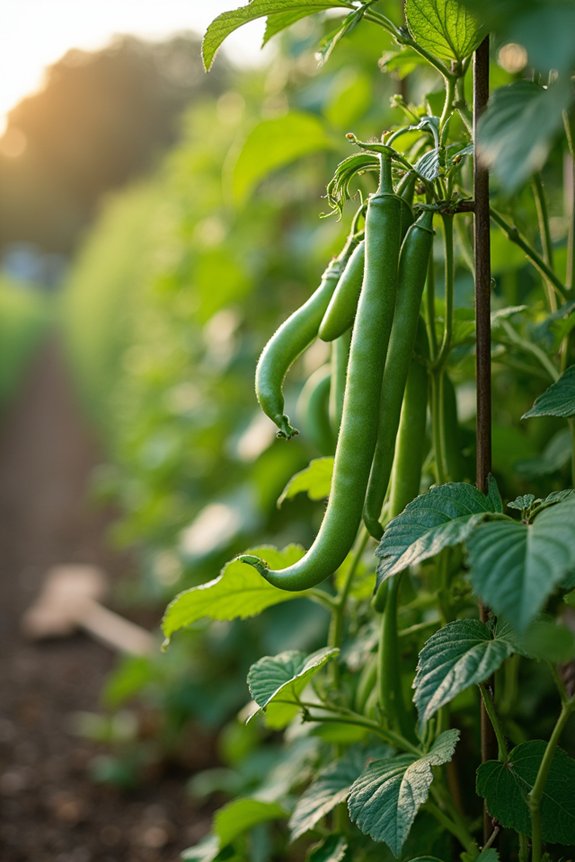
If you’re growing bush beans, you’ve got flexibility—support is optional since these compact plants stay under 2 feet tall and effortlessly bush out. I find that adding light supports like short bamboo sticks really helps when plants get heavy with beans, though it’s not absolutely necessary for growth. Your choice depends on your garden space, how much fruit you expect, and whether you’d rather maximize harvesting ease or keep things simple!
Bush Beans: Support Optional
Unlike their climbing cousins, bush beans innately grow compact and sturdy, so you won’t need a trellis to keep them producing well. I’ve found that these plants handle themselves beautifully without vertical support, which makes them perfect for maximizing your garden space.
That said, you do have options:
- Skip support entirely – Bush beans stay upright naturally and produce abundant harvests without any help.
- Add light supports – Short sticks or lightweight twine work well when plants become heavy with beans, keeping foliage off the ground.
- Consider your layout – In small gardens, ditching the trellis frees up room for other crops you’re eager to grow.
The choice is yours. Bush beans give you flexibility while delivering reliable yields!
Light Support Solutions
So you’ve decided bush beans might benefit from a little help staying upright—what now?
I’ve found that simple twine or string works well for training beans upward. It’s easier to manage than nylon netting and fully compostable when you’re done. Short bamboo sticks offer another practical option, especially when your yield gets heavy and plants start drooping.
Here’s the thing: you don’t need anything fancy. Even basic support keeps beans accessible for harvesting and improves air circulation around the foliage. Many gardeners I know use whatever they have on hand—sturdy branches, garden stakes, or even tomato cages repurposed for beans.
The real goal is keeping plants upright so you’re not bending constantly during harvest season. Choose what feels manageable for your garden setup, and your beans will produce cleaner, easier picking.