Lining your planter boxes protects both your plants and hardscape from moisture damage. A quality liner shields edible plants from treated wood chemicals, stops soil from washing away during heavy rain, and blocks weeds without herbicides.
You’ll prevent wood rot and warping while avoiding waterlogging that causes root rot. Liners also eliminate those dark stains on patios. Whether you choose terrain fabric or perforated plastic depends on your specific needs—and there’s more to discover about picking the right option.
Protect Plants From Treated Wood Toxins
Why should you care about what’s in your planter box wood? Because the materials we choose directly impact what we grow and eat.
The materials we choose for our planter boxes directly impact what we grow and ultimately eat.
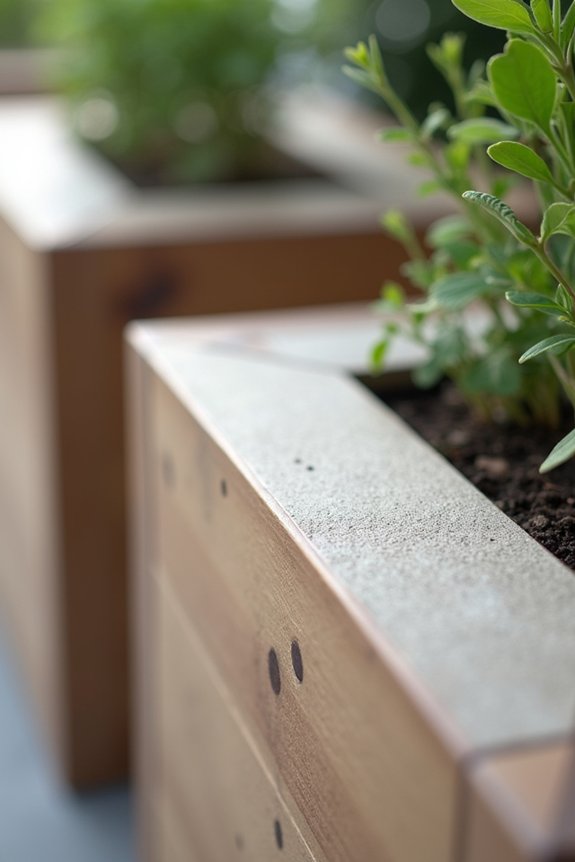
Treated wood often contains chemical preservatives that prevent rot and pest damage. Over time, these toxins can leach into your soil, particularly when moisture is present. If you’re growing edible plants—vegetables, herbs, or fruits—this becomes especially important.
Here’s where lining comes in. A food-safe liner creates a protective barrier between your treated wood and the soil. This simple addition shields your edible plants from potential chemical exposure, ensuring safer harvests.
I recommend choosing liners specifically labeled as food-safe. They’re your reliable defense when growing anything you’ll eat. Untreated or naturally rot-resistant woods reduce this concern, but lining remains your best protection strategy for peace of mind.
Stop Your Soil From Washing Away
How much soil have you lost through drainage holes after a heavy rain?
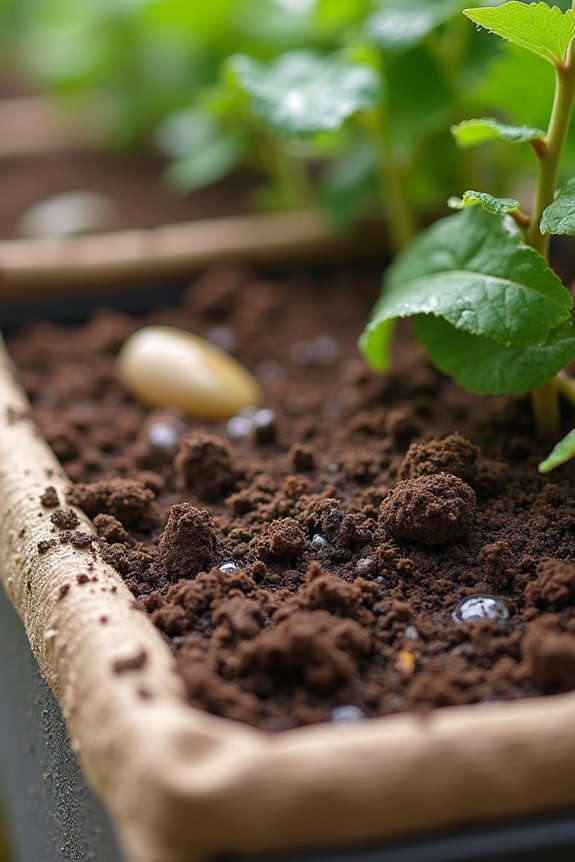
I’ve watched garden soil wash away during storms, and I realized a liner solves this problem. When water flows through drainage holes, it carries soil particles with it—especially at joints and seams. A liner acts as a barrier, containing your soil while still allowing water drainage necessary for plant growth.
| Problem | Solution |
|---|---|
| Soil erosion at drainage holes | Liner blocks particle escape |
| Gaps in planter joints | Barrier prevents washing at seams |
| Rapid soil loss during watering | Liner stabilizes soil content |
| Muddy water runoff | Contained soil stays put |
| Edge erosion | Comprehensive soil retention |
This simple addition protects your investment. Your soil retention improves, and your planter stays cleaner. You’ll notice the difference right away.
Block Weeds Without Chemicals
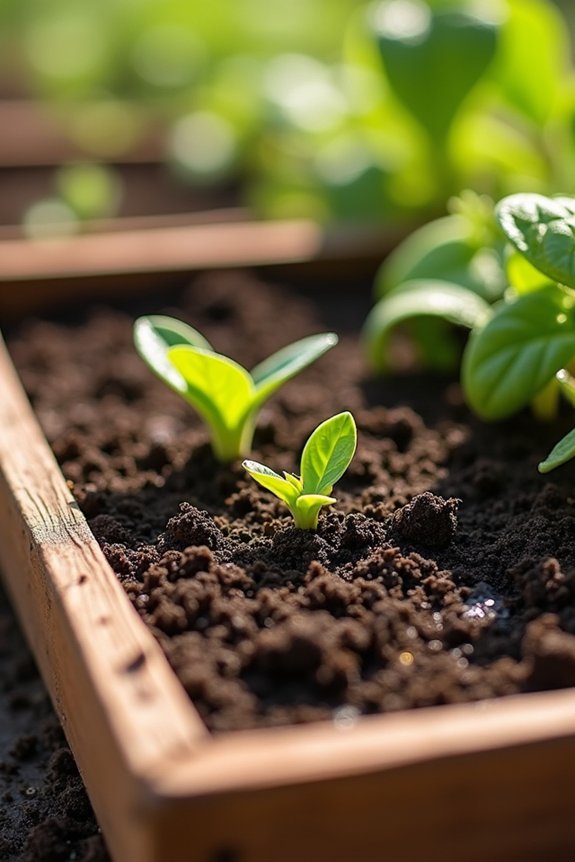
I’ve found that lining your planter boxes gives you a chemical-free way to stop weeds before they start—a barrier that prevents weed seeds from pushing up through the soil from underneath. When you combine your liner with landscape fabric at the drainage holes, you’re creating a natural defense system that blocks unwanted plants while still letting water flow through. This approach lets you enjoy a cleaner, weed-free garden without relying on herbicides or constant weeding!
Natural Weed Prevention Barrier
One of the most frustrating parts of maintaining planter boxes is dealing with weeds that sneak up through the soil—and you don’t need harsh chemicals to stop them. Adding a natural weed barrier will improve your results.
Landscape fabric works well as your planter lining. It blocks weeds from pushing through cracks and joints while still letting water drain properly. You can also use biodegradable options like burlap or Hessian cloth, which suppress weeds naturally without any synthetic chemicals.
When you line your planters this way, you’re reducing soil movement and preventing weed intrusion simultaneously. This means fewer weeding sessions for you and better plant performance overall. It’s the straightforward approach that works.
Reducing Chemical Dependency
While terrain fabric does an effective job stopping weeds from sprouting, there’s an even bigger benefit: you’re eliminating the need for chemical herbicides altogether. When you install a permeable liner with proper drainage holes or perforations, you’re creating a weed suppression system that works naturally. This approach blocks soil exposure to light, preventing weed seeds from germinating beneath your planter. You’ll notice that a quality liner paired with strategic drainage maintains soil containment while stopping weeds from underneath—no toxic sprays required. This shift toward natural weed prevention means you’re protecting your family, local ecosystems, and your garden’s long-term health. That’s the kind of practical gardening solution worth implementing in your spaces.
Liners Slow Wood Rot and Warping
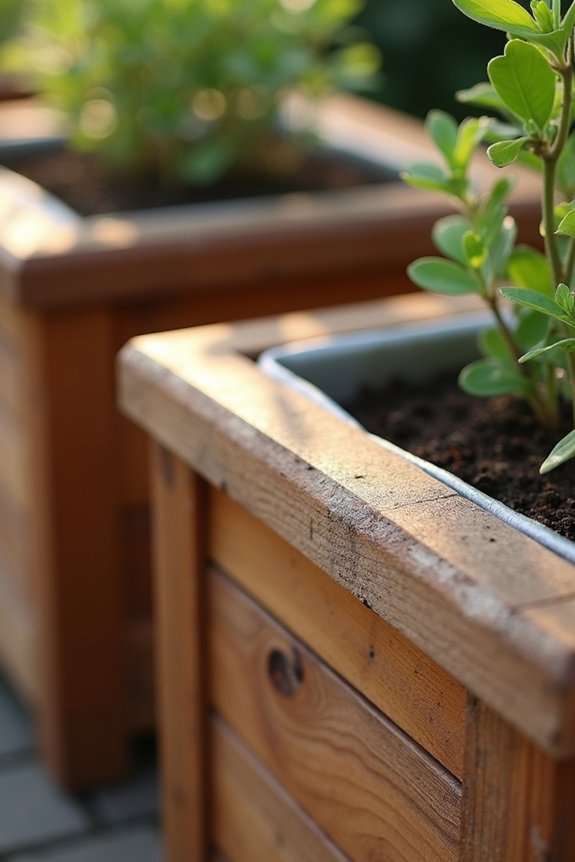
You’ll find that a quality liner acts as your first line of defense against moisture, which is the primary culprit behind wood rot and warping in planter boxes. By creating a barrier between the soil and wood, a liner shields the interior from constant water exposure—especially important if you’re using rot-prone woods like pine instead of naturally resistant cedar. This protective layer extends your planter’s lifespan by preventing moisture from seeping into cracks and causing the wood swelling and structural stress that eventually leads to failure.
Moisture Barrier Protection
Why does wood deteriorate so quickly in planter boxes? Direct soil and water contact accelerates wood rot and weakens structural integrity. That’s where planter liners become necessary. A quality moisture barrier protects your wood from constant moisture exposure, extending its lifespan.
Planter liners create a protective shield between soil and wood surfaces. This prevents water from seeping into joints and seams, which eventually causes deterioration. Metal planters benefit equally—liners shield Corten and galvanized steel from rust-accelerating water exposure.
| Material | Protection Benefit |
|---|---|
| Wood | Prevents rot and warping |
| Corten Steel | Reduces rust formation |
| Galvanized Steel | Extends finish durability |
| Seams | Blocks moisture infiltration |
| Powder-coat | Maintains appearance |
Installing a liner takes minimal effort and delivers maximum protection. You’re investing in your planter’s longevity.
Extended Wood Lifespan
Wood durability depends heavily on moisture protection. When water constantly contacts your wood, it invites rot and warping—problems that will compromise your entire planter.
A quality liner acts as a barrier between soil moisture and wood fibers, extending your planter’s life. Pine and other non-rot-resistant woods especially benefit from this protection. The planter liner benefits go beyond simple moisture control; liners seal cracks and joints, eliminating pathways where water sneaks through.
Cedar boxes might skip lining, but pairing liners with most other woods improves their longevity. You’re giving your planter the durability advantage it needs to perform for years. That’s a sound investment.
Rot Prevention Methods
Moisture is wood’s worst enemy, and a quality liner acts as your first line of defense against the rot and warping that can destroy your planter box from the inside out. Liners create a protective barrier, keeping water from seeping directly into wood fibers where it causes damage.
Here’s what happens: when moisture reaches joints and seams, it deteriorates edges faster than you’d expect. A liner stops this penetration. If you’re using pine or other non-cedar woods, lining becomes necessary protection. For cedar’s natural rot resistance, it’s optional.
You can combine liners with smart drainage—adding holes and fabric lets water escape while keeping soil contained. This dual approach maximizes your box’s lifespan without sacrificing function. That’s how you protect your investment.
Prevent Waterlogging and Root Rot
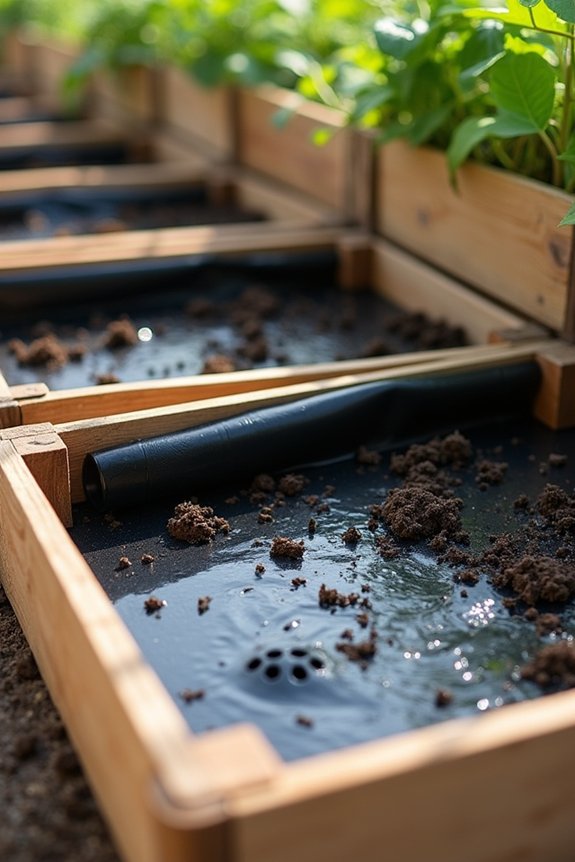
Since planter boxes sit directly on the ground, they’re vulnerable to moisture problems that can damage both your plants and the box itself. A quality liner acts as your drainage management system, preventing waterlogging by controlling how water moves through your soil.
When you line your planter, you’re protecting roots from sitting in excess moisture that causes root rot. The liner creates a barrier that lets water drain properly while keeping soil from becoming oversaturated.
| Drainage Problem | Cause | Liner Solution |
|---|---|---|
| Waterlogging | Standing water | Controlled moisture flow |
| Root rot | Excess moisture | Protective barrier |
| Wood decay | Direct soil contact | Material protection |
| Soil compaction | Poor drainage | Improved water movement |
| Foundation damage | Water accumulation | Moisture management |
Plants need oxygen and proper moisture balance to function well. Liners help you achieve exactly that by maintaining optimal soil conditions and preventing the water-related issues that inhibit plant growth.
Reduce Staining on Patios and Decking
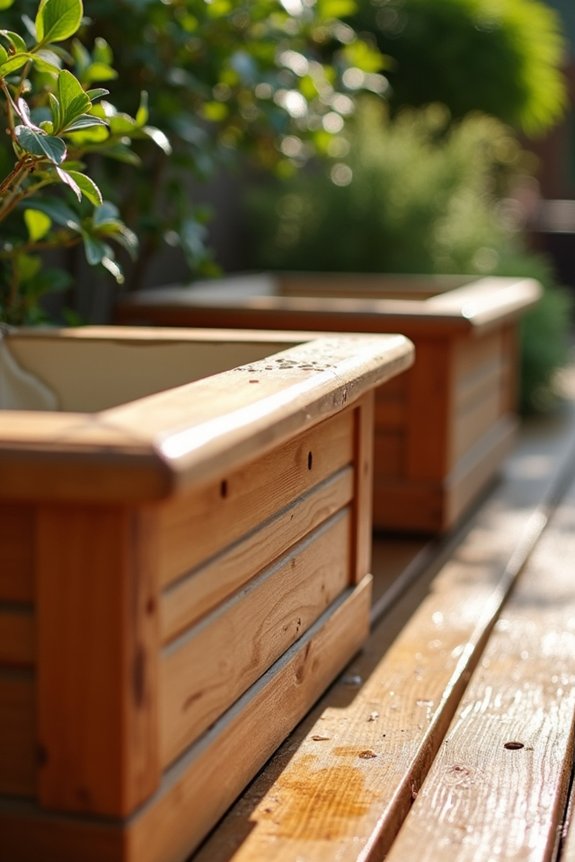
Have you noticed dark, damp patches appearing on your patio or deck around your planter boxes? You’re not alone! A quality liner solves this problem.
When soil contacts wood directly, moisture seeps through joints and cracks, creating stubborn stains on surrounding surfaces. A properly perforated plastic liner acts as a protective barrier, keeping soil and water away from your deck or patio edges while maintaining proper drainage.
Here’s what happens: the liner contains moisture within the planter box itself, preventing the constant dampness that discolors treated wood and powder-coated finishes over time. For planters without cedar’s natural resistance, this protection is invaluable.
Landscape Fabric vs. Plastic: Picking Your Liner
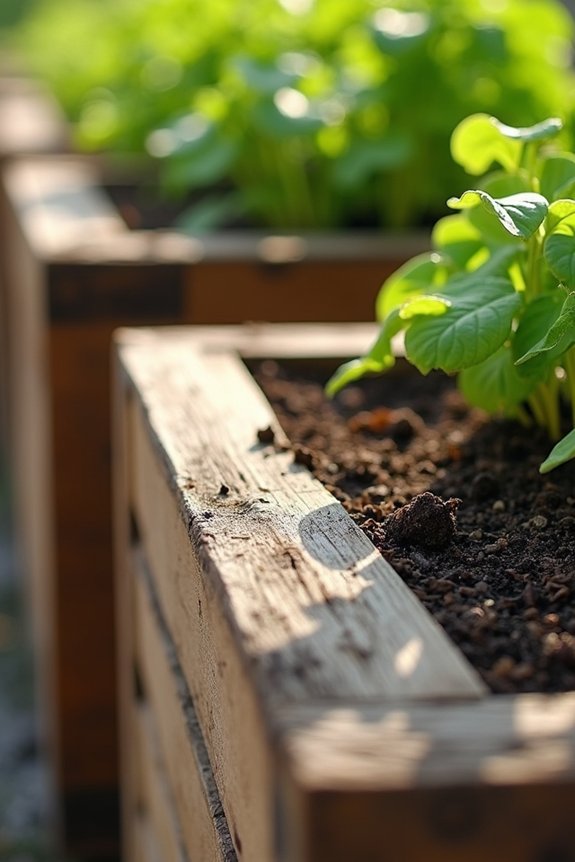
Now that you’ve decided to line your planter boxes, you’ll face an important choice: landscape fabric or plastic?
I’d recommend landscape fabric for most gardeners. It’s porous, letting water drain freely while stopping soil from washing through drainage holes. You’ll appreciate its reusability and biodegradable options—they’re gentler on the environment.
Plastic liners work differently. They block moisture and contaminants, protecting your wood longer. However, they require careful perforation at the bottom to maintain proper drainage. Without those holes, you risk waterlogged roots.
Here’s my preferred approach: combine both. Use plastic liners to shield wood, then punch drainage holes in the bottom. Layer landscape fabric on top of those holes. You’ll get superior moisture protection while preserving excellent drainage. This hybrid method gives you the best of both options.