
I’ll show you why chain link beats wood on cost.
Steel wire costs way less upfront than quality lumber, and installation labor drops significantly since there’s no complex carpentry.
You skip expensive seasonal staining and sealing, while galvanized or vinyl-coated options resist rust for 20–30 years—outlasting wood’s 15–20 year lifespan.
Repairs stay simple and affordable, involving just re-tensioning fabric rather than replacing whole sections.
In Seattle and Portland, you’re looking at $8–$35 per foot depending on height and coating.
The full breakdown of these seven cost-saving advantages awaits below.
Steel Wire Costs Less Than Lumber Upfront
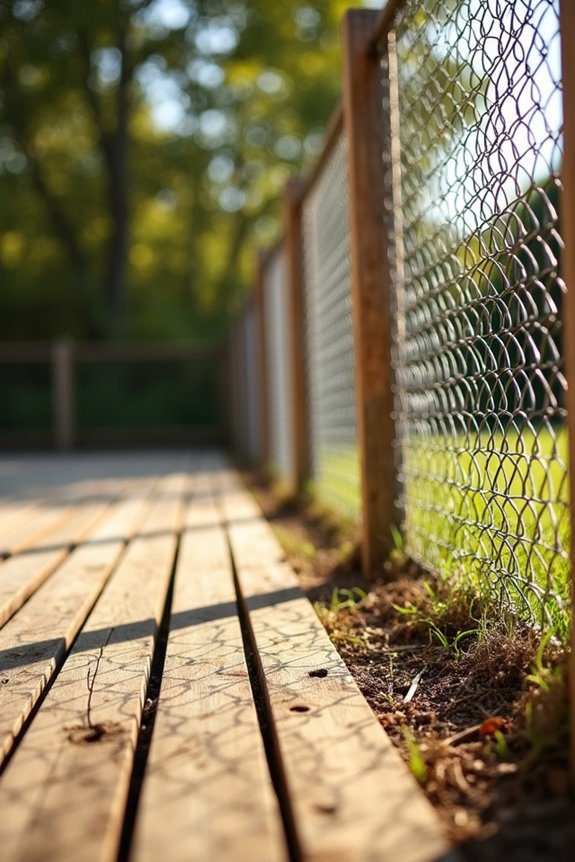
Why does chain-link fencing consistently undercut wood on price? The answer lies in materials. Steel wire—the backbone of chain-link construction—costs significantly less than quality lumber upfront.
When you’re planning your project, you’ll notice the difference immediately. Chain link costs far less per linear foot because steel manufacturing is more efficient than harvesting and processing wood. Galvanized or vinyl-coated fabrics further reduce material expenses while protecting against rust and weather damage.
I’ve found that comparing quotes reveals the real advantage. A standard chain-link installation runs substantially cheaper than comparable wood privacy fences. You’re not paying premium prices for lumber that requires ongoing maintenance and eventual replacement.
This upfront price advantage makes chain-link the practical choice for budget-conscious homeowners like us who want quality at a reasonable cost.
Why Chain Link Installation Costs Less in Labor
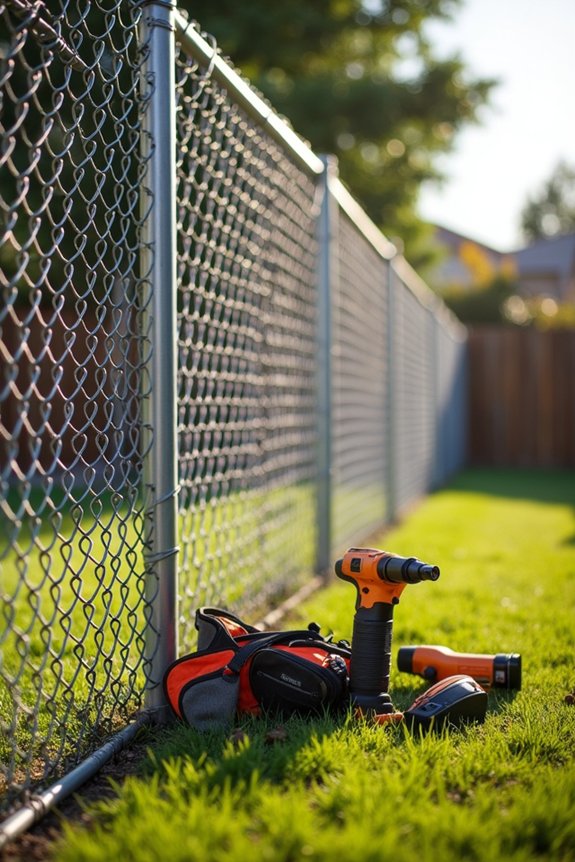
Installation labor costs drop dramatically with chain link because the work itself is simpler and faster than wood fence building. You’ll notice crews handle fewer materials and components, which means less time spent on the job site. Chain link installation requires straightforward fastening methods—no complicated carpentry steps or specialized permits slowing things down.
Unlike wood, chain link materials need virtually no surface treatment. There’s no staining, painting, or sealing involved, which eliminates hours of finishing labor. The consistent post spacing and standardized installation process mean your crew works efficiently without customizing heights or styles for different sections.
This streamlined approach translates directly to your bottom line. Where wood fences demand skilled carpenters and extended timelines, chain link’s lightweight design and uncomplicated framing keep labor costs remarkably lower, making it the smarter economic choice.
Simple Setup Means Lower Site Prep Expenses
How much time do you really need to prepare your property for fencing? With chain-link, you’ll find the answer straightforward. Unlike wood fencing, you won’t need extensive grading or complex framing work that drives up installation costs. I’ve seen how this approach cuts site preparation significantly.
Chain-link requires basic posts and fabric—nothing more. You’re skipping the decorative work and precise measurements that wood demands. This means fewer tasks before your installer even arrives, directly lowering labor costs on your project.
The minimal setup translates to real savings. Your local installer can move quickly through the property, avoiding time-consuming ground work. No elaborate framing means no delays. That’s the practical value of choosing chain-link: efficient preparation that keeps your budget intact.
Skip the Seasonal Staining and Sealing Grind
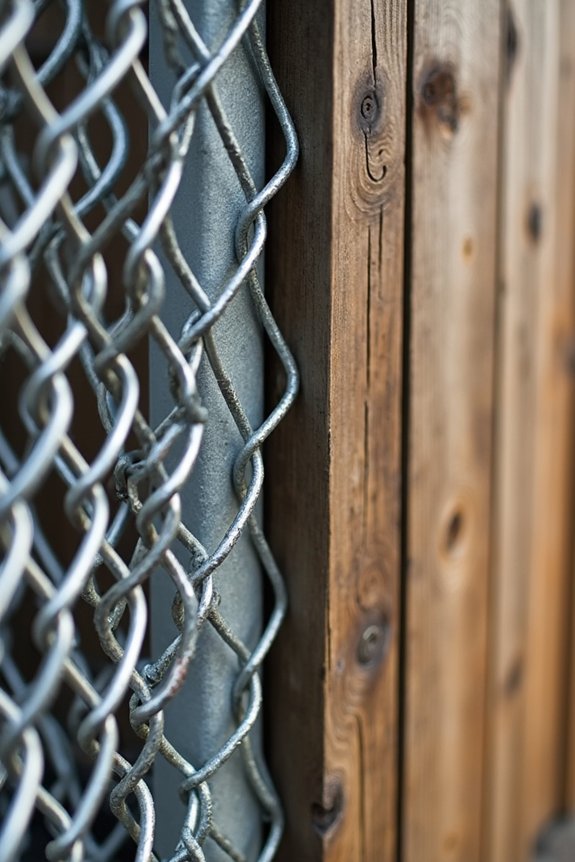
Once you’ve installed your chain-link fence, you can actually forget about it—which is something wood owners can’t say. While they’re out every spring with stain brushes and sealers, you’re enjoying your weekends. That seasonal maintenance grind costs real money over time. Wood requires regular staining or painting to prevent rot and pest damage, adding hundreds to your annual upkeep budget. Chain-link? It simply doesn’t need that constant attention. Galvanized or vinyl-coated options resist corrosion naturally, eliminating those recurring expense cycles. You’ll skip the labor costs of resealing, the materials themselves, and the headache of scheduling yearly touch-ups. After installation, your chain-link fence handles weather without fading or peeling. Occasional cleaning keeps it looking sharp without draining your wallet year after year.
Chain Link Lasts Longer, Delaying Replacement Costs
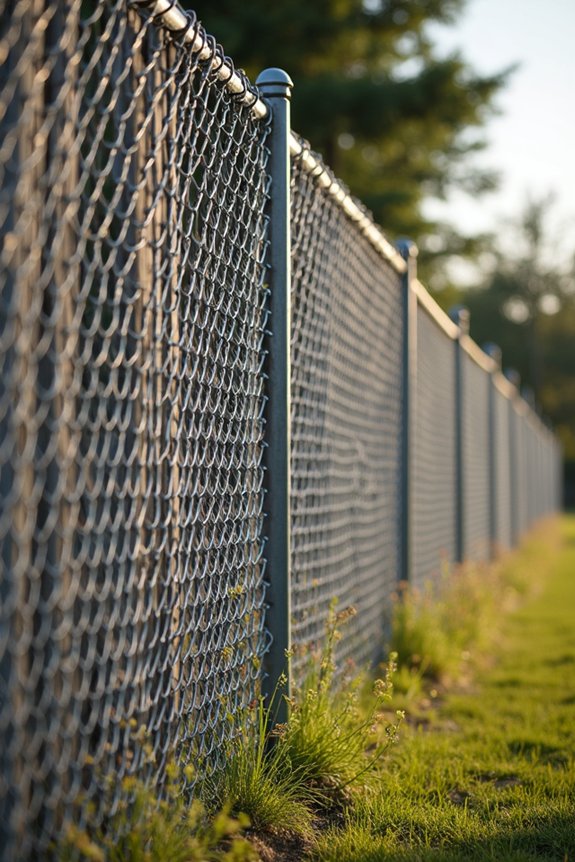
Beyond skipping those endless maintenance cycles, you’re also buying yourself decades of reliable service. Here’s what makes the chain link lifespan so impressive: you’re looking at 20–30+ years of dependable performance, while wood typically gives you just 15–20 years before replacement becomes necessary.
That gap matters significantly for your wallet. When you calculate replacement costs over time, chain link’s longevity means you’re investing less frequently in new fencing. Wood fences demand more regular replacements, which compounds your expenses year after year.
Additionally, galvanized or vinyl-coated chain link resists rot, pests, and fire damage that wood can’t withstand. Your maintenance duration shrinks considerably too. You’ll spend occasional hours on cleaning and bolt checks rather than the constant upkeep wood demands.
That’s real financial breathing room.
Fix Chain Link Repairs for Less
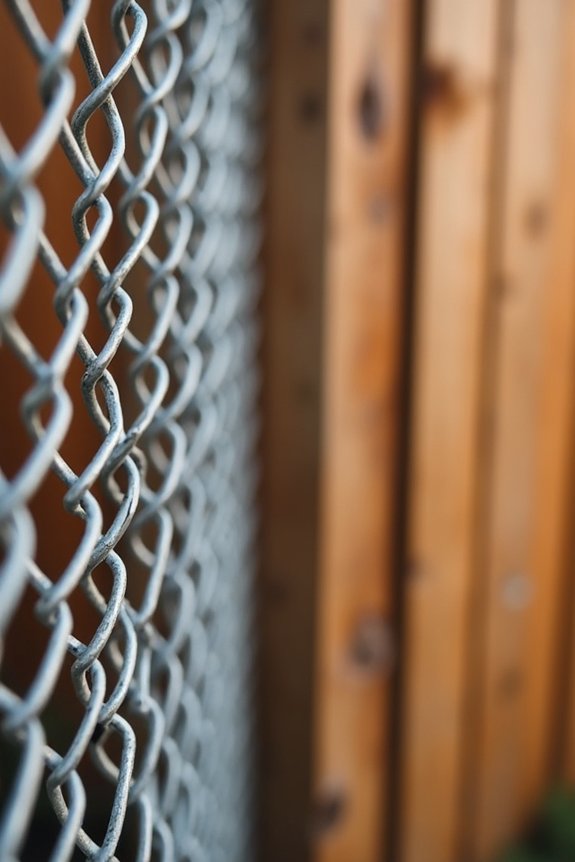
When damage does happen—and it will eventually—chain link’s repair costs stay remarkably low because you’re not replacing entire sections. You’ll simply re-tension the fabric, tighten loose hardware, or swap out a damaged area without touching the rest of your fence. This targeted approach keeps labor costs minimal compared to wood repairs, which demand matching panels and finishes across the entire damaged section.
Maintenance on chain link remains straightforward. Galvanized or vinyl-coated options resist rust and weather damage inherently, eliminating expensive staining or sealing cycles wood requires yearly. When repairs do become necessary, you’re looking at basic adjustments rather than structural replacements. That flexibility means you’re joining countless homeowners who’ve ditched the constant upkeep cycle and embraced genuine long-term savings.
Get Competitive Chain Link Pricing in Seattle and Portland
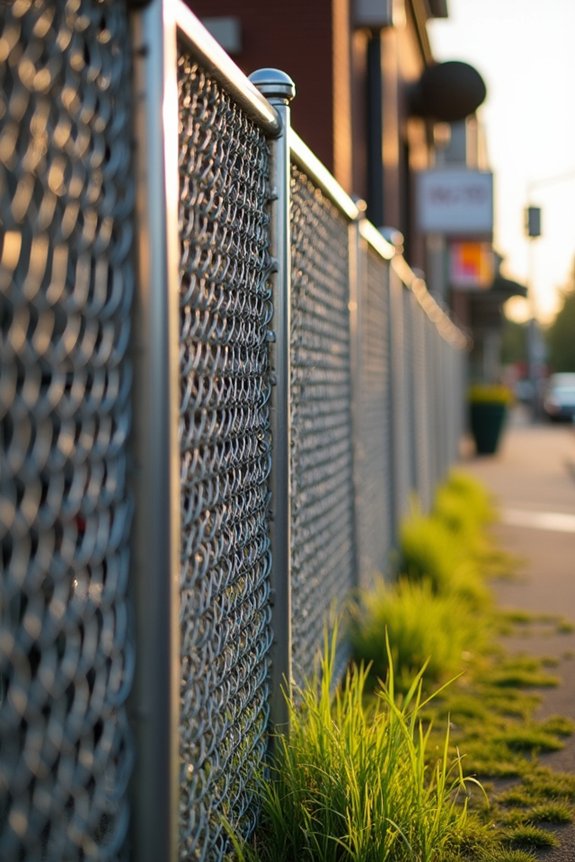
Now that you understand how chain link repairs won’t drain your budget, let’s talk about what you’ll actually pay upfront in your area.
In Seattle and Portland, you’re looking at competitive pricing that offers real value. Basic 4-foot galvanized chain link runs $8–$15 per linear foot, while 6-foot options with privacy features cost $15–$25 per linear foot. For vinyl-coated upgrades that improve appearance, expect $18–$35 per linear foot.
Your total installation typically lands between $1,200 and $3,500, which costs less than comparable wood fencing. Local contractors in both cities understand the regional market, so you’ll find consistent quotes reflecting Seattle and Portland’s material availability and labor rates.
This pricing advantage means you’re making a smart investment while joining countless neighbors choosing durability over cost.