Electric fences typically deliver between 2,000 and 5,000 volts, depending on what you’re containing. Cattle and horses need 2,000–3,000 volts, while sheep and goats require 4,000–5,000 volts due to their insulating wool. What matters most is the voltage actually reaching your animals compared to the number your energizer displays. Resistance from weeds, loose connections, and rust reduces voltage along the line. Testing at your fence’s far end reveals actual performance, and prioritizing steady output over sporadic spikes ensures lasting respect from your livestock. There’s much more to know about selecting the right energizer.
Why Voltage Matters for Instant Respect
Consistent, adequate voltage teaches animals respect without requiring repeated corrections—that’s the foundation of effective containment.
Why does voltage matter so much as it relates to electric fencing? I’ll tell you—it’s the difference between a fence animals respect and one they’ll test repeatedly.
Your electric fence system needs consistent, high voltage to create instant respect. When animals touching the fence experience a memorable sensation, they learn quickly to stay back. I’m talking about maintaining steady 3,000 volts across your entire fence line, not sporadic spikes.
Here’s why constant voltage works: it delivers a reliable pulse through the animal’s skin and nerves, making the boundary unforgettable. Your energizer should provide dependable output to compensate for vegetation growth and longer runs.
Think of it this way—consistent, adequate voltage teaches animals respect without requiring repeated corrections. That’s the foundation of effective containment.
Voltage Requirements by Animal Type
Voltage Requirements by Animal Type
That consistent voltage we discussed isn’t one-size-fits-all—different animals need different shock levels to respect your fence line.
Here’s what you’ll encounter across animal types:
- Livestock like cattle and horses require 2,000–3,000 volts from your energizers, with bulls needing the higher end due to their aggression and size.
- Sheep and goats demand 4,000–5,000 volts because their wool and thick coats insulate them from shock, so you need stronger voltage to get their attention.
- Pigs need around 2,000 volts, with wires positioned close to ground since they root constantly.
Selecting the right voltage for your animals ensures effective fence performance. When vegetation interference or high-tensile wire distances increase, your energizer must compensate. Match your setup to your animals, and you’ll achieve consistent respect for your fence line.
How Resistance Steals Voltage
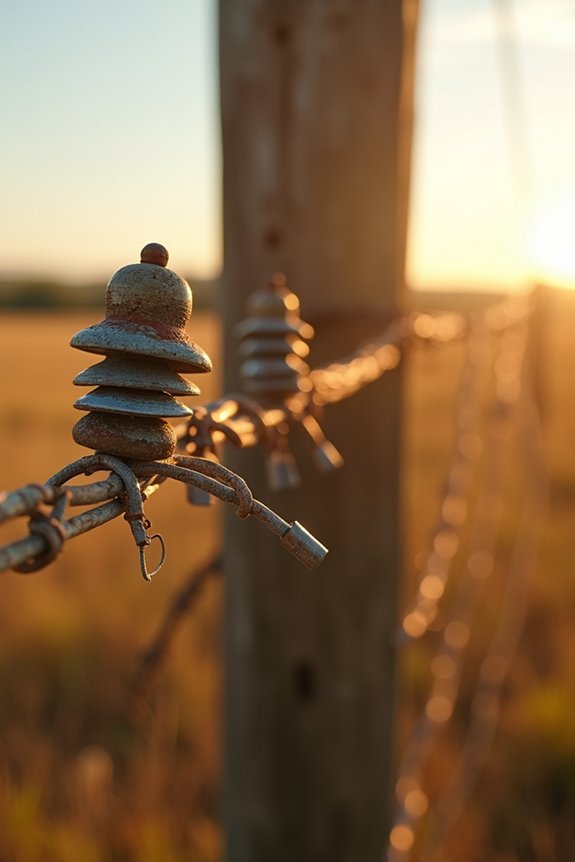
You’ll find that resistance along your fence line quietly steals the voltage your energizer produces, and understanding where it comes from helps you keep shock effectiveness strong across every section. Common culprits include weeds touching the wire, loose connections, broken insulators, moisture buildup, and rust accumulation—each one bleeding away precious volts before they reach distant animals. I’ll show you how to identify these resistance sources and prevent them so your fence delivers consistent, reliable shock from the charger all the way to the far end!
Common Resistance Sources
Your energizer might output 5,000 volts, but the animal touching the wire receives far less. That’s because resistance steals voltage before it reaches them.
Several culprits cause this voltage drop:
- Weed load and vegetation – Thick brush against your high-tensile wire creates a conductive path to ground, draining volts before animals touch anything.
- Poor connections and corroded components – Rusty wires, broken insulators, and loose terminals create localized high-resistance points that significantly reduce voltage delivery.
- Lead-out wire quality – Small-diameter or uninsulated lead-outs amplify resistance over distance, while large conductors preserve shock strength.
Your grounding system matters too. Dry soil or inadequate ground rods limit how effectively voltage returns, reducing the shock animals feel. Identifying these sources helps you maintain effective fence performance.
Voltage Drop Prevention
How does an energizer rated at 5,000 volts deliver only a fraction of that shock to animals at the far end of the fence? Voltage drop happens when resistance steals power along your line.
Lead-out wire resistance is your first defense. Using larger diameter conductors like 12½ gauge insulated lead-out cables minimizes losses before your fence starts. This matters considerably.
Next, inspect your insulators and connections regularly. Rusty hardware and cracked insulators create resistance hot spots that compound voltage loss. Vegetation touching wires compounds the problem as well.
Monitor your voltage readings at various fence points using a meter. You’ll likely see significant differences from your fence energizer output at the source versus distant sections. This measurement guides your maintenance priorities and confirms effective shock delivery throughout.
When You Need More Joules: Long Fences and Heavy Vegetation
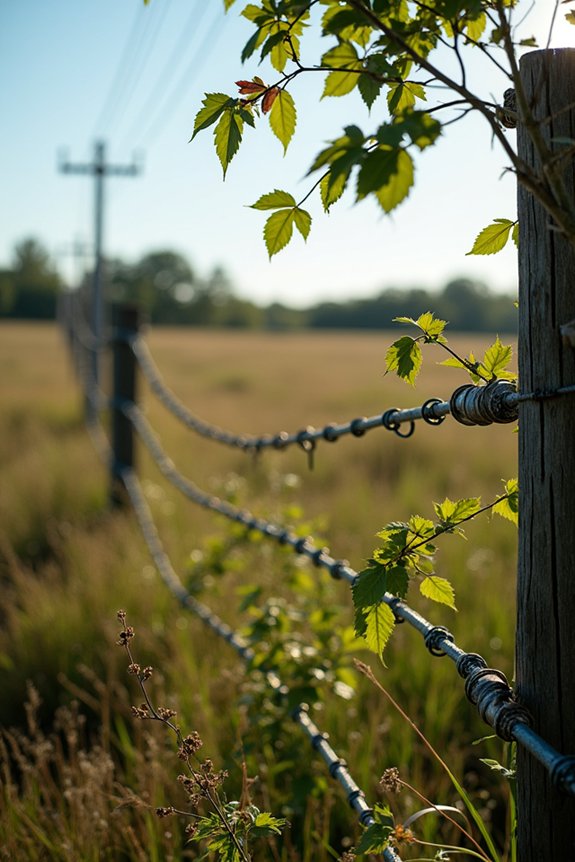
Why does an electric fence lose its punch over distance? Here’s what happens: longer fences and heavy vegetation create resistance that drains your system’s effectiveness. Understanding this challenge helps you design a fence that works.
Consider these factors affecting your setup:
- Voltage drop occurs as electricity travels through high-tensile smooth wire and dense brush, requiring higher energizer output to compensate
- Fence resistance from wet vegetation and poor grounding quality significantly reduces the joules reaching your animals
- Long fences demand energizers rated for 0.5 to 3 joules minimum to maintain meaningful shocks across the entire length
When managing longer installations, choose an energizer with robust joule ratings. This investment ensures consistent performance, regardless of distance or vegetation challenges. Your animals receive reliable protection throughout the entire perimeter.
Testing Your Fence Voltage Before You Rely on It
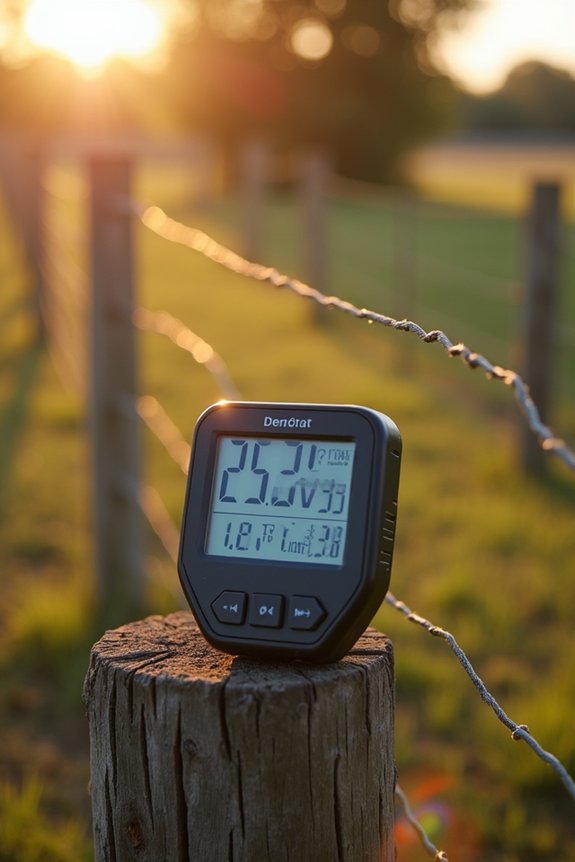
All that planning and equipment selection means nothing if I can’t confirm the fence is actually delivering the shock where it counts. You’ll want a proper fence tester designed specifically for high voltage fencing—not a pocket multimeter that’ll mislead you.
Here’s what I do: I test at the far end of the fence line where vegetation and distance cause the most voltage drop, not just near the energizer. I aim for about 5,000 volts under typical conditions as my reliability benchmark.
Test timing matters. I check after rainfall when ground conductivity improves, since soil moisture directly affects voltage levels. Weekly testing catches issues early, and I always verify after maintenance work. This routine ensures consistent fence voltage across the entire run and keeps my animals safely contained.
Choosing an Electric Fence Energizer That Holds Voltage
Once you’ve got your fence line planned and materials gathered, the energizer you select becomes your system’s backbone—it’s the piece that determines whether your voltage stays reliable across the entire run or drops to useless levels at the far end.
I recommend looking for these key features:
- Steady voltage output around 5,000 V for cattle or 2,000–3,000 V for horses under normal conditions
- Low impedance design that maintains fence output across distance and vegetation load
- Adequate joules supporting consistent volts even when your fence encounters resistance
Avoid energizers with highly variable voltages that spike then fade. Instead, choose models delivering dependable performance throughout your entire fence line. Test voltage regularly at the farthest point, especially after extending distance or adding vegetation-heavy areas. You’ll appreciate the consistent deterrence when your energizer holds its ground.