

Cut flowers do well in bright indirect light, not direct sunlight. Here’s why: direct rays accelerate wilting, fade colors, and raise temperatures around your flowers. Instead, position your vase near a window where light filters in without harsh exposure. Keep the area cool—below 65°F ideally—since heat damages petals faster than anything else. Rotate your arrangement throughout the day, moving it from bright morning spots to shaded afternoon areas. This simple strategy preserves hydration and color noticeably. There’s much more to mastering placement and rotation techniques.
Do Cut Flowers Need Direct Sunlight?
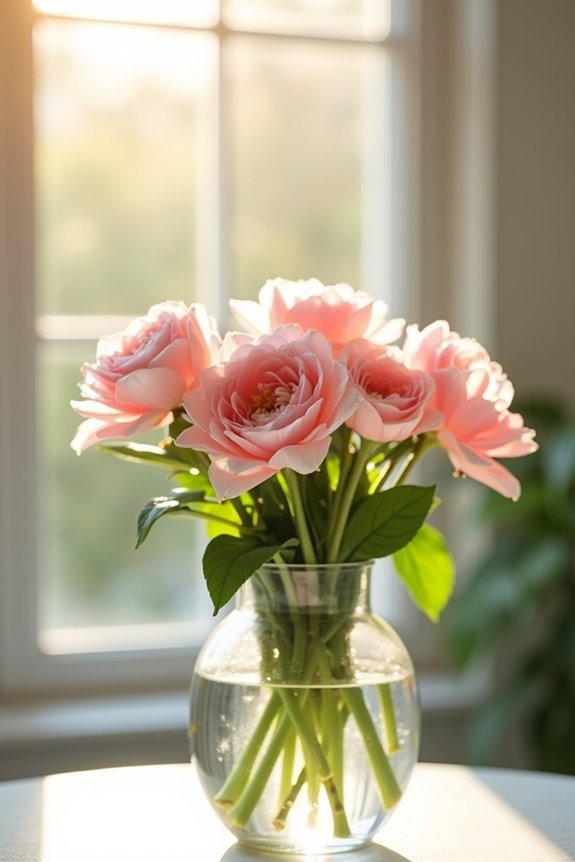
Why do so many people assume cut flowers need a sunny windowsill to stay fresh? I’ve found that direct sunlight actually works against us when keeping flowers fresh. Prolonged exposure causes wilting and speeds up drying, which shortens your arrangement’s lifespan.
Here’s what I’ve learned: indirect sunlight is better for cut flowers. A bright spot in your home—away from harsh rays—keeps stems healthier longer. Just a couple hours of direct sun can damage delicate petals and fade their colors.
The real culprit? Heat from intense light accelerates aging. Since flowers are movable, I reposition mine during peak sun hours, shifting them to shadier spots. This simple practice extends vase life noticeably. You don’t need that sunny windowsill after all!
Why Indirect Light Keeps Flowers Fresher Longer
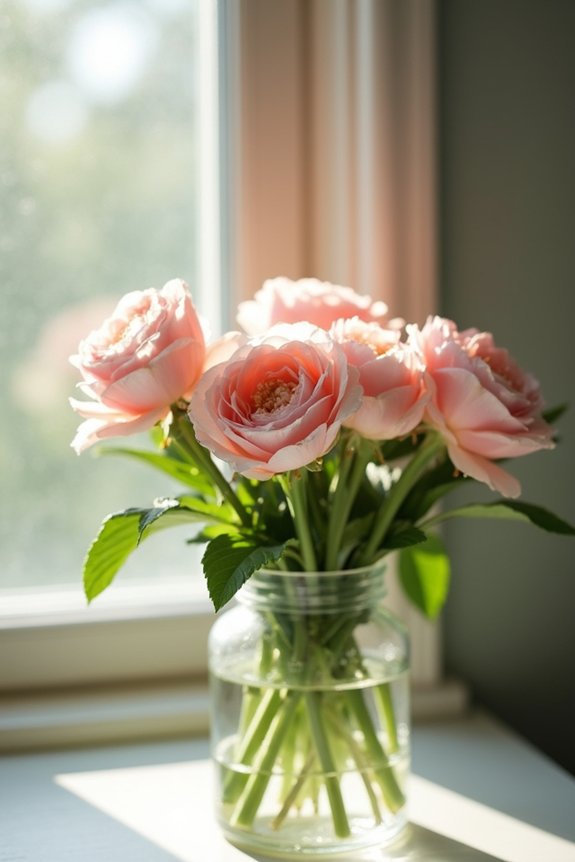
You’ll notice your cut flowers stay fresh much longer when you place them in indirect light because it prevents the heat buildup that damages their delicate petals. Indirect light protects those beautiful pigments in your flowers—the reds, purples, and pinks—from fading quickly under harsh UV rays, which means your arrangement maintains its rich colors instead of looking washed out after just a few days. By keeping temperatures moderate and pigments intact, indirect lighting extends the life of your flowers and keeps them looking fresh in your space.
Temperature Control Benefits
The cooler your vase environment, the longer your blooms will stay fresh and hydrated. When you keep flowers away from direct sunlight and heat sources, you slow down their aging process.
Heat speeds up how quickly flowers consume nutrients and water. Direct sunlight raises the temperature around your stems, causing faster evaporation. This means your flowers dry out quicker and wilt sooner.
Find a cool spot in your home, away from sunny windows and heating vents. A shaded corner on a side table works well. Your stems stay turgid, your petals remain firm, and you’ll enjoy fresher arrangements for days longer. Temperature control helps extend vase life.
UV Pigment Preservation
Have you noticed how a bouquet left on a sunny windowsill loses its color faster than one tucked in a shaded corner? That’s UV radiation at work, breaking down the pigments that make flowers beautiful.
I’ve found that indirect light offers the best UV protection for your blooms. When you place flowers away from direct sun, you’re shielding those delicate reds, purples, and blues from photo bleaching—the process that dulls their color.
| Light Condition | Color Retention | Fade Speed |
|---|---|---|
| Direct sunlight | Poor | Fast |
| Bright indirect light | Excellent | Slow |
| Shaded area | Good | Very slow |
A bright, non-direct spot maintains visibility while limiting UV-induced breakdown. I recommend positioning your vase near a window but away from direct rays. This approach keeps your flowers looking fresher longer, ensuring consistent color across your entire bouquet.
The Danger of Harsh, Direct Sunlight on Cut Blooms
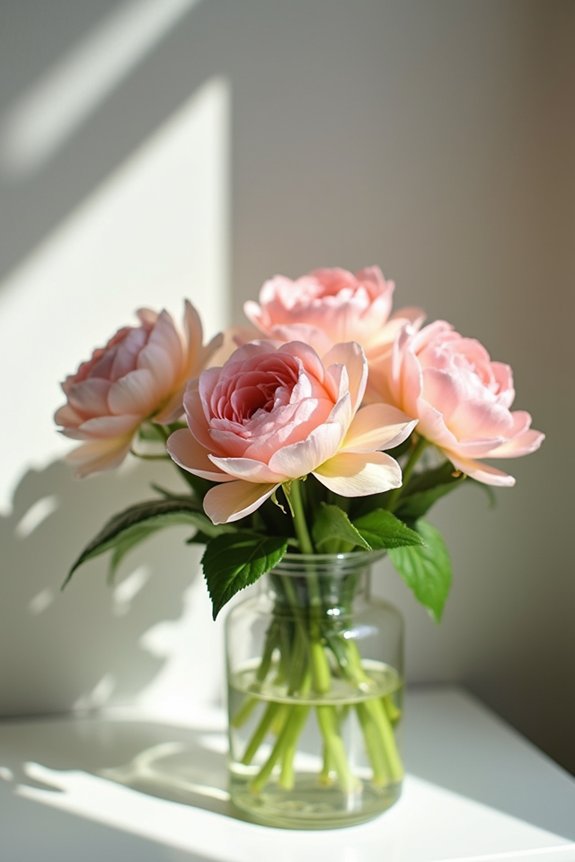
You might think bright light is always good for flowers, but direct sunlight actually works against you. UV rays fade your blooms’ pigments while the heat accelerates water loss, causing wilting to speed up. By keeping your arrangements in cool, shaded spots with indirect light instead, you’ll help your flowers stay hydrated, colorful, and fresh for longer.
UV Rays Fade Pigments
Why do your favorite blooms lose their brilliant colors after just a few days in a sunny window? UV rays from direct sunlight break down the pigments that make flowers beautiful. I’ve watched this happen—colors fade unevenly, with sun-facing petals losing vibrancy faster than shaded areas.
| Factor | Effect | Solution |
|---|---|---|
| Direct UV exposure | Rapid pigment breakdown | Move to indirect light |
| Heat from sunlight | Accelerated wilting | Use ambient lighting |
| Uneven fading | Patchy color loss | Position away from windows |
When you expose cut flowers to direct sun, you’re speeding up their aging process. The damage is often permanent. That’s why I recommend placing your vase in indirect light instead. Ambient light preserves color brightness while extending your blooms’ visual lifespan. Your flowers will last longer this way.
Heat Accelerates Wilting Process
Beyond color fading, direct sunlight poses another threat to your cut flowers: it cranks up the heat around your vase, and that’s where real trouble starts. When light heats your blooms, their metabolic rate skyrockets, burning through stored nutrients faster than you’d expect. This accelerated aging causes wilting within days rather than weeks.
Heat from sunlight isn’t the only culprit—nearby appliances and heating vents contribute significantly too. That warm spot on your windowsill? It’s actually shortening your arrangement’s life considerably.
Keeping flowers in cool, shaded environments slows dehydration dramatically. Move your vase away from direct light and heat sources. You’ll notice the difference immediately—fresher blooms that last noticeably longer.
Heat as the Real Enemy of Cut Flower Longevity
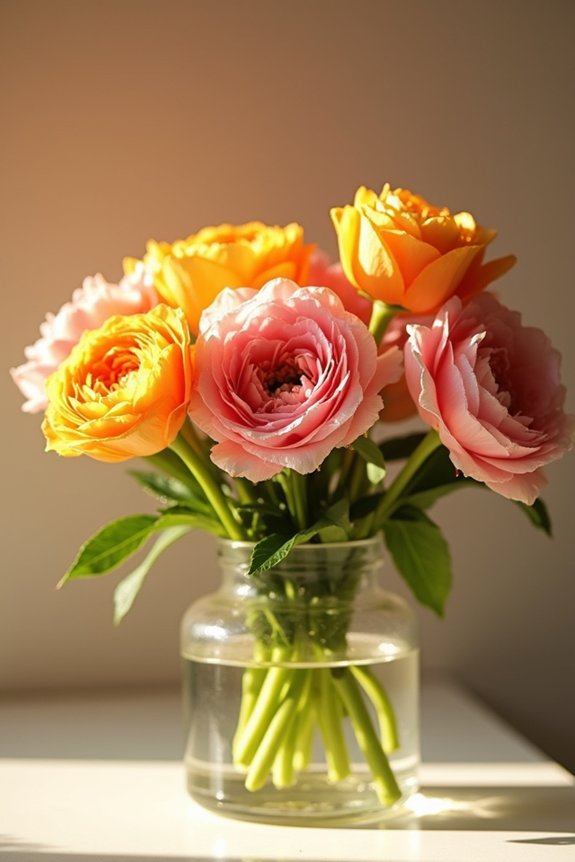
While we often fixate on light when thinking about cut flowers, heat’s the real culprit behind those drooping petals and withered stems. I’ve learned that heat accelerates your flower’s metabolic rate, burning through stored nutrients faster than anything else. Your vase life shrinks dramatically when temperatures rise because water evaporates quicker from petals and stems, causing dehydration and premature wilting.
Here’s what matters: even modest heat sources—kitchen ovens, heating vents, or certain lamps—noticeably shorten longevity if placed nearby. Direct heat exposure amplifies aging more powerfully than light alone. Keep arrangements in cool spots away from warmth, and you’ll extend freshness considerably. I recommend placing your vase in locations under 65°F for optimal results. Temperature control significantly affects how long your blooms stay fresh.
Find the Right Bright Spot for Cut Flowers
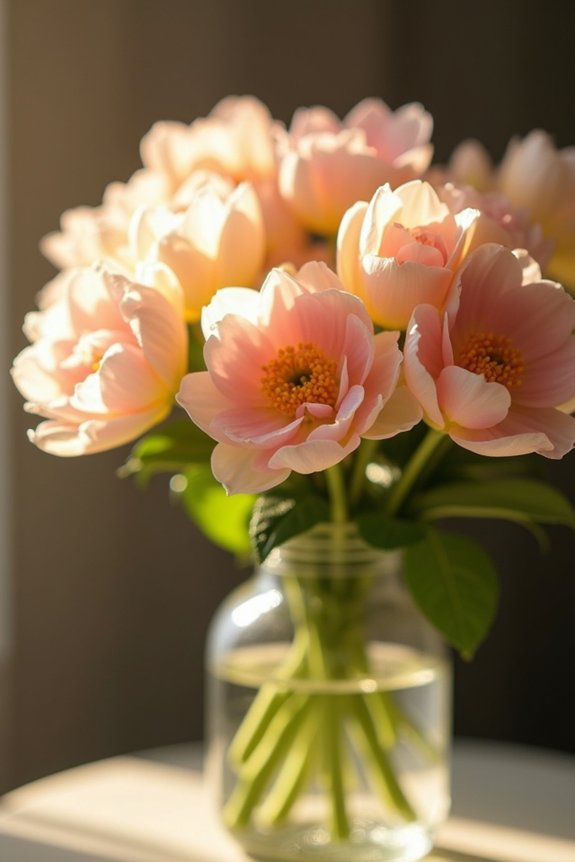
Now that you’ve got your flowers in a cool location, let’s talk about light—because placement matters just as much as temperature does. You’ll want to find a bright spot in your home that doesn’t get harsh, direct sunlight. Indirect sunlight works best here. That means a windowsill that catches ambient light without the intense midday rays beating down on your blooms.
Look for areas with natural light that feel comfortable to you—places where you’d want to read without squinting. A bright corner away from heat sources works well. If your spot gets direct sun at certain times, simply rotate your arrangement. This keeps your flowers looking fresh longer while letting you enjoy them from different angles throughout your space.
How to Identify a Heat Source Near Your Vase
You’d be surprised how many hidden heat sources lurk around your flowers—from kitchen appliances and heating vents to artificial lights that feel cool but actually emit significant warmth. Scan your room for ovens, radiators, under-cabinet lights, and electronic devices, then check whether any surface near your vase feels warm to the touch. Even LED bulbs can run hot if they’re high-wattage or enclosed, so examine your lighting setup when hunting for temperature culprits.
Common Kitchen Heat Hazards
Where does your vase sit right now? I’m guessing you haven’t considered the invisible heat sources surrounding it. Your kitchen contains several culprits that dramatically shorten vase life by accelerating water evaporation and stem wilting.
Common kitchen heat hazards include:
- Ovens and stovetops radiating warmth during cooking
- Fluorescent and LED overhead lights emitting unexpected heat output
- Heating vents and warm air from appliances like toasters
- Sunny windows and warm walls creating hidden temperature pockets
Direct exposure to these heat sources causes flowers to wilt within days. I’d recommend relocating your arrangement to a cooler, shadier spot away from these appliances. Check shelves above heat-emitting devices too—warmth rises and creates unintended hot zones. Your flowers need a stable, cool environment to last longer.
Heating Systems and Vents
Have you noticed warm air flowing from vents or heating units in your home? These heating vents are serious culprits for cutting flower freshness! Warm, dry air accelerates water loss, causing wilting and dramatically shortening your arrangement’s life.
Identify heat sources by feeling around your space—check near ovens, under-cabinet lighting, and lamps. Even “cool” bulbs emit surprising heat that builds up near vases. Move your flowers away from these zones immediately.
Your action plan: relocate your vase to a cooler spot away from all constant heat sources. If you can’t move it far, rotate the arrangement regularly to prevent persistent heat exposure on one side. This simple strategy keeps your flowers fresher longer.
Artificial Lighting Heat Output
While heating vents and appliances create obvious warm zones, the lights in your home can be sneaky culprits too. I’ve found that artificial lighting heat output varies depending on bulb type, and understanding this difference protects your cut flowers.
Here’s what I’ve learned about identifying problematic heat sources:
- Incandescent and halogen bulbs produce intense heat that’ll wilt petals quickly when placed nearby
- LED and CFL options emit considerably less heat, making them safer choices for cut flowers
- Even low-heat sources can raise surrounding temperatures enough to speed dehydration within a few feet
- Direct radiation onto water or blooms accelerates wilting more than ambient warmth alone
I recommend using a thermometer to check your display area stays below 75–80°F. Position lights from the side or above, avoiding direct contact with your vase. This simple adjustment extends vase life.
Morning vs. Afternoon Light: What’s Best for Cut Flowers?
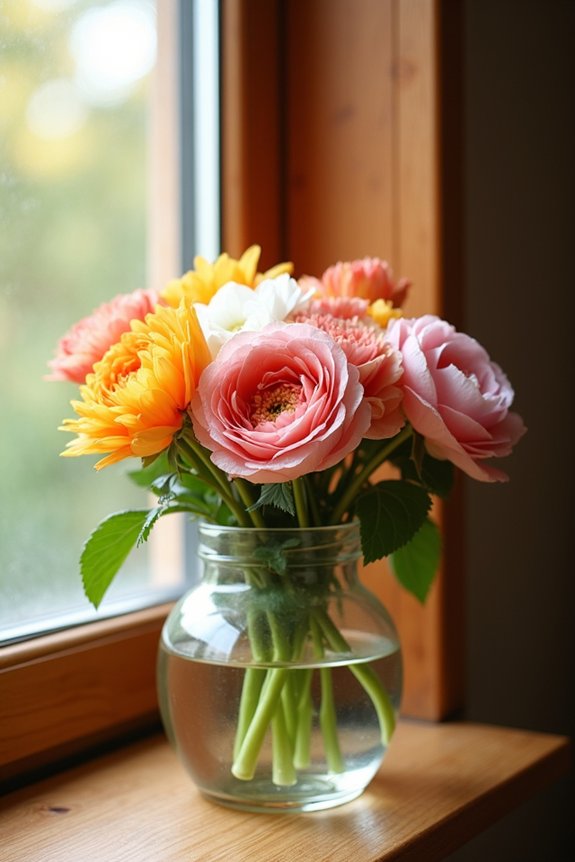
When it comes to positioning your cut flowers, timing matters just as much as brightness. Morning light is your friend because it’s gentler and won’t stress your blooms the way afternoon sun does. I’ve found that indirect morning light keeps your vase cooler, which slows dehydration and extends how long your flowers last.
Direct afternoon sun, though, raises temperatures and increases UV exposure—both accelerate pigment loss and speed up aging. The heat can actually wilt your flowers faster than you’d expect.
Here’s what I recommend: place your arrangement in a bright spot that catches morning light but avoids direct afternoon rays. If your flowers end up in a bright area, rotate or relocate them during midday to minimize sun exposure and keep them fresher longer.
Position Cut Flowers Away From Heat Sources
Beyond timing your light exposure, you’ll want to think carefully about where heat enters the picture—because warmth is actually one of your flowers’ biggest enemies.
Heat dramatically shortens vase life by speeding up metabolism and increasing evaporation from petals and stems. I recommend keeping arrangements away from these common heat sources:
- Ovens and stovetops
- Heating vents and radiators
- Under-cabinet lighting
- Direct sunlight through windows
Even normal indoor lighting contributes warmth that compounds damage. Rotate your arrangements regularly to avoid prolonged exposure to any single warm spot. When you’re unsure about placement, choose a cool, shaded area or indirect light position instead. This approach maintains hydration and color freshness far better than warmer locations. Your flowers will remain fresher and last longer when positioned in cooling conditions away from heat sources.
Can You Move Cut Flowers to Different Locations?
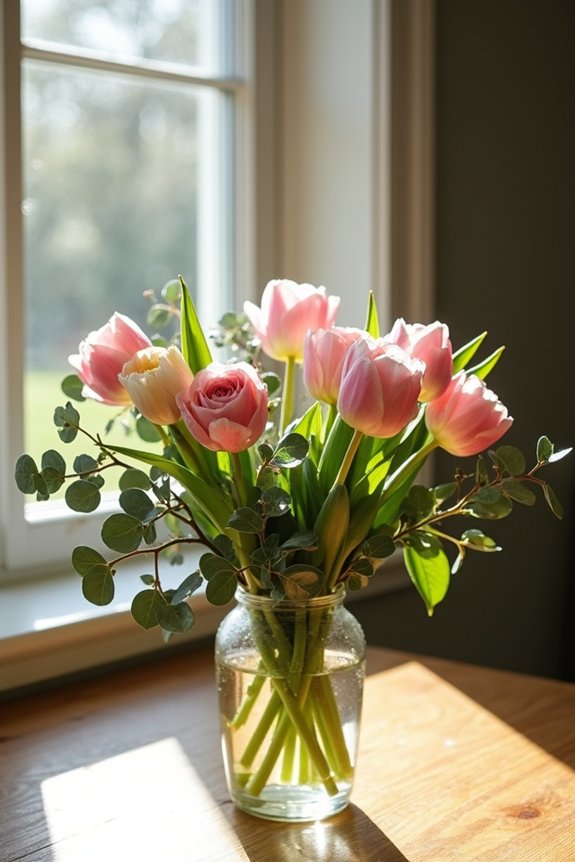
You can absolutely move your cut flowers around your home to keep them fresh longer, and I’d encourage you to do it strategically! Rotating your arrangement away from direct sunlight and heat sources throughout the day helps protect the petals while maintaining that fresh look you want. By shifting them to cooler, shadier spots during the warmest hours, you’re giving your flowers a break that can considerably extend their vase life.
Relocation for Optimal Care
Have you considered that moving your vase throughout the day can extend the life of your arrangement? Strategic relocation prevents flowers from experiencing harsh, direct sunlight that causes premature wilting and drying.
Here’s how to optimize care through light and relocation:
- Position near bright, indirect light during morning hours when sun angles are gentler
- Rotate arrangements away from south-facing windows during peak afternoon heat
- Move vases away from heat sources like ovens, heating vents, and under-cabinet lighting that accelerate water evaporation
- Reposition for events or displays while maintaining visibility and enjoyment
This approach balances practical flower care with aesthetic placement. Since flowers are mobile by design, you create flexibility in how you display and enjoy your blooms throughout your home.
Rotation Maintains Flower Longevity
When does your vase receive the most direct sunlight—and is that actually helping or hurting your blooms?
Rotating cut flowers throughout your space extends their longevity. Move arrangements away from heat vents, ovens, and direct intense light for extended periods. If your favorite display spot gets warm or sunlit during certain hours, transfer the bouquet to a cooler area with indirect light.
This rotation strategy manages uneven aging effectively. By repositioning regularly, you keep blooms evenly hydrated and reduce rapid edge wilt. Movement allows you to maintain your preferred aesthetics while optimizing environmental conditions. Check your arrangement’s location daily, shifting it as sunlight patterns change throughout your home. You’re slowing wilting while preserving vitality—and that’s the goal.
Keep Cut Flowers Cool to Extend Freshness
Temperature plays a critical role in how long your cut flowers stay fresh. Heat accelerates water loss and wilting, so keep your arrangement away from sources of warmth. This simple step extends your flowers’ lifespan.
Here’s what to do to maintain cool conditions:
- Position vases in indirect sunlight rather than direct rays, which increase temperature
- Avoid placing arrangements near ovens, heating vents, or under-cabinet lights
- Move flowers to cooler, shaded spots during warmer parts of the day
- Check your room temperature—ideally keep it between 65-72°F
Use Artificial Light When You Lack Natural Light
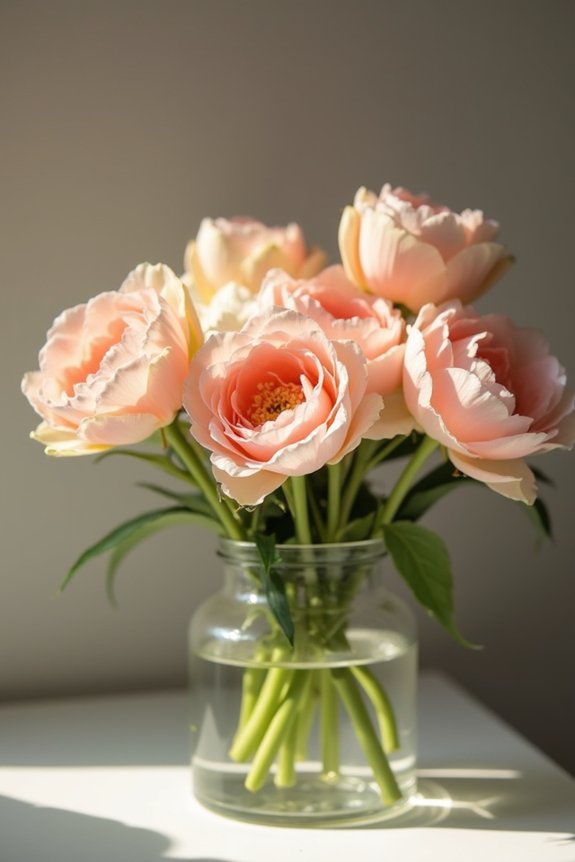
What if your favorite display spot sits far from windows or in a naturally dim corner? You can still enjoy cut flowers! Artificial light supplements insufficient natural light effectively. I recommend choosing bright lighting that’s non-harsh—fluorescent or LED warm-white options work well. They provide steady spectrum without excessive heat that damages petals.
Here’s what I’ve learned about setup:
| Light Type | Heat Level | Best Use | Distance |
|---|---|---|---|
| Fluorescent | Low | General display | 12-18 inches |
| LED warm-white | Very low | Extended display | 12-24 inches |
| Direct spotlight | High | Avoid | N/A |
| Indirect illumination | Low | Recommended | Varies |
Position lights away from your vase to minimize heat exposure and dehydration. Combine artificial light with occasional natural light when possible. This balanced approach keeps your arrangement looking fresh longer.
When to Use Your Fridge for Cut Flowers
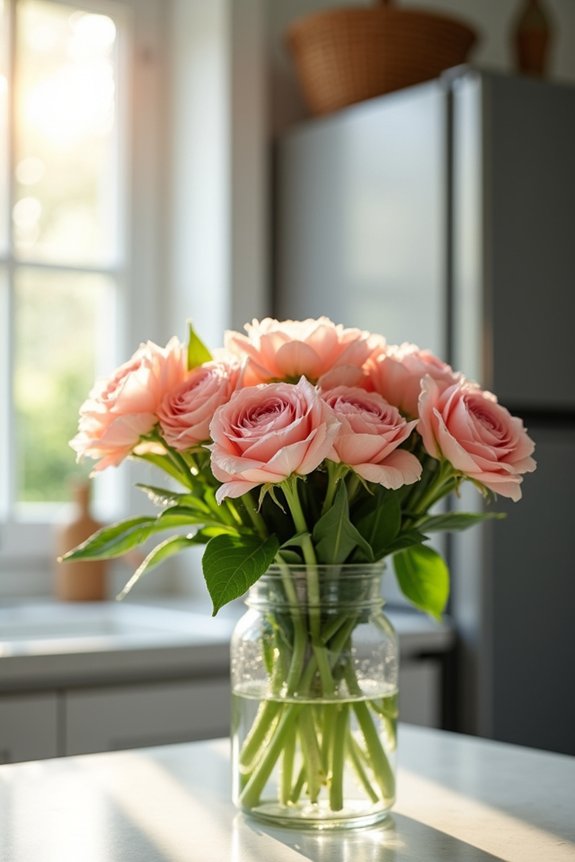
Your refrigerator can become your hidden asset for keeping cut flowers fresh longer. Strategic refrigeration around special occasions helps extend your vase life substantially. Here’s when you’ll want to use this approach:
- Short-term storage: Use your fridge for a few hours before displaying flowers at events
- Temperature control: Keep settings between 34-40°F (1-4°C) to balance hydration and preserve pigments
- Ethylene prevention: Remove ripe fruit nearby, since it accelerates aging and wilting
- Gradual acclimation: Move flowers slowly from cold storage to room temperature to prevent shock
Treat refrigeration as a temporary solution rather than permanent storage. This method mimics professional florist conditions without damaging delicate blooms. You’re effectively giving your flowers a restorative pause before they take center stage in your home.
Placement Mistakes That Kill Cut Flowers Fast
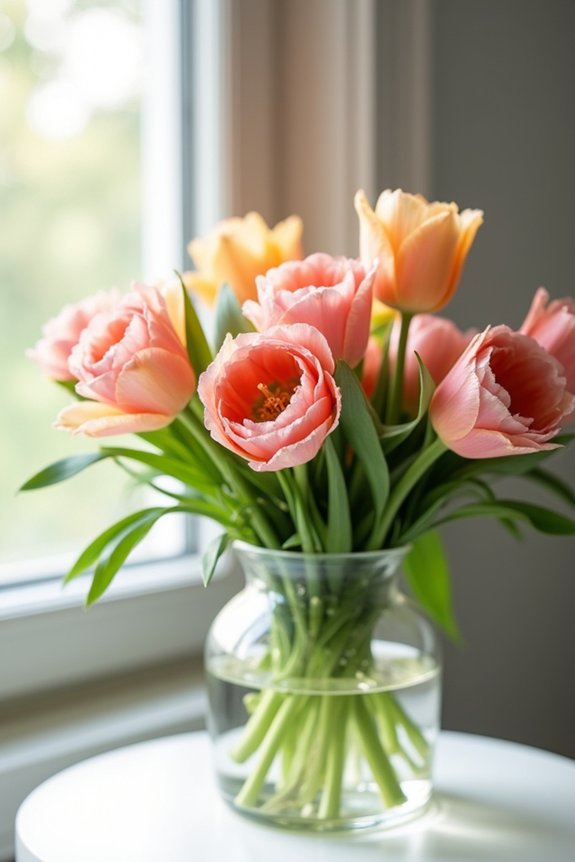
Where you put your vase matters just as much as what’s inside it. Direct sunlight wilts flowers within hours, so indirect light is preferable. Heat from vents, lamps, and ovens accelerates aging faster than light exposure alone—this is a common mistake.
Choose a cool, shaded spot with gentle natural light. Rotate your arrangement to different cooler areas throughout the day. This simple strategy extends vase life. Avoid placing flowers near heat sources, and skip harsh, prolonged lighting. A bright location with indirect light and occasional artificial illumination keeps your flowers visible without overheating them. You know your home’s cool spots best.
The Ideal Placement: Balancing Light, Cool Temperature, and Stability
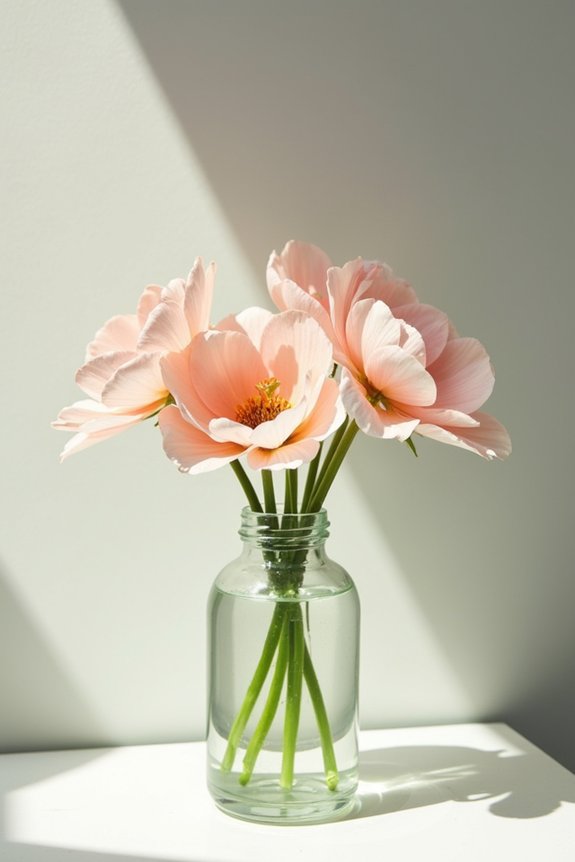
How do you find that sweet spot in your home where flowers last longer? Consider these factors:
The ideal placement balances three key elements:
- Indirect sunlight keeps colors bright without causing wilting or rapid drying
- Cool temperature matters more than light—heat accelerates flower decline faster than anything else
- Stability keeps your arrangement upright and undisturbed
- Rotation protects flowers if your chosen spot gets warm or sunny during certain hours
Choose a cool, shaded area away from heat sources like ovens, vents, and radiators. A bright corner with indirect light works well. If your space warms up periodically, rotate the arrangement to shield the blooms. This careful placement preserves hydration and color, extending the life of your flowers.
Rotate Cut Flowers Throughout the Day
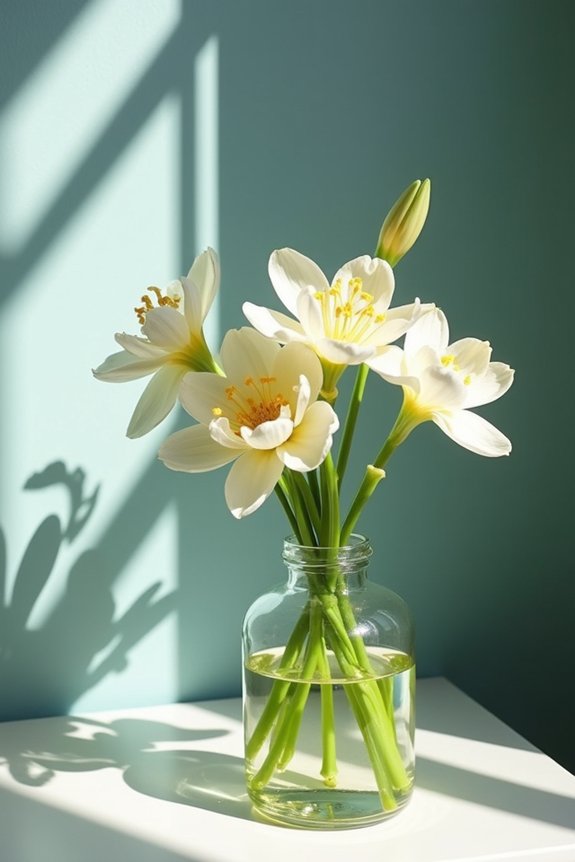
Think of your home like a sun map—certain spots warm up or brighten as the day progresses, and those shifting conditions can stress your flowers faster than you’d expect.
Rotating arrangements throughout the day keeps petals evenly hydrated and extends vase life considerably. When you move flowers from a warm afternoon spot to a cooler, indirect-light area, you’re protecting them from heat stress that’ll wilt them prematurely.
| Time of Day | Action |
|---|---|
| Morning | Place in bright indirect light |
| Afternoon | Rotate to shaded, cool spot |
| Evening | Return to display location |
Here’s what I do: gently reposition arrangements between bright indirect spots and shaded areas. I’ll quick re-cut stems and refresh the water to minimize stress during changes. This balancing act keeps your flowers looking fresh while maintaining their longevity—it’s worth the effort!