

You can paint vinyl fences, but you’ll need epoxy-based acrylic paint and vinyl-specific primer—standard paint won’t stick to vinyl’s smooth, non-porous surface.
Clean thoroughly with soapy water, lightly sand with 180–220 grit sandpaper, then apply primer and two thin paint coats.
Choose lighter colors to prevent heat warping.
Expect 7 days full curing time and know that painting voids your warranty.
Though doable, replacement with pre-colored vinyl often makes more financial and practical sense long-term.
Should You Paint Your Vinyl Fence?
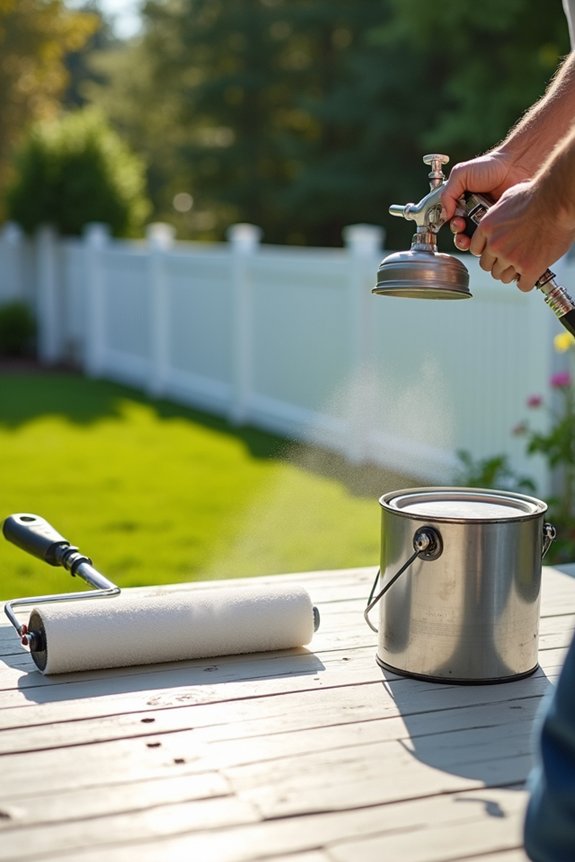
Should You Paint Your Vinyl Fence?
Why would you paint a vinyl fence when it’s designed to be maintenance-free?
I understand—you’re drawn to a specific color that doesn’t come standard. Before you grab a brush, consider what you’re really signing up for. Painting vinyl fence requires serious surface prep, including cleaning and light abrading, plus vinyl-specific primer and epoxy-based paint. Here’s the catch: this actually increases long-term maintenance. Paint peels over time on vinyl’s non-porous surface, demanding touch-ups you wouldn’t otherwise need.
Painting vinyl fence demands extensive prep work and specialized materials, but ultimately increases maintenance through inevitable paint peeling.
There’s more. Dark vinyl fence paint risks warping panels through heat absorption. Plus, painting voids your warranty.
Instead, explore pre-colored vinyl options or decorative alternatives offering genuine durability. If you’re committed to painting, understand that you’re trading the fence’s fundamental advantage—low maintenance—for aesthetic control. Make your choice carefully.
Why Paint Won’t Stick to Vinyl Fences
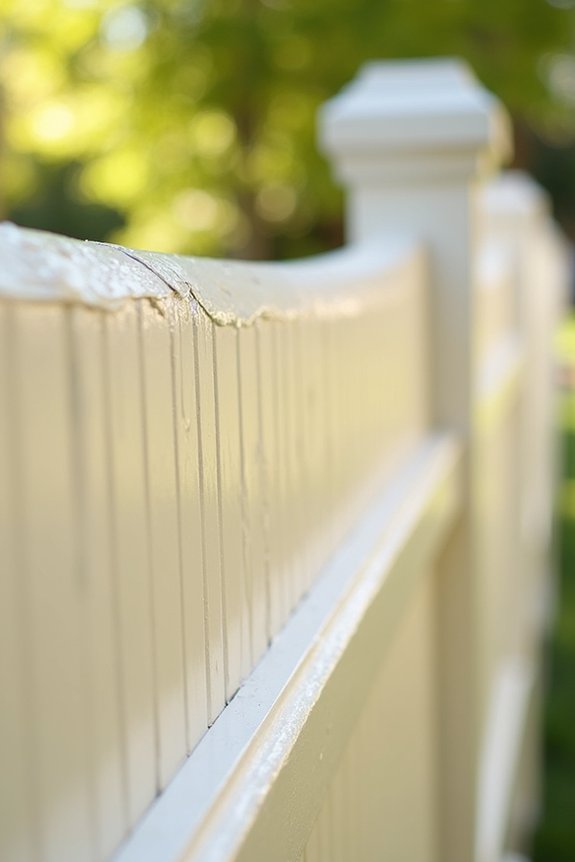
Paint struggles to bond with vinyl because the material’s smooth, non-porous surface works against adhesion—the opposite of what happens with wood or metal. Standard paint simply slides off without gripping the fence.
Here’s why adhesion failure happens: vinyl doesn’t absorb anything. Unlike porous materials that accept paint, vinyl repels it. This slick surface means you’re fighting physics from the start.
Temperature swings make things worse. Vinyl expands and contracts constantly, causing paint to crack and peel within a year or two. Dark colors trap heat, increasing warping risks.
That’s where vinyl primer and epoxy-based acrylic paint come in. These specialty products are designed specifically for vinyl’s challenges. Proper surface preparation—thorough cleaning and light sanding—becomes necessary.
Skip these steps, and your work will fail.
Best Paint Types and Primers for Vinyl Fences
Now that you understand why standard paint fails on vinyl, it’s time to choose the right products that’ll actually stick. I recommend using epoxy-based acrylic paint specifically designed for vinyl surfaces. This paint type bonds exceptionally well to non-porous materials where regular paints struggle.
Before applying your top coat, you’ll need a vinyl-specific primer. This bonding primer creates the smooth foundation that helps your vinyl-safe exterior acrylic paint adhere properly. Think of it as creating a welcoming surface for your paint.
Skip latex and oil-based options entirely—they’ll crack and peel as your fence expands and contracts. For best results, apply one primer coat followed by two thin paint coats, allowing full drying between each layer. Choose lighter colors to prevent heat absorption and warping from sun exposure. These primers for vinyl fences make the difference between projects that last and those that fail.
Avoid Dark Colors: Heat, Warping, and Why It Matters
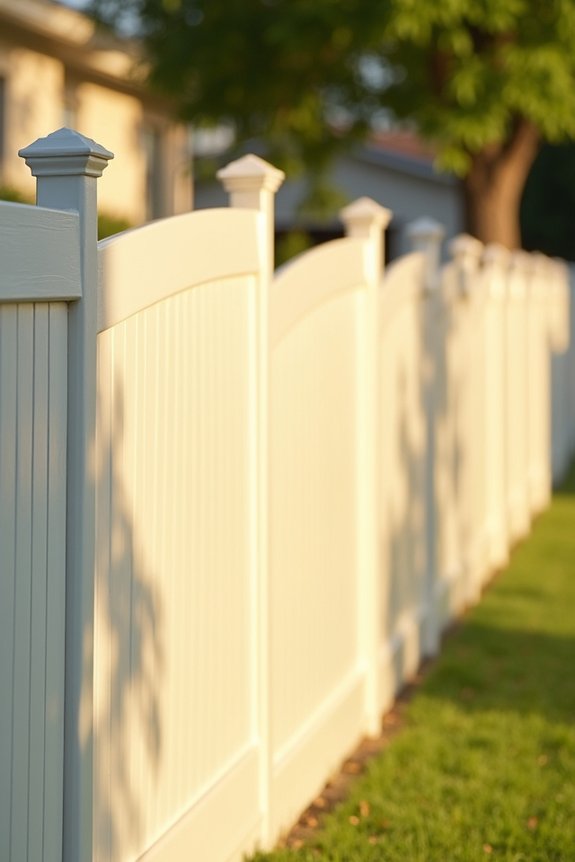
You’ll want to steer clear of dark paint colors on your vinyl fence because they absorb heat and can cause the panels to warp or bend, especially during hot summers. When dark colors heat up in the sun, they trigger expansion that creates gaps at the joints and distorts the fence’s shape. Instead, choose lighter colors that reflect sunlight and keep your fence cooler, protecting both its appearance and your warranty coverage.
Heat Absorption And Warping
Why do dark-colored vinyl fences sometimes bow or warp in the summer sun? The answer lies in heat absorption. When you apply dark coating colors to vinyl, they absorb considerably more sunlight than lighter alternatives. This absorbed heat raises your fence’s surface temperature dramatically, creating stress on the material.
Here’s what happens: vinyl’s smooth, non-porous surface amplifies temperature differences between your coating and the surrounding air. This causes accelerated thermal expansion and contraction cycles. Over time, this constant stress weakens the vinyl panels, leading to warping or bowing.
Light-colored coatings reflect sunlight instead, minimizing heat buildup and reducing warping risk considerably. By choosing lighter, vinyl-specific paints, you protect your fence’s structural integrity while maintaining its appearance. Careful coating color selection prevents costly damage over time.
Color Selection Best Practices
Understanding heat absorption sets the stage for your most important decision: picking the right paint color. I’ll guide you toward selections that resist heat and warping.
What matters most for your color selection:
- Choose light or off-white hues that minimize heat buildup and thermal stress
- Avoid dark colors that trap excessive heat, causing expansion and contraction cycles
- Select high-quality vinyl-safe paint with appropriate primer for superior adhesion
- Prioritize heat/warp resistance over aesthetic preferences alone
Lighter shades maintain paint longevity by reducing temperature fluctuations on your fence substrate. When you apply primer before paint, you’re investing in durability. Dark colors accelerate expansion cycles, leading to cracks and paint failure. Lighter selections protect your investment while keeping your fence looking sharp for years.
How to Deep Clean Your Vinyl Fence Before Painting
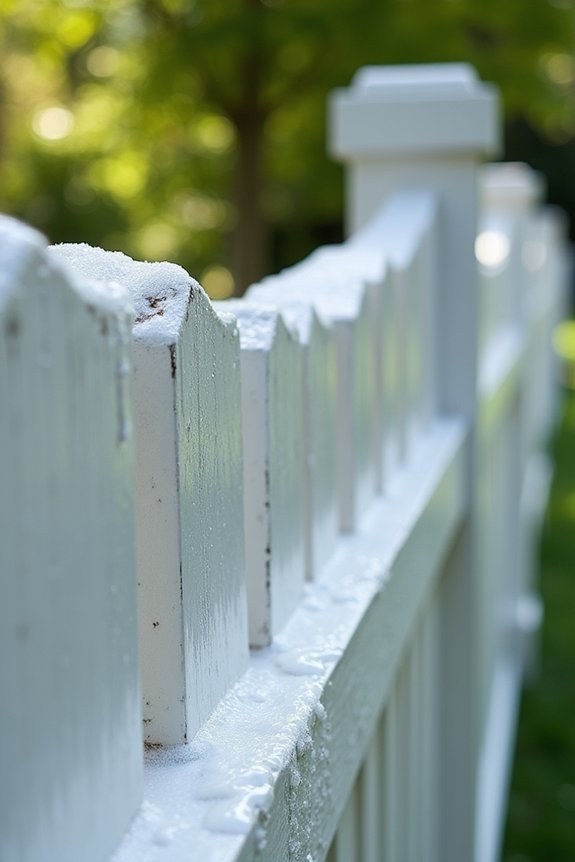
Before you pick up a paintbrush, your vinyl fence needs a thorough cleaning to ensure the paint adheres properly and lasts for years.
I recommend starting with soapy water and a soft sponge, gently scrubbing the entire surface. For stubborn stains, a vinegar and water mixture works well. You can also use a pressure washer on low settings to blast away grime safely without damaging your vinyl fence.
| Cleaning Method | Best For | Time Required | Effort Level | Drying Time |
|---|---|---|---|---|
| Soapy water & sponge | General dirt | 2-3 hours | Low | 24 hours |
| Vinegar mixture | Stubborn stains | 1-2 hours | Medium | 12 hours |
| Pressure washer | Heavy grime | 1 hour | Low | 12-24 hours |
| Combination approach | Deep clean | 3-4 hours | Medium | 24+ hours |
| Final inspection | Quality check | 30 minutes | Low | N/A |
Allow your fence to dry completely before painting. Humidity delays drying, so choose dry weather conditions for best results.
Sanding Your Vinyl Fence: When and How to Do It Right
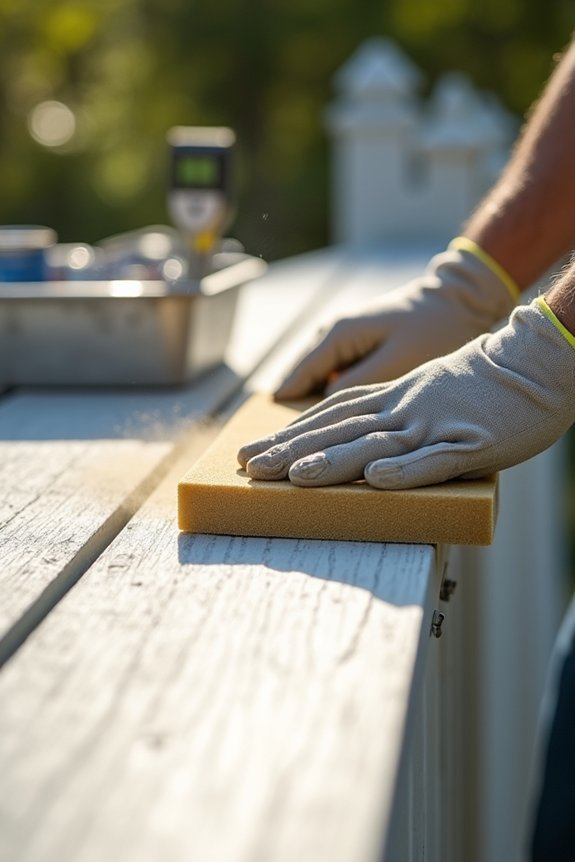
Once you’ve cleaned and degreased your fence, you’ll want to assess whether sanding is necessary—if your vinyl still feels slick or glossy, light sanding with fine-grit sandpaper (180–220 grit) will roughen the surface and help primer and paint stick better. I recommend working section by section with gentle strokes that follow the vinyl’s grain, avoiding heavy pressure that could damage the material. After sanding, you must thoroughly wipe or rinse away all dust and let everything dry completely, since leftover particles will create texture problems or pinholes in your final coating.
Fine-Grit Preparation Technique
Why does sanding matter when you’re painting vinyl? Fine-grit sanding creates the grip your paint needs to stick properly. This is how to handle this surface preparation step:
- Use 220–320 grit sandpaper for that perfect light abrading without removing shine
- Sand along the vinyl panel grain to prevent cross-grain scratches from showing through
- Stop before you burn through—aim for matte, slightly textured surfaces only
- Wipe thoroughly with a damp cloth, then let everything dry completely
This technique provides excellent adhesion for your vinyl primer and topcoat. You’re not roughing up the fence; you’re giving paint the right foundation. Once dust settles and surfaces dry, you’ll be ready for that primer application that prepares your fence for painting!
Abrading For Paint Adhesion
The smooth, glossy surface of vinyl fencing actually works against you when you’re trying to get paint to stick—and that’s where light sanding comes in. I recommend using fine-grit sandpaper (180–220 grit) to create a micro-rough surface that improves both primer and paint adhesion. You’ll sand in the direction of the panel grain to minimize visible scratches, especially if your fence is shiny. The goal isn’t aggressive sanding—avoid deep grooves that compromise vinyl integrity. Instead, aim for a uniform, dull finish that balances adhesion with durability. After sanding your vinyl fence, wipe everything down with a damp cloth, then let it dry completely before priming. This preparation step is essential for proper paint application.
Primer: Why It’s Essential (and Why DIYers Skip It)
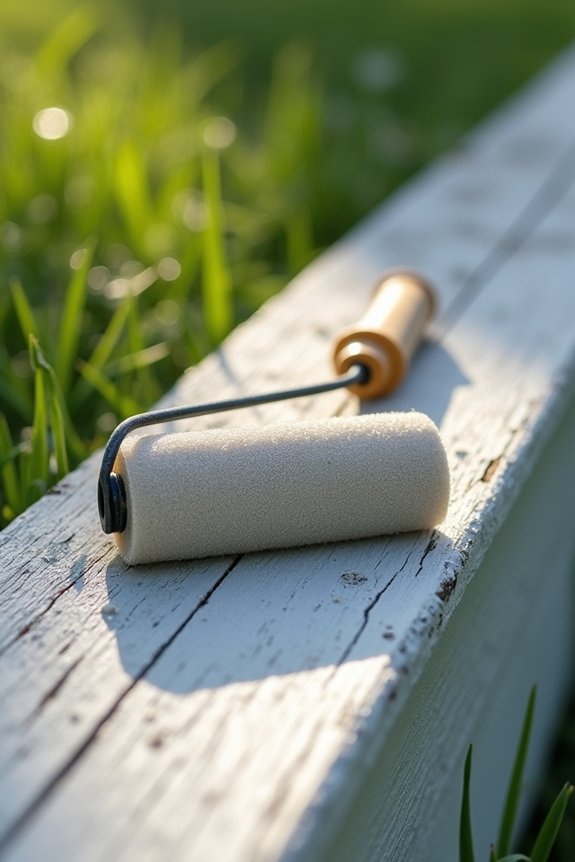
I’ll be honest—most DIYers skip primer when painting vinyl fences, and it’s almost always a mistake.
Vinyl’s slick, moisture-repellent surface demands a vinyl primer to achieve proper adhesion. Without it, your topcoat won’t grip the fence properly, leading to peeling and premature failure. Here’s why you shouldn’t skip this step:
- Improves adhesion on non-porous surfaces
- Creates a uniform base for your topcoat to bond
- Reduces mold and mildew growth by sealing the surface
- Minimizes future peeling and cracking with epoxy-based formulas
Use a vinyl-specific bonding primer—it’s your insurance policy. Apply thin, even coats and let it dry completely before painting your topcoat. Taking this extra time prevents costly repainting later.
How to Paint Your Vinyl Fence in Even, Thin Coats
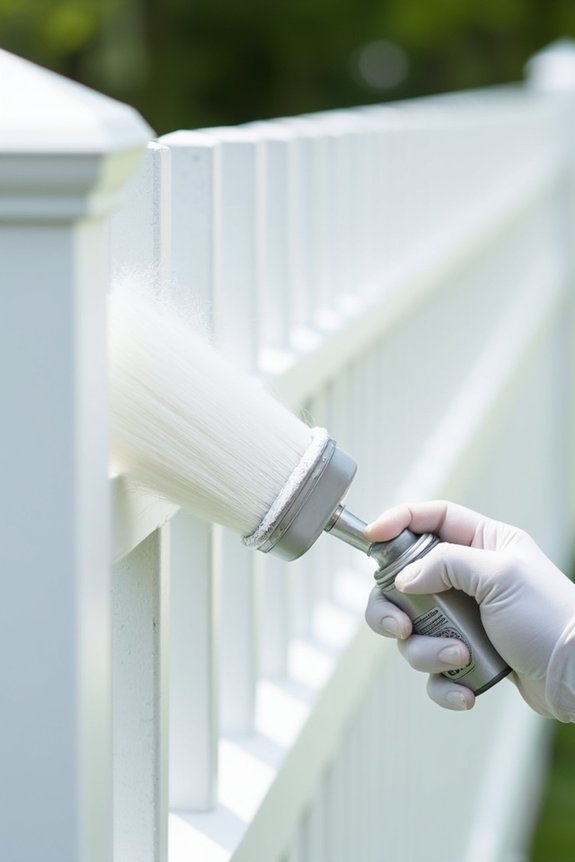
Once you’ve primed your fence properly, how you apply that paint matters just as much as what you’re using. I recommend using a spray method for even coverage, though brushing works fine too. Apply your epoxy-based acrylic paint in thin coats rather than one thick layer—this prevents runs and peeling that will damage your work.
Work in manageable sections, following the vinyl panel grain to keep everything looking natural. Let each coat dry completely according to manufacturer instructions before adding the next one. You’ll want at least two coats for solid, even color on that smooth vinyl surface. These thin, multiple coats create a professional finish that lasts longer than shortcuts.
How Long Paint Takes to Cure on Vinyl (and Why It Matters)
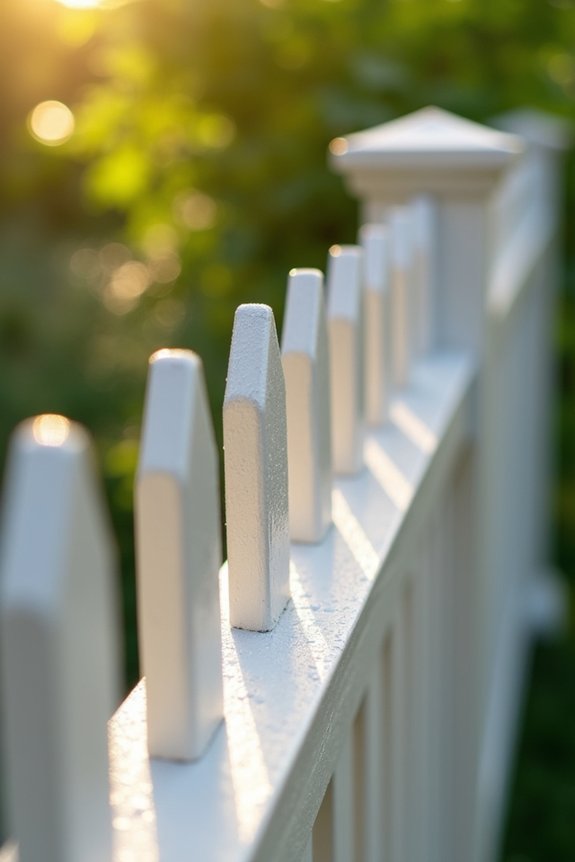
Patience during the curing process is just as important as the painting itself—skip this step, and you’ll risk undoing all your hard work. I’ve learned that vinyl fence paint cure time varies based on several factors you’ll want to monitor:
- Surface drying: Expect 24–72 hours in dry, warm conditions before your paint feels dry to touch
- Full curing: Plan 7 days before exposing your fence to heavy moisture or foot traffic
- Humidity impact: High humidity substantially extends cure times and can cause adhesion problems
- Temperature requirements: Keep conditions between 50°F and 90°F for optimal results
Following manufacturer recommendations protects your investment. Even when the surface feels ready, solvents continue curing deeper within the film for up to 21 days. You’re joining experienced fence painters who understand that rushing this stage compromises durability and appearance.
How Painting Voids Your Fence Warranty
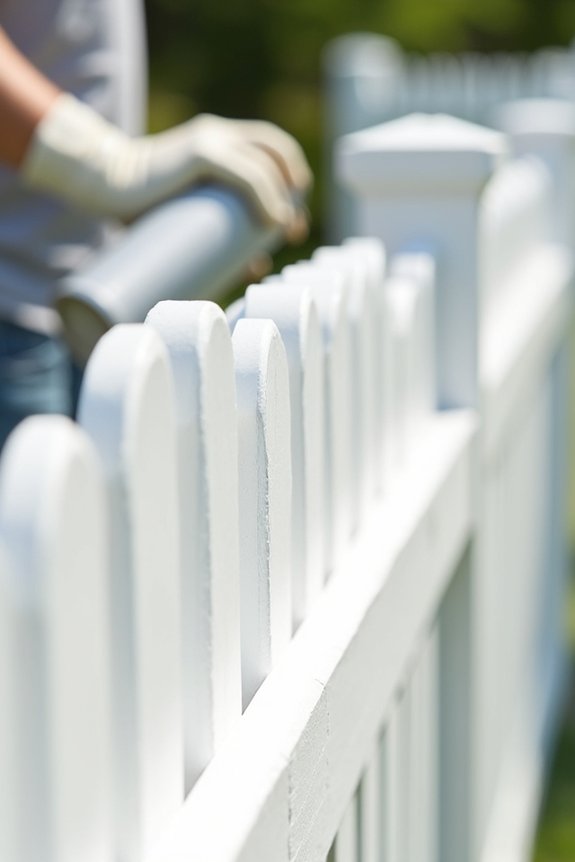
Before you pick up that brush, you’ll want to understand that most vinyl fence manufacturers explicitly state painting can void your warranty coverage. Warranty voiding happens because manufacturers can’t guarantee how non-original finishes perform over time.
When you apply paint to vinyl, you’re taking responsibility for potential issues. Adhesion failure—where paint peels or bubbles—often isn’t covered once you’ve painted. Warping and damage from UV exposure also fall outside manufacturer warranty protection after vinyl fence painting occurs.
| Risk | Coverage | Your Role |
|---|---|---|
| Peeling paint | Void | Monitor closely |
| Warping | Void | Accept responsibility |
| UV damage | Void | Plan maintenance |
| Adhesion failure | Void | Use quality primers |
| Discoloration | Void | Expect changes |
Always review your specific fence’s documentation before painting. Different brands have different rules.
Better Alternatives to Painting Your Vinyl Fence
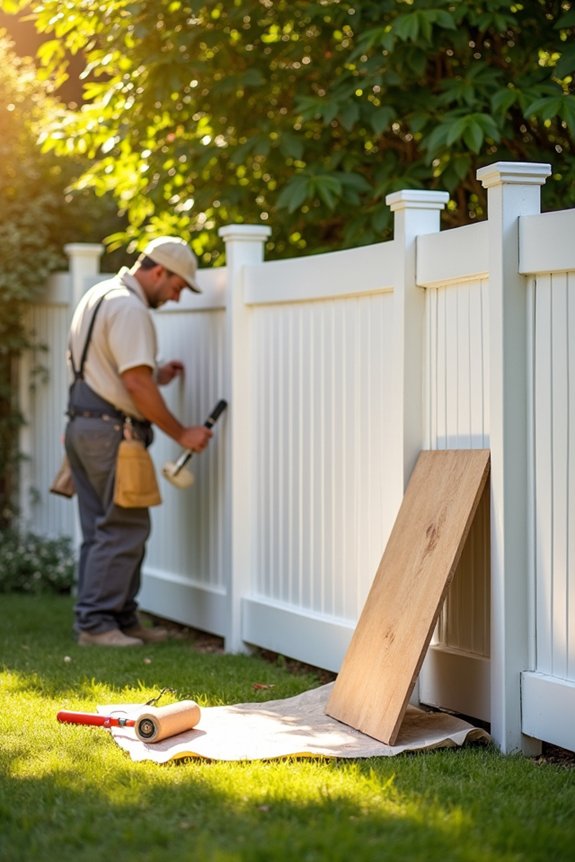
Before you grab a paintbrush, explore options that work with your vinyl rather than against it. You can replace select panels or your entire fence with pre-colored vinyl, which resists fading and chipping far better than any paint job would. You might also improve your fence’s appearance through decorative post caps, solar lighting, or strategic landscaping that draws attention away from the fence itself.
Replace With Colored Vinyl
If you’re tired of the painting cycle, replacing your fence with pre-colored vinyl might be the solution you’ve been looking for.
Pre-colored vinyl offers genuine advantages for homeowners who want durability without constant upkeep. Here’s what makes this alternative compelling:
- Eliminates repainting – UV inhibitors and color retention additives keep your fence looking fresh for 25+ years
- Resists fading and chipping – Pre-colored surfaces outperform painted ones significantly
- Reduces long-term maintenance – You’ll skip the endless painting vinyl fence cycles
- Supports warranty considerations – Matching house or scenery colors during installation prevents aesthetic mismatches
Yes, the upfront cost exceeds painting alternatives. However, you’ll recoup that investment by avoiding repeated repaint cycles. When installation includes proper expansion gaps, drainage, and solid mounts, your colored vinyl fence resists warping and sagging. You’re joining homeowners who’ve moved beyond painting maintenance entirely.
Enhance Without Paint
Rather than committing to the painting cycle, you can transform your vinyl fencing’s appearance through decorative enhancements that preserve your warranty and skip the maintenance headaches.
Adding decorative post caps and solar lighting refreshes the look while keeping the fence surface untouched. Landscaping near your fence creates color contrast—plant native shrubs or flowering beds to soften that white backdrop.
You can also hang lightweight garden art and ornaments directly on panels. These touches add personality without altering anything permanently.
If you want a more noticeable change, consider replacing specific panels with pre-colored vinyl options. This approach gives you the enhanced appearance you want while staying maintenance-free long-term. These alternatives let you achieve the look you’re after while protecting your investment and keeping upkeep minimal.
When Replacement Makes More Sense Than Painting
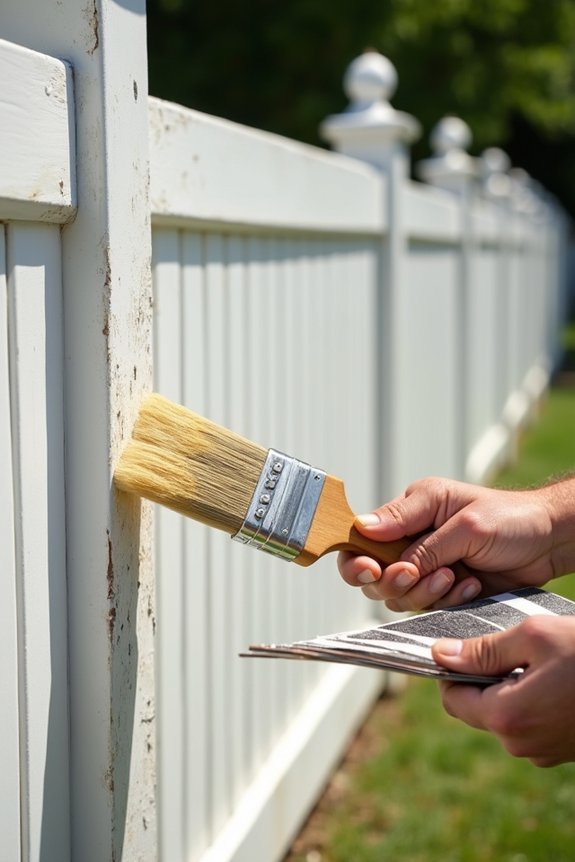
Why spend time and money painting a fence that might not hold up to the effort? I’ve learned that replacement often makes more long-term sense than painting your vinyl fence.
Here’s why you should consider replacing instead:
- Quality vinyl lasts 25+ years, reducing ongoing maintenance and repaint cycles that drain your budget
- Painting voids your warranty, leaving you unprotected against defects or installation issues
- Fading and warping persist even after repainting—these underlying problems won’t disappear with a fresh coat
- Color matching proves difficult, and heat expansion can cause adhesion failures over time
Yes, replacement costs $4,000–$7,000 versus $1,500–$2,500 for painting. But that upfront investment pays dividends through extended lifespan and minimal maintenance. After warranty expiration or when damage is significant, replacing panels with new colored vinyl makes financial sense for homeowners seeking lasting solutions.