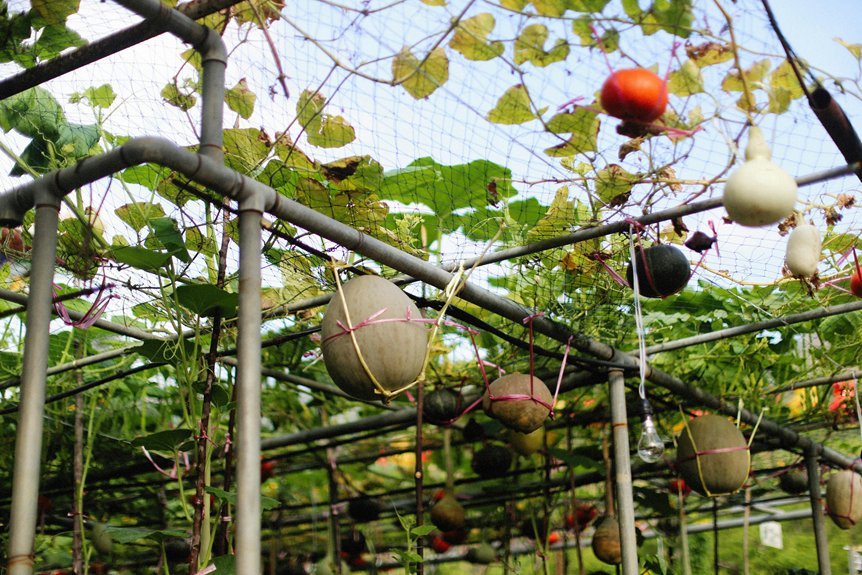
I’ve found that trellising squash frees up precious bed space—you’ll fit one plant per square foot instead of sprawling vines everywhere.
Choose vining varieties like Tromboncino Rampicante or Butternut, then build a sturdy north-south trellis using cattle panels on 6-foot posts.
Plant seeds three feet apart, thin seedlings, and gently tie stems upward as they grow.
You’ll get larger, uniform yields with healthier leaves and easier pest monitoring.
Proper irrigation, pruning, and support systems maximize your harvest.
Understand Why Trellising Transforms Your Squash Yield
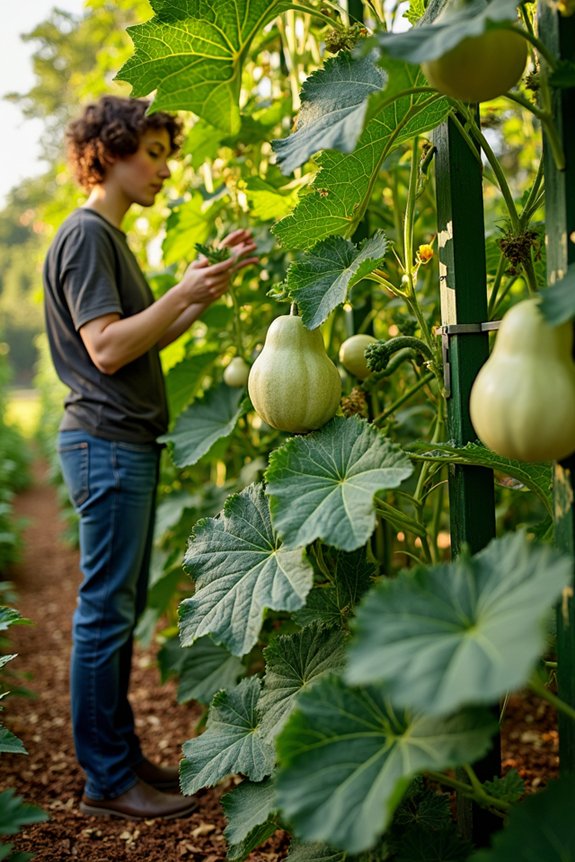
Several reasons make trellising effective for squash growers. Vertical growing changes how you use garden bed space. Those 10–15 foot vines that sprawl across ground now climb upward, letting you plant one squash per square foot on a trellis instead.
Disease reduction occurs when leaves stay drier with improved airflow. You’ll notice fewer rot problems and stronger plants overall. Better sun exposure strengthens your squash from all angles.
You can inspect trellised vines easily for squash vine borers and squash bugs, catching pest problems early. The yield benefits are substantial—you can grow larger fruit in compact areas compared to ground-level planting. Your harvest becomes more manageable and uniform when a sturdy trellis guides those productive vines upward.
Build a Sturdy Trellis Structure and Orient It for Sun
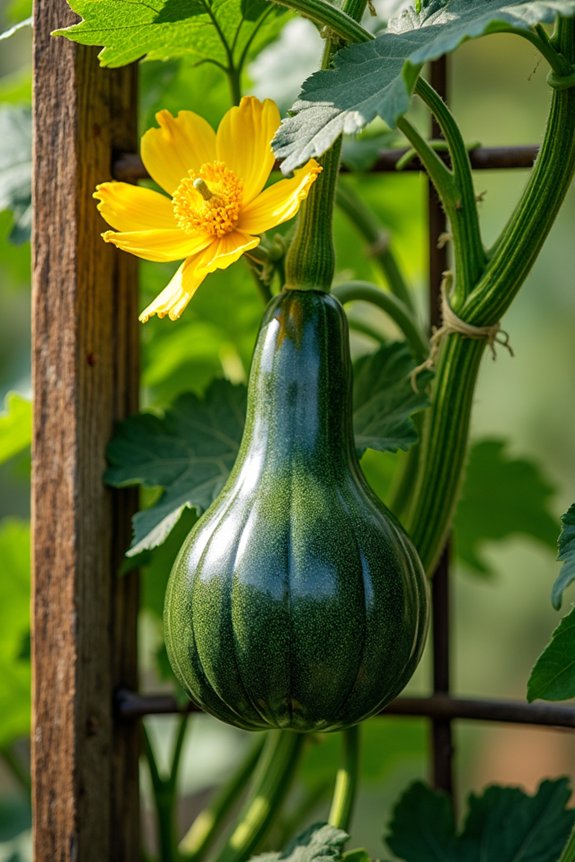
Now that you understand how trellising boosts your squash harvest, it’s time to build the framework that’ll make it all happen. I recommend using cattle panels or sturdy wire secured to 6-foot T-posts spaced 5 feet apart. Position your sturdy trellis running north-south to maximize sun exposure on both sides—this balanced lighting keeps your squash vines healthy and productive.
Build either a wall or hoop design, securing panels firmly to support heavy vines. Keep the base about a foot off the ground for essential air circulation around your raised bed’s roots. This clearance prevents moisture problems that invite disease.
As your squash vines grow, gently tie stems to the wire, guiding them upward. Your trellis structure becomes the backbone supporting vigorous growth and impressive yields.
Choose Squash Varieties and Prepare Nutrient-Rich Soil
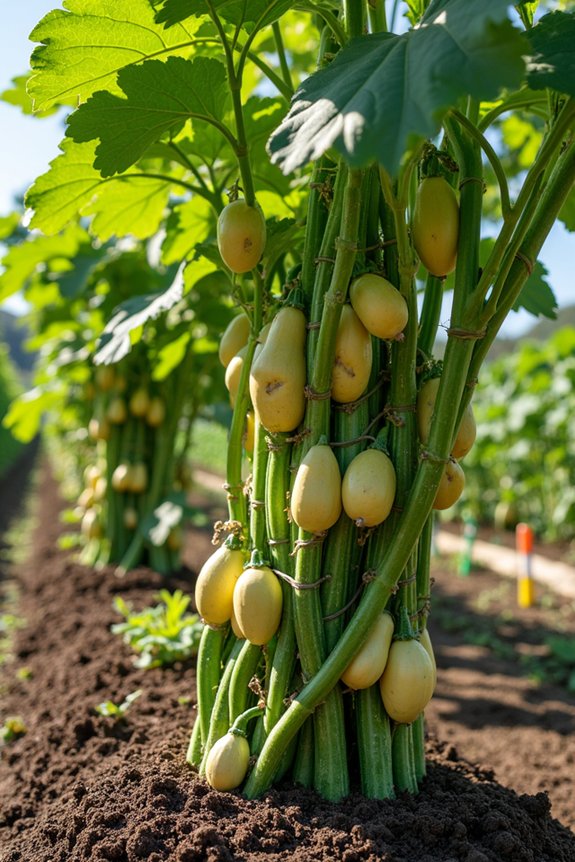
Your variety selection determines your trellising success, so stick with vining types that naturally climb and sprawl—think Tromboncino Rampicante, Butterscotch Butternut, Spaghetti Squash, Winter Luxury Pie Pumpkin, Delicata, and Cha Cha Kabocha. Avoid bush varieties entirely; they’ll fight your trellis design.
For soil, build a foundation that feeds your trellised vines from day one. Mix Re-Vita Pro with laying hen manure, feather meal, bone meal, sulfate of potash, leonardite ore, kelp, and calcium. Layer thick compost on top and incorporate azomite minerals. This nutrient-rich soil prevents early failures and supports massive root systems that develop vertically.
Deep, well-drained soil matters tremendously. Apply bi-weekly foliar feeding throughout the season. Strong soil fertility early supports consistent growth and fruit set on your trellis.
Plant Seeds and Train Vines Upward From the Start
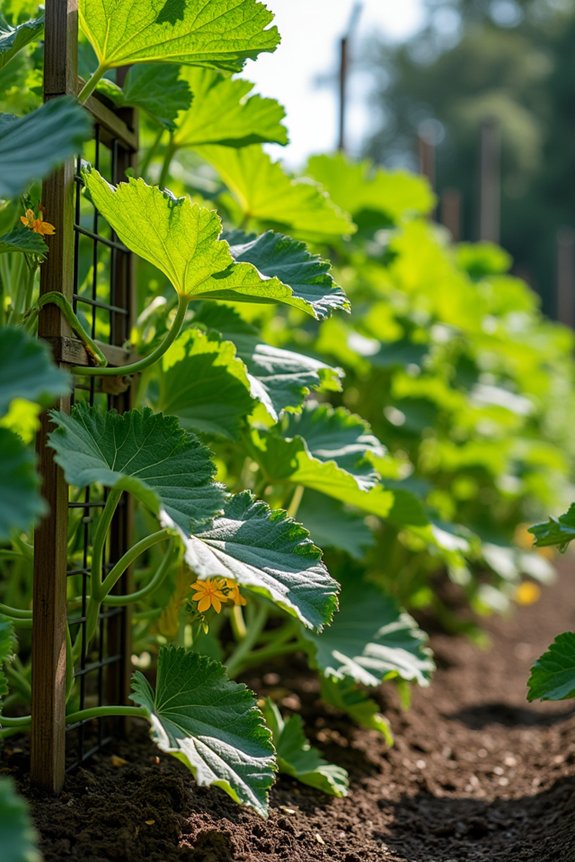
Once your soil’s ready with all that nutrient density, you’re set to get seeds in the ground and start guiding them skyward. Direct sow squash seeds about 3 feet apart, planting three seeds per spot to boost germination success. Thin to one vigorous plant once they sprout.
| Growth Stage | Your Action | Support Method |
|---|---|---|
| Seedling | Gently assist vines to trellis | Light guidance |
| Early growth | Secure stems regularly | Flagging tape |
| Developing fruit | Install support system | Nylon hammocks |
| Peak season | Prune side-shoots | Maintain airflow |
Train 6–8 vines upward from each plant, keeping them on the trellis structure. Use lightweight ties and pruning to prevent overcrowding. Your trellis height should reach at least 5 feet—vines’ll stretch 10–15 feet long. This vertical setup maximizes your growing space while maintaining optimal plant health.
Irrigate Frequently, Prune for Airflow, and Monitor for Pests
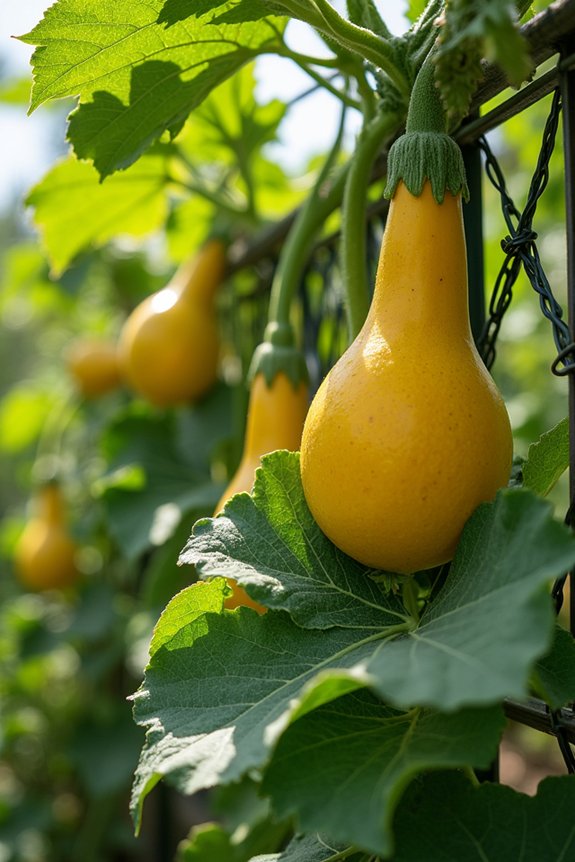
How much water does a vertical squash plant really need? You’ll find that trellised squash demands more irrigation than ground-grown varieties because higher leaves lose significant moisture through evaporation, and vines can’t sink roots along their length for additional water access.
I recommend consistent watering to keep soil evenly moist. Next, prune side-shoots regularly, retaining only main growth and fruit-bearing stems. This pruning improves airflow and reduces disease pressure on your squash vines.
Monitor your trellis base frequently for pests like squash vine borers and squash bugs—vertical growth actually makes early detection easier! Finally, use fruit supports or “fruit hammocks” to prevent bruising. This keeps your produce storage-quality and protects against ground damage while maintaining trellis stability.