

Cucumbers don’t strictly need a trellis, but I’d recommend using one. Ground-grown vines sprawl across 18–36 inches, hiding fruit in soil and inviting rot, pests, and disease.
Trellising saves space, improves airflow, and produces straighter, cleaner fruit that’s easier to harvest. You’ll space plants just 12 inches apart vertically using a sturdy 5–6 foot structure.
The payoff? Better yields, healthier plants, and less disease pressure. There’s a lot more to know about setup and training techniques.
Do Cucumbers Actually Need a Trellis?
Why do some gardeners swear by trellises while others let their cucumbers sprawl across the ground?
Here’s the truth: cucumbers don’t strictly require a trellis to grow successfully. However, trellis importance becomes clear when you weigh the benefits. Vertical growth saves valuable garden space—something we’re all working with limited amounts of. More importantly, air circulation improves when plants climb upward rather than sprawl, reducing disease problems that plague ground-level vines.
The yield benefits are real too. Trellised cucumbers produce cleaner, straighter fruit that hangs conveniently for picking. You’ll spend less time hunting through tangled vines on soil. While ground-growing works, trellising creates a more manageable, productive system that fellow gardeners appreciate.
What Happens When You Grow Cucumbers on the Ground
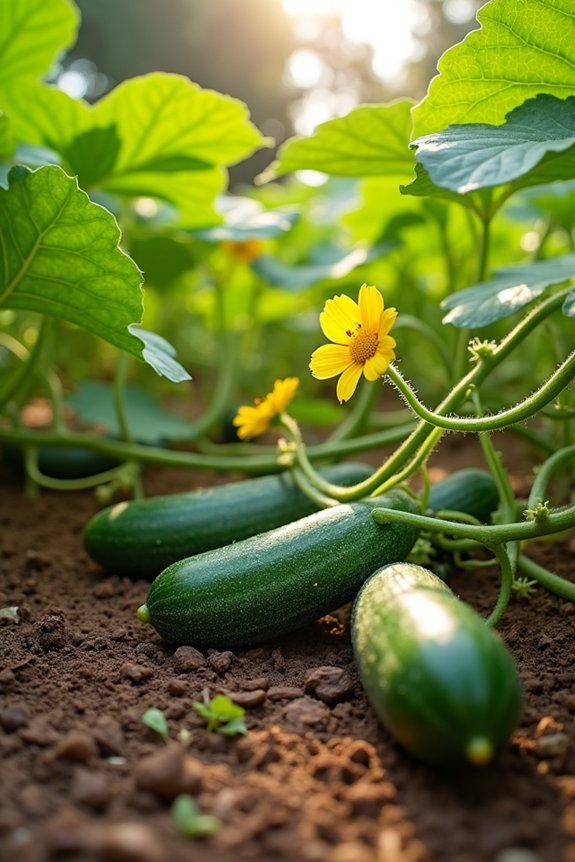
When you grow cucumbers on the ground, they sprawl across your garden beds and pathways, requiring considerably more space than trellised plants—sometimes needing 18–36 inches between each plant compared to the tighter spacing a trellis allows. This spreading growth also brings increased contact with soil, which raises your risk of rot, pest damage, and dirty fruit that’s harder to clean before eating. You’ll likely find yourself harvesting more frequently since the vines and leaves can hide ripe cucumbers from easy view.
Space Consumption And Sprawl
How much garden real estate are you willing to dedicate to cucumbers?
When you grow cucumbers on the ground, they sprawl outward markedly, consuming valuable space that you might use for other plants. Ground-sprawl requires wider spacing between plants and creates extensive horizontal bed coverage. This approach ties up more of your garden than you’d expect!
Here’s what ground growing demands:
- Considerable spacing between vines to prevent disease and allow air circulation
- Wide pathways around sprawling rows for harvesting and maintenance access
- Limited room for companion planting or additional vegetables nearby
A trellis completely changes this equation. Vertical growth frees up ground space while maximizing your yield per square foot. By training cucumbers upward using arches, panels, or cattle-panel trellises, you’ll reclaim valuable real estate. You’re stacking your harvest instead of spreading it out horizontally!
Increased Disease And Pest Risk
Increased Disease And Pest Risk
When cucumbers sprawl on soil, they’re exposed to soil-borne disease that naturally lives in earth—think fungi and harmful microorganisms. Their leaves and fruit collect moisture, creating environments where powdery mildew and rot develop. Slugs and beetles attack your plants directly since they’re easily accessible at ground level. Damp, crowded conditions favor disease and pest problems.
A trellis addresses these issues. By elevating your cucumbers vertically, you improve airflow around foliage and fruit. Better airflow means leaves dry faster after rain or watering, reducing fungal infections. You’re also keeping pests at bay by removing easy access to your crop. This growing method protects your harvest.
How Trellising Improves Airflow and Prevents Disease
Since cucumber plants sprawl across the ground, they create dense, humid pockets where disease develops—but trellising changes that completely. When you elevate your cucumbers vertically, you’re naturally transforming how air moves through your garden.
Here’s what improves with a trellis:
- Better airflow reduces humidity around foliage, directly lowering powdery mildew and fungal disease risk
- Elevated fruit stays cleaner since leaves and stems no longer contact soil-borne pathogens or splash
- Faster drying times mean wet leaves dry quickly after rain or watering, eliminating conditions diseases prefer
This vertical gardening approach keeps your plants in better condition overall. You’ll spot pests earlier on exposed foliage, making disease prevention straightforward. The structured support system gives your cucumbers the space they need for proper air circulation. You’re creating an environment where your plants perform well and remain disease-resistant.
Straighter, Cleaner Fruit: The Vertical Growth Advantage
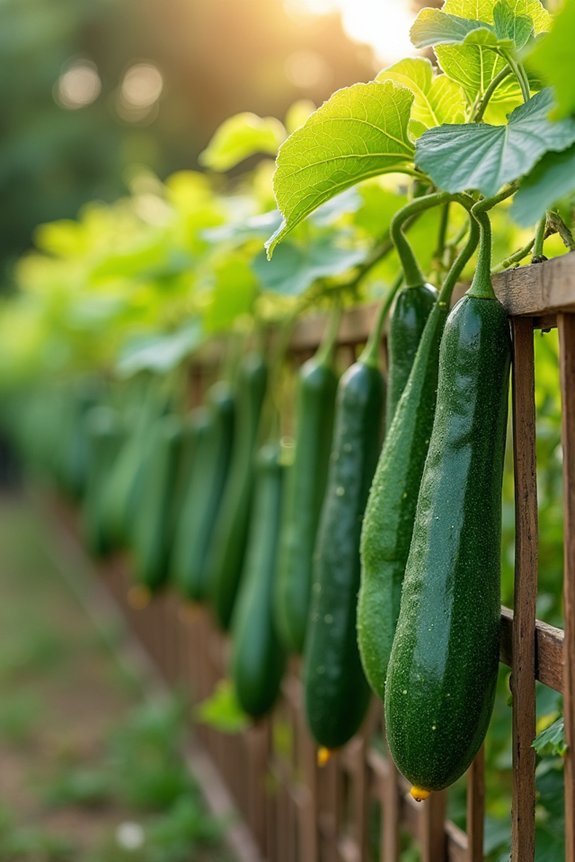
When you grow cucumbers vertically on a trellis, gravity inherently pulls the developing fruit downward in a straight line, giving you straight cucumbers instead of the bent ones you’d get from ground vines. You’ll also notice your fruit stays clean and free from soil contact, which means less washing work for you and reduced disease risk from dirt-borne pathogens. This elevation keeps your harvest visually accessible too, so you can spot ripe cucumbers easily and pick them at their peak.
How Gravity Straightens Fruit
One of the most practical benefits of growing cucumbers vertically is understanding how gravity works for you—literally pulling your fruit into those perfectly straight shapes you see at the farmer’s market.
When you train cucumbers on a trellis, gravity naturally encourages downward growth as fruit develops. This constant, gentle pull creates the straightness desired:
- Hanging fruit avoids ground pressure that causes kinks and bends
- Weight distribution stays even along the cucumber’s length during development
- Natural tension supports uniform shape from blossom end to stem
A sturdy 5–6 foot trellis gives your fruit plenty of vertical space to hang freely. As your cucumbers elongate downward, they’re not fighting against their own weight or pressing against soil. This simple physics makes vertical growth effective for achieving market-ready, uniform produce.
Cleanliness Through Elevation
Beyond the physics of straightness, growing cucumbers vertically delivers another immediate payoff: you’ll harvest fruit that’s cleaner and fresher. When your cucumbers climb a trellis instead of sprawling across soil, they stay elevated and protected from ground grime that clings to trailing vines.
I’ve noticed the difference myself—elevated cucumbers require minimal washing compared to ground-grown fruit. That elevation advantage extends further: improved air circulation around your trellised vines actively reduces fungal diseases that thrive on moisture-laden foliage hugging the earth.
Cleanliness through elevation isn’t just about appearance. It’s about quality. Your harvested cucumbers arrive cleaner, healthier, and market-ready with less effort. By choosing a trellis system, you’re investing in produce that looks and feels premium straight from your garden to your table.
Best Trellis Types for Different Garden Setups
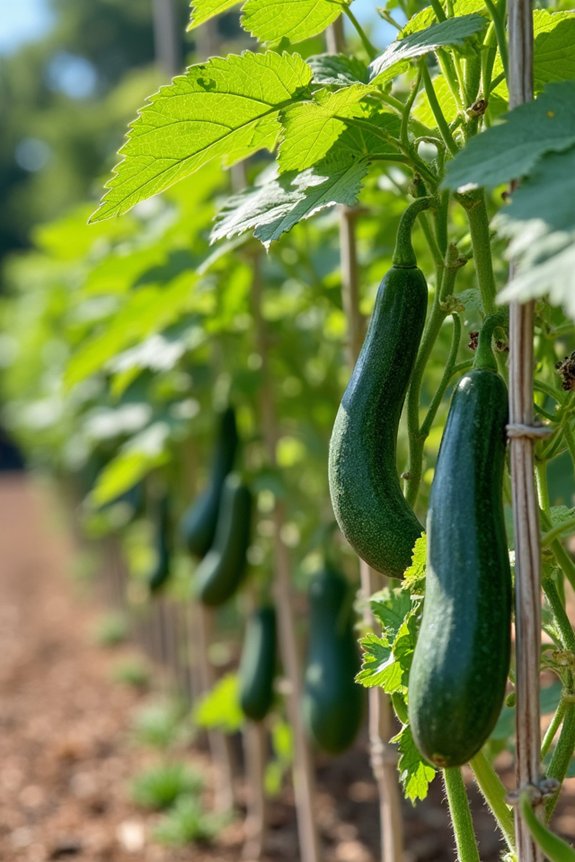
How you set up your garden space really shapes which trellis works best for your cucumbers. Matching your trellis type to your garden layout improves yields and keeps plants in good condition.
Consider these popular trellis types for different setups:
- Cattle panel arches offer sturdy vertical gardening solutions that work well in rows, providing excellent support while creating intentional garden pathways
- Traditional tall trellises (5–6 feet) suit standard garden beds, delivering space-saving benefits for any cucumber variety you’re growing
- Cage structures work well for compact spaces, keeping fruit elevated and accessible without requiring extensive ground area
Your cucumber variety influences which option suits you best. Vertical gardening through proper trellis selection improves air circulation, reduces disease pressure, and makes harvests easier. These sturdy systems improve your growing experience while protecting your crop.
Training Cucumbers Up a Trellis: Step-by-Step
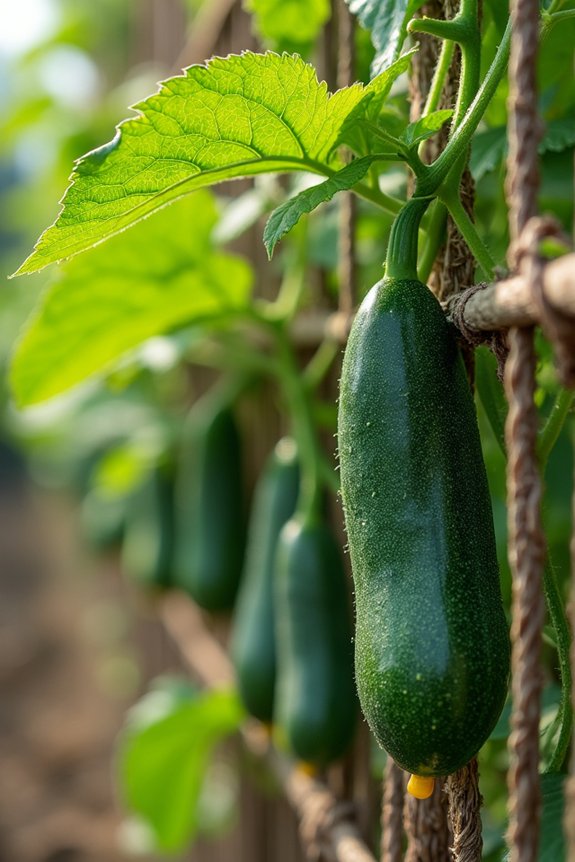
When should you start guiding your cucumber vines upward? I recommend beginning training early—right when seedlings reach 6-8 inches tall. This establishes upward growth patterns before vines sprawl across your garden bed.
| Training Stage | Action | Timing | Support Height | Result |
|---|---|---|---|---|
| Early Growth | Tie main stem loosely | Weeks 2-3 | 2-3 feet | Establishes direction |
| Vine Development | Weave tendrils around trellis | Weeks 4-6 | 4-5 feet | Encourages climbing |
| Mature Vines | Guide secondary shoots upward | Weeks 7+ | 5-6 feet | Maximizes vertical space |
| Flowering | Support fruit-bearing branches | Peak season | Full height | Prevents breakage |
| Maintenance | Adjust ties as needed | Ongoing | Consistent | Promotes air circulation |
I use sturdy cattle panels or tall cages (5-6 feet minimum) to accommodate growing vines. Gently weave tendrils around your trellis structure, encouraging them upward. This training reduces ground spread, saves valuable garden space, and prevents disease by promoting air circulation around your cucumbers.
Spacing, Height, and Setup for Maximum Yield
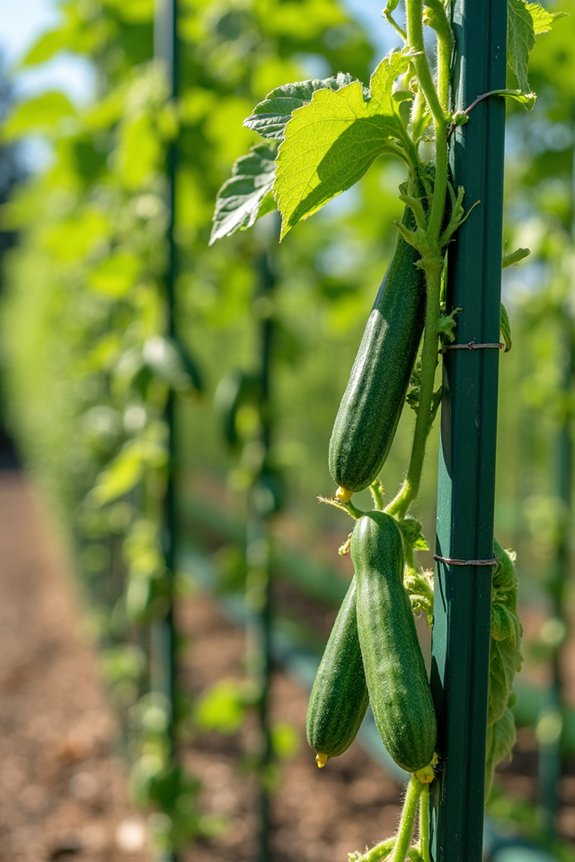
Where you position your trellis and how far apart you space your cucumber plants directly affects your harvest volume. Getting your setup right increases your garden’s productivity.
Here’s what I recommend for maximum yield:
- Space plants 12 inches apart when trellising, versus 18–36 inches for ground growing
- Build your trellis 5–6 feet tall using sturdy supports like metal fence posts or cattle panel arches
- Arrange trellises in straight rows to maximize growth potential and keep vines climbing freely
When you position your setup this way, you create ideal conditions for your cucumbers. Train vines to weave through the trellis as they grow—this maximizes vertical space and supports heavier fruit. The height and spacing work together to give your plants adequate room while keeping your garden organized and productive.
Best Cucumber Varieties for Trellising
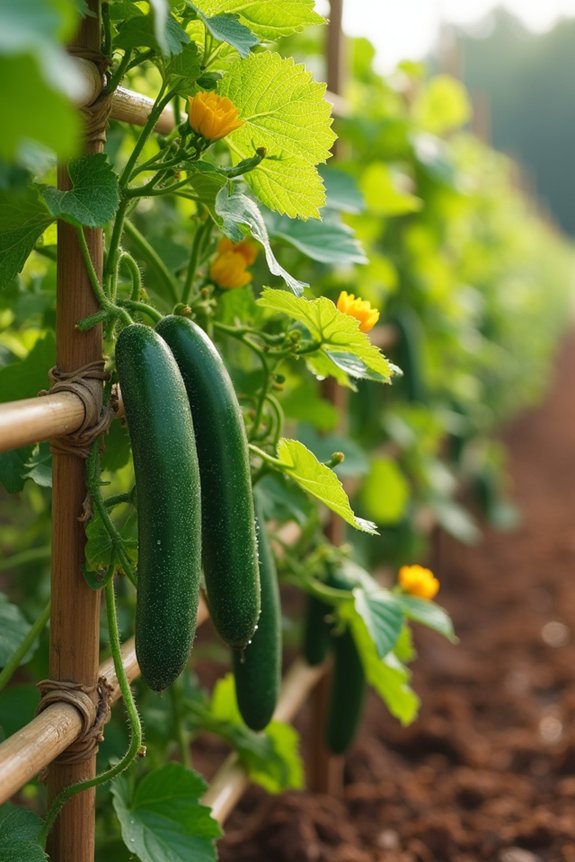
Not all cucumber varieties perform equally well on a trellis—some are naturally built for vertical growing and produce larger harvests in smaller spaces.
Some cucumber varieties thrive vertically while others don’t—select types naturally built for trellising to maximize your harvest in minimal space.
I’d recommend choosing disease-resistant hybrids or high yield F1 varieties designed specifically for trellis systems. These modern cultivars produce straighter fruit that grows tall on 5–6 foot structures, making harvesting easier and keeping produce off the ground where disease spreads.
Look for varieties marketed as trellis-focused or extra-tolerant. Heavier-fruiting types benefit most from vertical support since trellising prevents fruit damage and improves air circulation around plants.
When you select cucumber varieties bred for trellising, you’re choosing proven performers that’ll maximize your vertical garden’s potential while keeping plants healthier and more productive than ground-grown alternatives.