
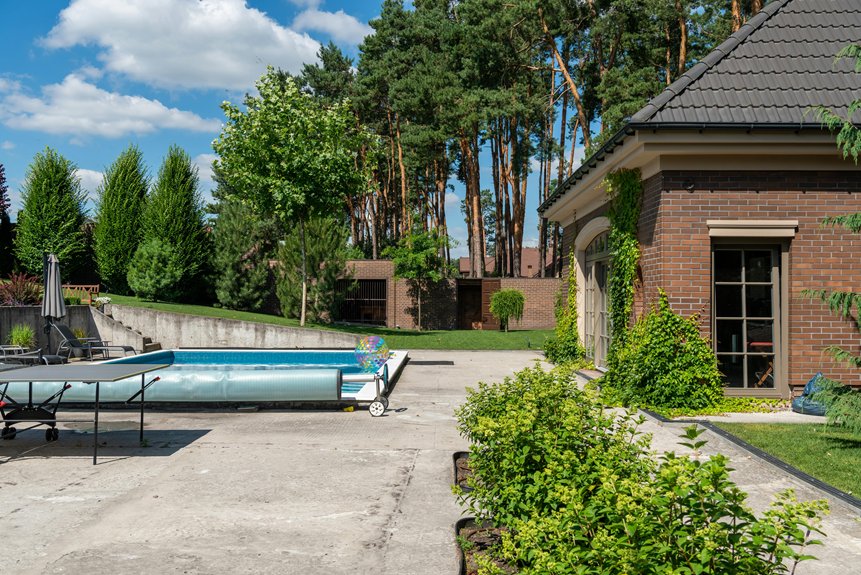
4 inches for basic patios with regular foot traffic, but bump it to 6 inches if you’re adding an outdoor kitchen or fire pit, and 8 inches for driveways or hot tubs. Your soil type matters too—soft, clay-heavy ground needs extra thickness or a 3–6 inch gravel base. Don’t forget thickened edges about 6 inches deep where the slab meets the ground. When in doubt, go thicker. There’s plenty more to consider about reinforcement, joints, and soil testing that’ll help you make this decision.
Standard Concrete Thickness by Use and Load
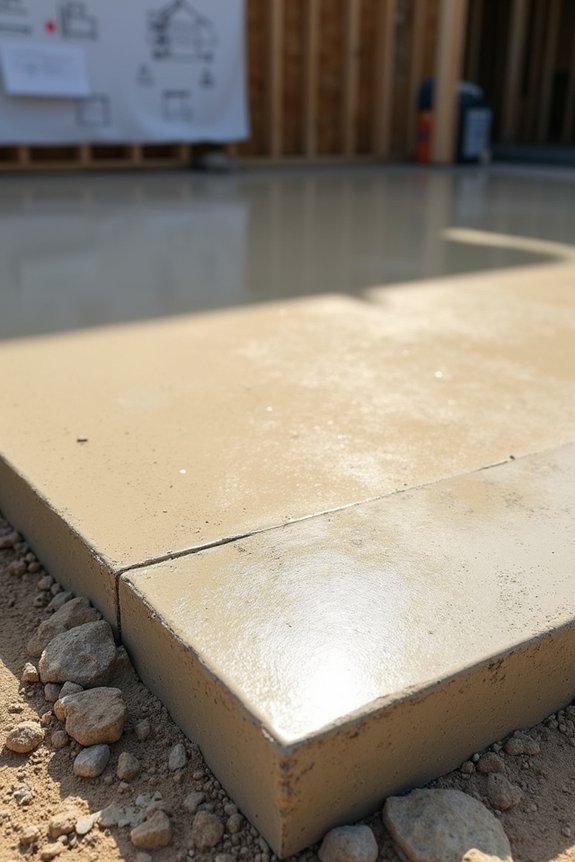
How thick should your concrete patio be? It depends on what you’re planning to do with it. For basic patios where you’ll walk around and enjoy drinks with friends, I’d recommend a minimum thickness of 4 inches. That’s your solid foundation for standard foot traffic.
However, if you’re adding an outdoor kitchen, fire pit, or moderate seating areas, bump that up to 6 inches. The extra thickness handles heavier loads without breaking down. For driveways, hot tubs, or anything bearing vehicle weight, you’ll need 8 inches of concrete.
Don’t forget thickened edges—about 6 inches deep—where your slab meets the ground. They prevent edge cracking and strengthen vulnerable spots. When in doubt, go thicker. It’s a decision you won’t regret.
How Soil Type Changes Your Thickness Needs
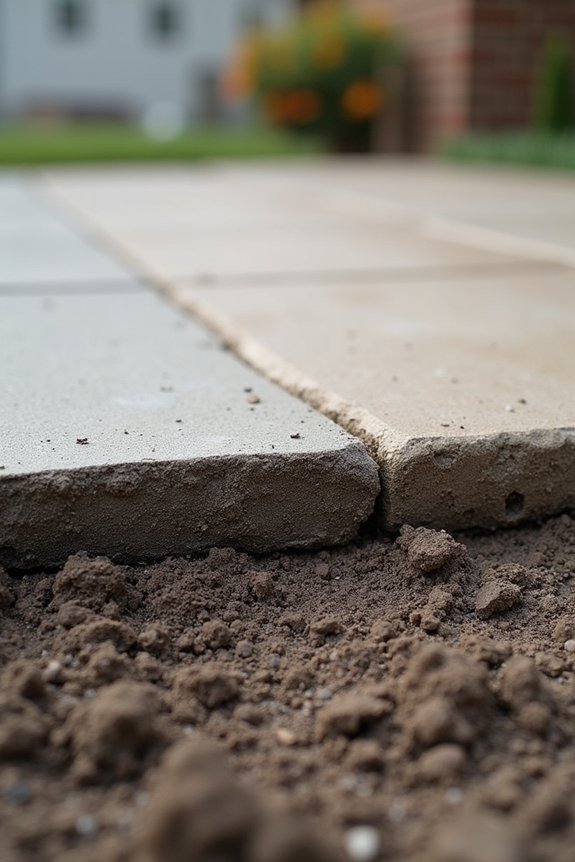
Why does the ground beneath your patio matter so much? The soil you’re building on directly determines how thick your concrete needs to be. I’ve found that soft, clay-heavy soil requires thicker slabs or extra reinforcement to prevent settling and cracking over time.
Here’s what I recommend: test your soil before pouring. Solid, well-compacted soil supports a standard 4-inch slab for decades with proper reinforcement. But on weaker soil, you’ll want to increase thickness to 6 inches or add a compacted gravel base of 3–6 inches.
That base layer is important. It compensates for soil instability and distributes your patio’s weight evenly. Getting this foundation right means your patio stays crack-free and performs well for years.
Reinforcement for Different Concrete Thicknesses
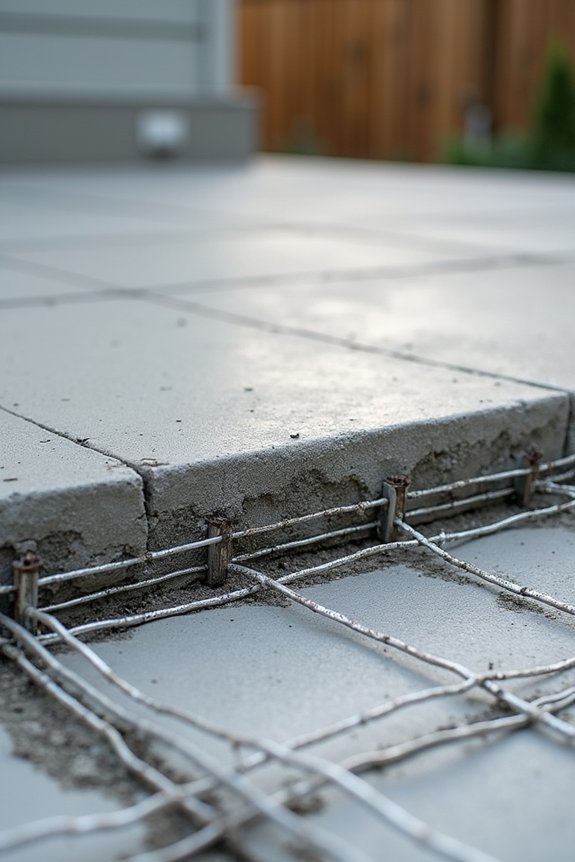
Once you’ve settled on your slab thickness and prepared that solid base, reinforcement becomes your next layer of protection against cracking and shifting. For 4-inch slabs, wire mesh provides adequate reinforcement for light foot traffic. When you’re going thicker with a 6-inch slab—especially for heavy-use areas like outdoor kitchens or fire pits—rebar or dowels work better. These stronger materials handle the extra weight and stress more effectively.
Reinforcement complements thickness rather than replacing it. Pair your chosen reinforcement with proper base preparation to build a durable patio. This combination keeps cracks manageable and maintains the appearance of your outdoor space over time.
Spacing Control Joints Based on Your Slab Depth
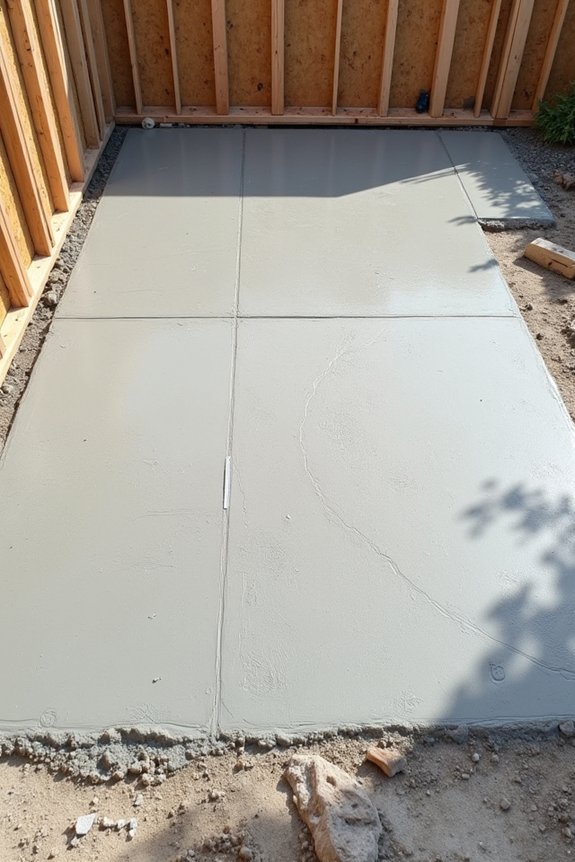
Now that you’ve planned your reinforcement, you’ll want to map out where your control joints go—these cuts are what stop random cracks from damaging your patio’s appearance. The spacing and depth of these joints depend directly on your slab thickness, and getting them right means the difference between a clean, controlled crack pattern and jagged breaks. Here’s how to space and cut these joints based on whether you’re pouring a standard 4-inch pad or going thicker.
Joint Spacing By Thickness
Joint Spacing By Thickness
How you space your control joints directly depends on how thick your concrete slab is, and getting this right prevents unsightly cracks.
Matching joint spacing to slab thickness gives you reliable results:
- 4-inch slabs: Space control joints every 4–6 feet for optimal crack control
- 6-inch slabs: You can extend spacing to 8 feet apart since thicker concrete handles longer spans better
- Joint depth: Make joints at least 1/4 of your slab thickness deep to guide cracks where you want them
Thicker slabs give you more flexibility, but don’t skip proper reinforcement and a solid base. When you’re mixing different thicknesses in one patio, align joints with heavier sections and create gradual transitions. This prevents weak spots and keeps your finished patio looking sharp for years.
Control Joint Depth Requirements
Why does joint depth matter as much as spacing? Deeper control joints guide cracks exactly where you want them, preventing random damage across your patio.
For 4-inch slabs: Cut joints at least 1 inch deep. This depth equals one-quarter of your slab thickness and creates a natural weak point.
For 6-inch slabs: Go 1.5 inches deep, maintaining that same quarter-depth ratio. Thicker slabs need deeper control joints because they can withstand wider cracks.
Deeper joints resist stress better. You’re directing concrete where it’s acceptable to crack, keeping your patio looking clean and protected. When joints are shallow, cracks spread randomly instead of following your planned lines. That’s the difference between a controlled crack and a problematic one.
Preventing Random Crack Formation
Controlling joint depth keeps cracks in line, but spacing those joints correctly ensures they actually do their job. You’ll want to adjust your control joint spacing based on your slab thickness—here’s what works:
- 4-inch slabs: Space control joints every 4–6 feet to direct cracks effectively
- 6-inch slabs: Extend spacing up to 8 feet since thicker concrete handles stress better
- Transition zones: Create gradual thickness changes where 4-inch and 6-inch sections meet to prevent weak spots
Your local climate matters too. If you’re in freeze-thaw territory, tighter spacing reduces random cracking during temperature swings. Align your control joints with reinforcement and load paths for optimal results. This strategic placement means fewer surprise cracks appearing where you don’t want them.
Why Concrete Patios Crack: Common Prep and Curing Mistakes
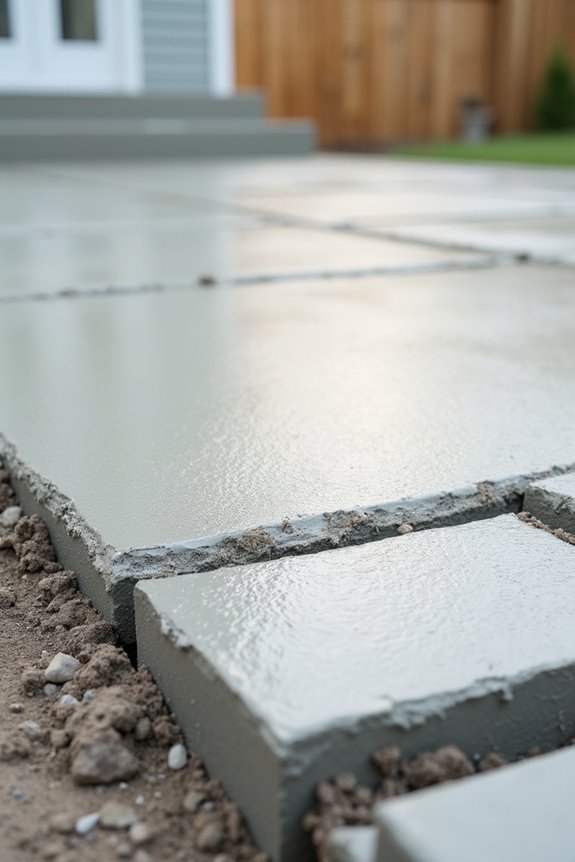
Most concrete patio failures aren’t caused by poor concrete itself—they’re caused by what happens before, during, and after the pour.
Skipping proper preparation leads to failure. A weak base allows your slab to settle unevenly, creating cracks that spread over time. The curing process matters just as much—rush it, and you’ll see surface damage within months.
| Mistake | Result |
|---|---|
| Soft soil base | Settlement cracks |
| Fast drying | Surface crazing |
| Poor water-to-cement ratio | Shrinkage cracks |
| No control joints | Random fractures |
You need a compacted gravel base and proper moisture control during curing. Keep your patio damp for several days, not bone-dry. These fundamentals protect your investment and extend your patio’s lifespan significantly.
Can You Use Different Thicknesses in One Patio?
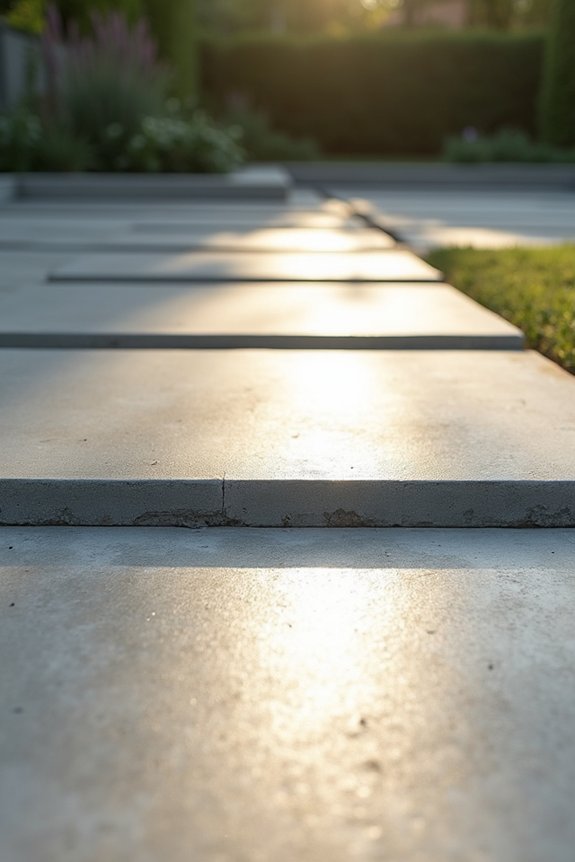
Now that you understand how proper base prep and curing prevent cracks, you can use that knowledge to make smarter design choices—including varying your slab thickness across different areas.
Proper base prep and curing knowledge empowers smarter design choices, like varying slab thickness across different patio areas.
You can absolutely mix slab thickness within one patio! Here’s how to do it right:
- Reserve 4 inches for most areas with light foot traffic, then increase to 6–8 inches under heavier features like outdoor kitchens or pergola posts
- Create gradual variations between different thicknesses to avoid weak spots, reinforced with proper base prep and joints
- Deepen control joints in thicker sections (up to about 1/4 of slab thickness) to manage expansion and cracking
The key is ensuring your underlying base and reinforcement handle the heaviest area. This prevents differential settlement and keeps your entire patio stable and crack-free.
When Patio Thickness Isn’t Enough (Soil Testing and Repairs)
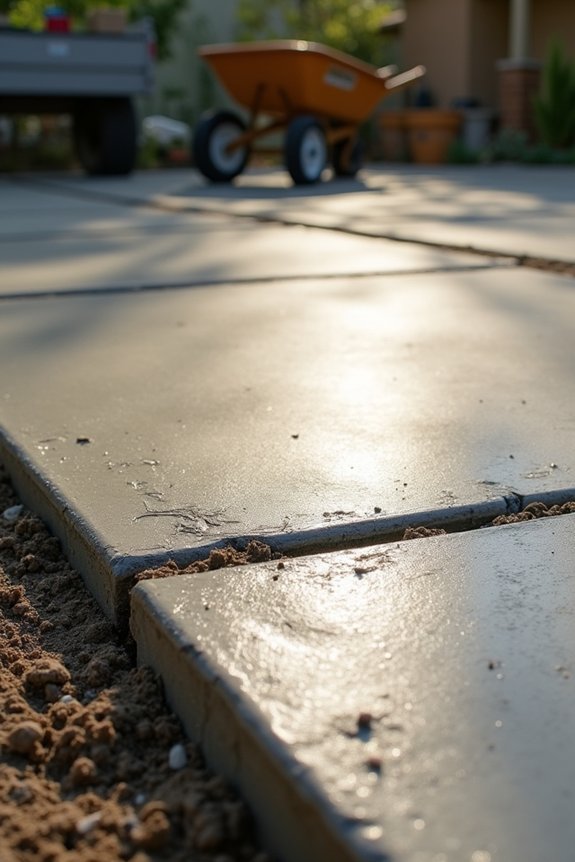
What’s beneath your patio matters as much as the concrete on top. Soil testing before pouring reveals bearing capacity and guides thickness decisions. Weak soil or expansive clay requires stronger solutions: thicker slabs (6–8 inches) or deeper gravel bases (3–6 inches) restore soil stability and prevent settling cracks.
You might discover your standard 4-inch slab isn’t sufficient. That’s when reinforcement enters the picture—rebar, dowels, or fiber work alongside proper base prep and joints. Thickened edges or turndown beams help counteract cracking near softer ground transitions.
Soil testing functions as insurance. Identifying problems upfront prevents costly repairs later. You’re investing in a patio that remains level and crack-free for years.