
To estimate your fence stain, multiply length by height for square footage, then divide by your stain’s coverage rate (typically 250–400 sq ft per gallon).
Double this if you’re staining both sides.
Add 10–20% extra for weathered wood and another 10–15% for spillage and waste.
Solid stains need two coats, so budget accordingly.
Round up to whole gallons and check your product’s label for exact coverage rates.
Calculate Your Fence’s Total Square Footage
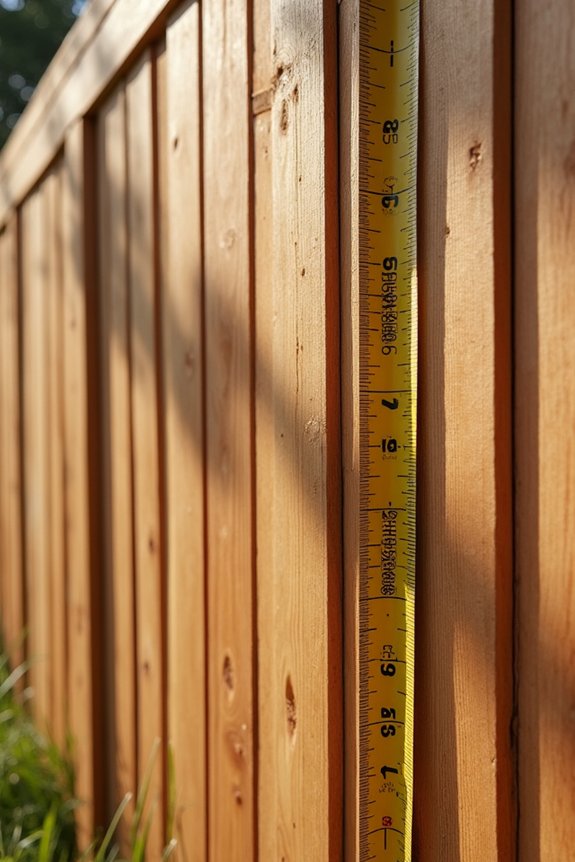
How do you know how much stain you’ll need? It starts with calculating your fence’s total square footage—the foundation for getting your estimate right.
Multiply your fence length by its height. If you’re staining both sides, double that number. For example, a 150-foot fence at 6 feet tall gives you 900 square feet per side, or 1,800 square feet total.
Multiply fence length by height, then double the result if staining both sides for your total square footage.
Shadow box fences need special attention. Multiply your square footage by 1.5 to account for overlapping boards. Short picket fences with large gaps may require adjusted calculations since they cover less surface area.
Don’t forget gates and additional sections when measuring your fence length. Missing these details means underestimating your total square footage and potentially running short on stain mid-project. Accuracy here sets you up for success.
Does Your Fence Style Affect Stain Quantity?
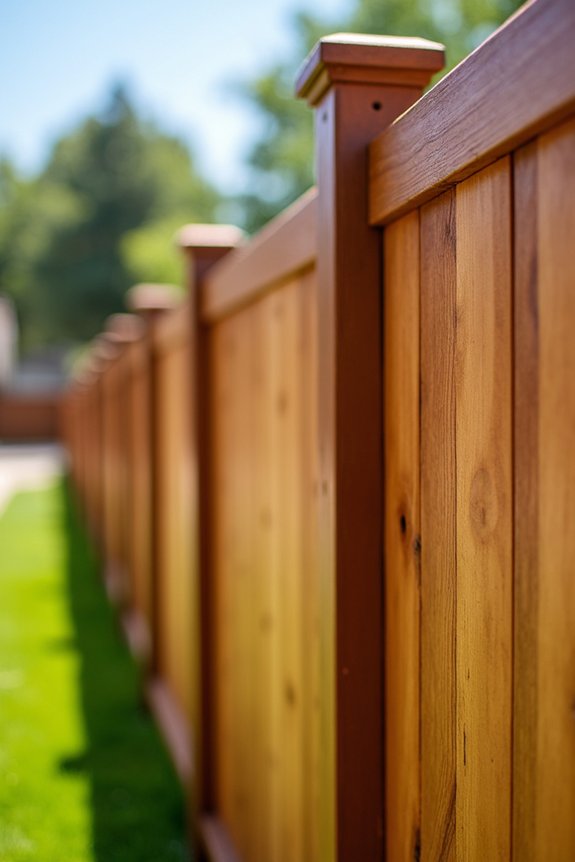
Your fence’s design matters far more than you might think when calculating stain needs. Different fence styles change how much product you’ll actually use.
Shadow box fences demand extra stain because overlapping boards create more surface area. I multiply my square footage by about 1.5 to get accurate gallons per square foot estimates. Picket fences with large gaps work opposite—they require less stain since you’re covering less actual wood.
The stain type you choose also impacts coverage. Solid stains need more product than transparent or semi-transparent options. If you’re staining both sides, you’re essentially doubling your surface area and gallons needed.
Understanding your fence style helps you estimate correctly and avoid surprise material shortages mid-project.
What Stain Coverage Rate Should You Expect?
You’ll typically see coverage rates between 250 to 400 square feet per gallon, though the exact number depends on your stain type and wood condition. Solid color stains use more product because of their heavy pigment and usually need two coats, while transparent stains often cover more ground with just one coat. Wood that’s weathered, aged, or already stained can reduce your coverage efficiency, so test your specific stain on a small fence section first to see what you’re actually working with.
Coverage Rates By Stain Type
What kind of stain you choose dramatically affects how much product you’ll actually need. Different formulas behave quite differently on wood, which means your coverage rate varies significantly.
| Stain Type | Coverage Rate |
|---|---|
| Solid Color | 250–300 sq ft/gal |
| Semi-Transparent | 300–350 sq ft/gal |
| Transparent Oil-Based | 350–400 sq ft/gal |
| Premium High-Solid | 250 sq ft/gal |
High-solid premium stains pack more pigment and binders, so they cover less ground per gallon. Conversely, penetrating oil formulas spread further across your wood. Understanding these differences helps you calculate gallons accurately before purchasing. Match the stain type to both your fence’s wood condition and your desired appearance.
Factors Affecting Coverage Rates
Several factors beyond stain type affect how far each gallon stretches across your fence. Wood porosity plays a significant role—weathered or aged wood absorbs stain differently than freshly milled boards. Previously stained surfaces reduce absorption, meaning you’ll need less product overall.
Your fence’s condition matters too. Rough, porous wood absorbs stain faster, lowering your coverage rate. Smooth or sealed wood resists absorption, stretching each gallon further. Prep work directly impacts these results. Properly sanded and cleaned wood accepts stain more evenly, improving coverage efficiency.
Consider your fence style as well. Shadow box designs require extra stain because overlapping boards create additional surface area. When you account for these variables, you’re calculating a more accurate coverage rate tailored to your specific project rather than relying solely on manufacturer estimates.
How Stain Type Changes Your Gallon Needs
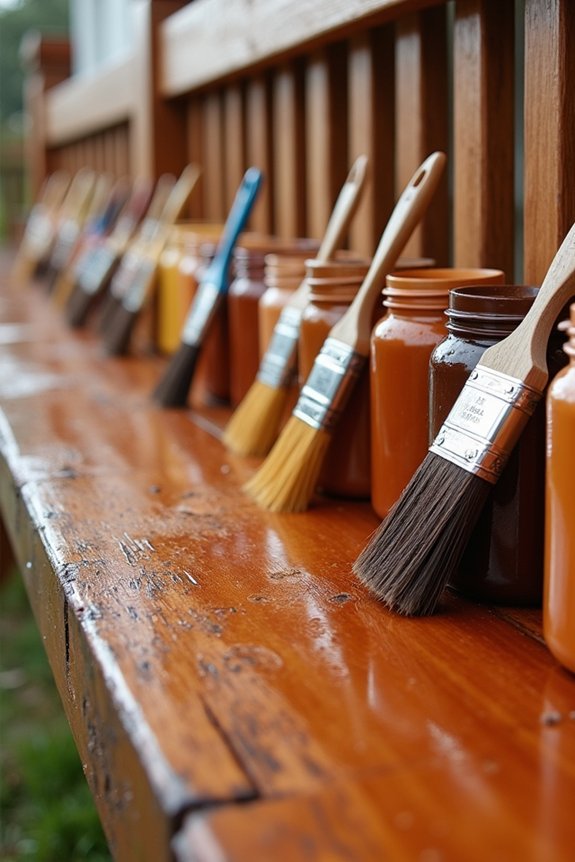
When I’m calculating how much stain to buy, the type I choose directly affects coverage and total gallons needed. Transparent stains stretch furthest, covering 250–400 square feet per gallon, letting wood grain show through. Semi-transparent options offer similar range but slightly less coverage. Solid stains, however, work differently—they’re thicker and require more product per coat, often needing two applications. This means you’ll use more gallons than with transparent finishes.
Stain type directly impacts your budget and timeline. If you’re tackling a larger fence, choosing transparent stains saves you money and effort. Solid stains demand commitment but deliver bold, uniform color. Understanding these differences helps you plan accurately and confidently.
Choosing Between One-Coat and Two-Coat Coverage
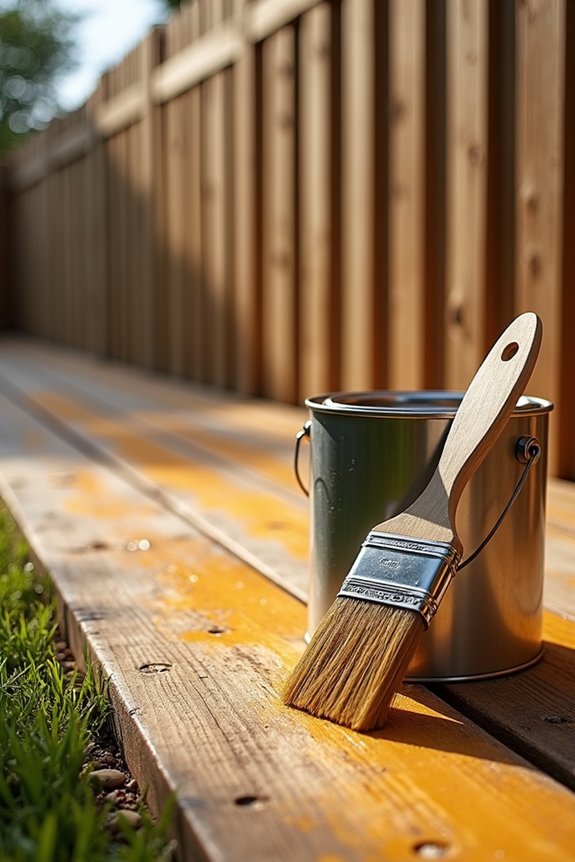
Once you’ve settled on your stain type, the next decision shapes your gallon needs just as much: how many coats you’ll apply.
Solid color stains typically demand two coats for complete coverage and rich color. That means doubling your gallon estimate. Transparent or semi-transparent stains often need just one coat, though you might add a second pass for evenness or in areas with intense sun exposure.
Here’s the math: a 1,800 sq ft fence requires roughly 4.5–7.2 gallons for one coat. Two coats? You’re looking at 9–14.4 gallons. Your fence style matters too—shadow box designs with overlapping boards increase surface area, potentially pushing you toward that two-coat requirement even if one seemed sufficient.
Choose based on your desired durability and aesthetic goals.
How Weather-Damaged or Porous Wood Affects Coverage
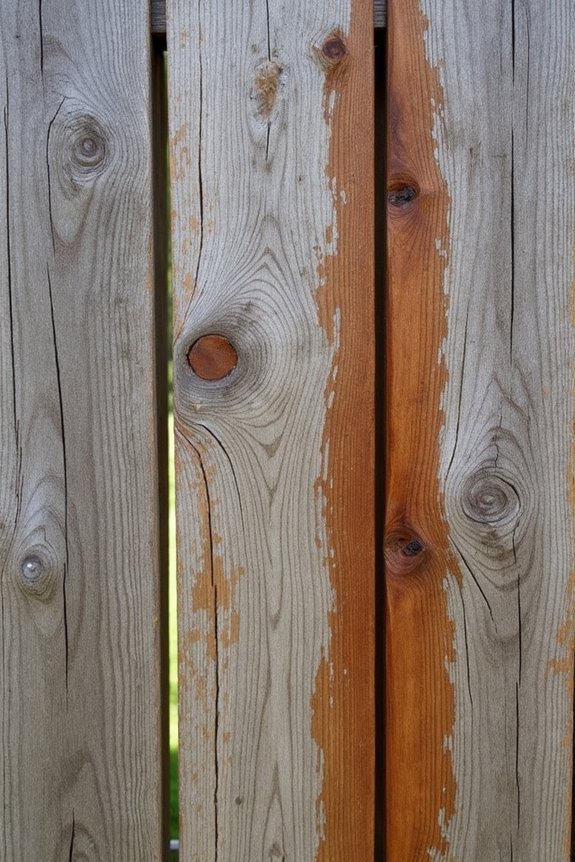
If your fence boards are weathered, bleached, or showing signs of age, you’ll need to account for increased stain absorption when calculating gallons needed. Porous wood soaks up more product than smooth, fresh wood—sometimes demanding 10–30% additional stain to achieve even color and proper coverage. I recommend assessing your fence’s condition first, because weathered wood often requires extra prep work, longer dwell times, and potentially an additional coat to get the results you’re after.
Wood Porosity and Absorption
Your fence’s wood porosity plays a significant role in how much stain you’ll need, and it’s one of the most overlooked factors when calculating gallons.
Porous wood absorbs stain differently than dense wood. When your boards vary in porosity—soft spots mixed with harder areas—absorption becomes inconsistent. You’ll notice uneven color if you don’t account for this reality.
| Wood Type | Absorption Rate | Coverage Impact | Coats Needed |
|---|---|---|---|
| Dense wood | Low | Better coverage | 1-2 |
| Porous wood | High | Reduced coverage | 2-3 |
| Weathered wood | Very high | Significantly reduced | 3+ |
| Mixed porosity | Inconsistent | Spotty results | 2-3+ |
High-porosity areas absorb stain quickly, demanding extra gallons to achieve the color you want. Understanding your wood’s absorption patterns helps you estimate accurately and avoid frustrating mid-project runs to the store.
Weathering’s Impact On Coverage
How does a fence that’s weathered for years behave so differently from brand-new wood?
Weathered wood absorbs stain differently than fresh lumber, and that matters for your project. Porous, aged wood soaks up stain faster, meaning you’ll need more product to achieve even coverage. Where new wood might require 250–400 square feet per gallon, weathered fences often demand significantly more.
Before staining, you’ll want to clean and brighten your wood. This prep work removes mold and mildew but can actually increase stain absorption. That decontaminated surface becomes thirsty for color.
Plan ahead: weathered wood typically needs extra gallons beyond standard estimates. Factor in potential second coats too, since porous surfaces may show uneven coverage initially. This understanding helps you budget accurately and avoid mid-project supply runs.
Adjusting Gallons For Condition
Wood condition dramatically shifts how much stain you’ll actually need—and that’s where many DIYers underestimate their material budget. Weathered or porous wood absorbs stain like a sponge, meaning you’ll cover less square footage per gallon than you’d expect on new wood.
Here’s what I’ve found works best:
| Wood Condition | Absorption Level | Extra Gallons Needed |
|---|---|---|
| New, smooth | Low | None |
| Slightly aged | Medium | 10% more |
| Heavily weathered | High | 15–20% more |
| Post-cleaning/sanding | Very high | 20%+ more |
Your prep work matters tremendously. Washing, sanding, or peeling opens the grain and increases porosity, demanding additional stain for uniform coverage. I recommend calculating your base gallons, then adding 15–20% for aged fences. This approach prevents you from running short mid-project.
Buffer for Spillage, Brush Waste, and Weather Delays
It’s smart to plan for extra stain beyond your calculated amount—I’d recommend adding an extra 10–15% to cover spillages, brush waste, and those unexpected weather delays that can pop up during your project.
Spillage and cleanup typically consume 1–2 gallons per 200–300 linear feet, depending on your application method. Brush waste and overspray losses add roughly 0.5–1 gallon per 500 square feet, especially with spray application. Weather delays matter too—rain or high humidity might force you to reapply, increasing your total by 5–20% if multiple coats are needed.
Always round up to whole gallons and check your product label for coverage rates. This buffer keeps you from running short mid-project.
Quick Gallon Estimate: The Rule-of-Thumb Shortcut
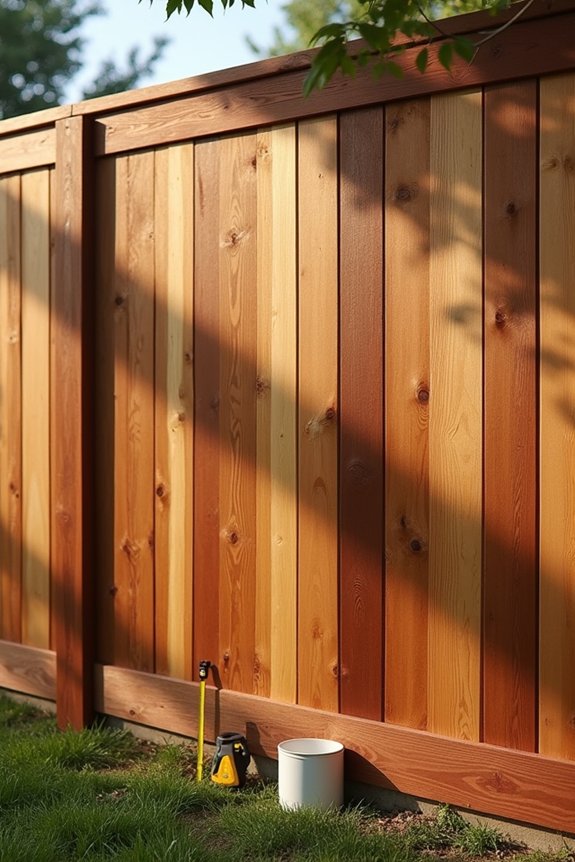
Need a fast way to ballpark your stain needs without pulling out a calculator? Here’s a straightforward approach we can use together. The standard rule is 90 square feet of fence per gallon of stain. This means you divide your total square footage by 90 to get your gallons of stain estimate.
There’s also a quicker shortcut: drop the trailing zero from your fence’s linear feet. So a 200-foot fence needs roughly 20 gallons. However, remember this ignores height and whether you’re staining both sides.
For accuracy, multiply your single-side square footage by two if you’re staining both sides. This adjustment helps you calculate enough gallons for complete coverage and accounts for real-world variables like wood porosity and application method.
Comparing Transparent, Semi-Transparent, and Solid Stains
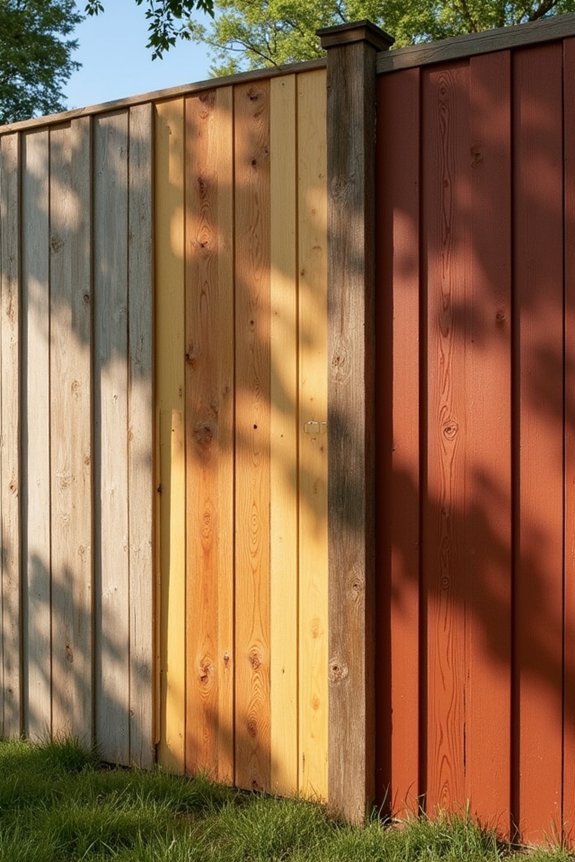
Now that you’ve got a basic estimate, let’s look at how different stain types affect your actual gallon needs and longevity. Each stain category—transparent, semi-transparent, and solid—demands different coverage rates and holds up differently over time, so choosing the right one impacts both your budget and maintenance schedule. I’ll walk you through what each type requires and help you pick the best option for your fence.
Coverage Rates And Gallons
How much stain you’ll actually need depends heavily on which type you choose, and that’s where things get interesting!
Transparent and semi-transparent stains are your efficiency winners. You’re looking at 250–400 square feet of coverage per gallon, meaning a 3,600 sq ft fence (both sides) needs roughly 9–14 gallons for one coat. Solid color stains demand more product and typically require two coats, so they’ll consume your gallons faster.
Here’s what affects your coverage:
- Wood porosity and condition – rougher, drier wood soaks up more stain
- Board density – shadow box or tight-grained boards increase effective surface area
- Real-world application – always add 10–20% extra for prep work and touch-ups
Factor these variables into your calculations, and you’ll order the right amount with confidence.
Durability And Maintenance Needs
Once you’ve calculated your gallon needs, you’ll want to consider what happens after you’ve finished painting—because your stain choice directly affects how often you’ll be back out there with a brush in hand.
Transparent stains need reapplication every two to three years, so you’re committing to regular maintenance. Semi-transparent options fall in the middle, offering moderate wood protection without demanding constant upkeep. Solid stains provide the strongest UV defense and longest intervals between applications, though they require two coats initially.
Using a stain calculator helps you estimate not just immediate gallons needed, but also long-term costs. Think about your lifestyle—if you prefer minimal maintenance, solid stain justifies its higher upfront gallon requirement. You’re investing in durability and long-term value.
Common Mistakes That Inflate Stain Estimates
Why do so many fence projects end up requiring an extra trip to the hardware store? You’re likely making one of these common calculation errors that lead to inaccurate stain estimates.
Why fence projects require extra hardware store trips: common calculation errors in stain estimates.
I’ve seen it happen repeatedly. Here’s what trips people up:
- Ignoring both fence sides: You’ll underestimate gallons needed if you forget to double your square footage for front and back surfaces
- Misreading stain coverage rates: Using 90 sq ft per gallon instead of 250–400 sq ft per gallon drastically changes your calculations
- Skipping waste and prep allowances: Not accounting for extra stain, brush loss, and application waste leaves you short mid-project
Different wood types also demand different approaches. New pine absorbs stain differently than weathered cedar. I recommend adding 10–15% extra for waste and prep to avoid running short during application.