
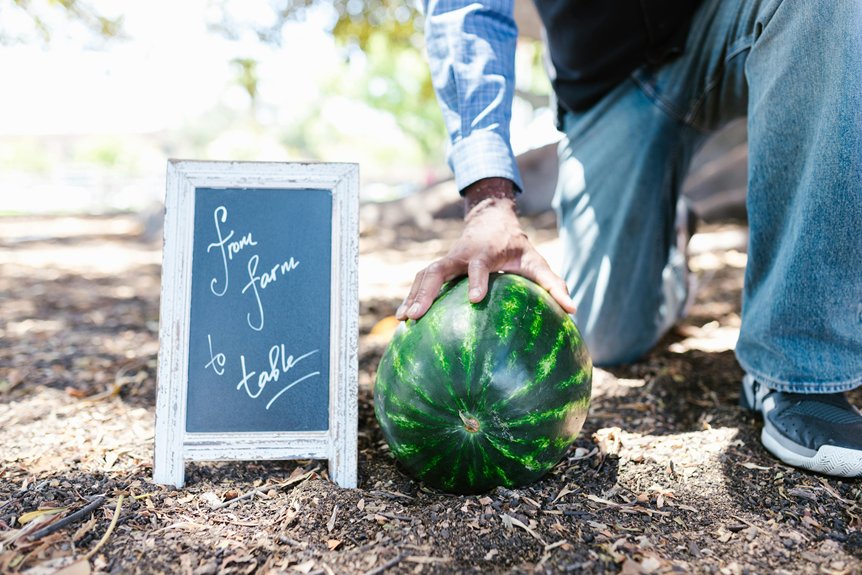
Growing watermelons vertically saves space and reduces disease by keeping fruit off damp soil. Start with lighter varieties like Sugar Baby (8-10 lbs) or Yellow Doll (6-8 lbs) that don’t require heavy reinforcement. Build sturdy trellises using cattle panels, plant on 12-18 inch mounds for drainage, and guide vines upward while installing slings—like knee-high stockings—beneath developing melons. Space plants 12-18 inches apart to maximize airflow. Harvest when rinds dull and tendrils brown. Pay attention to the specific techniques that prevent sling failure and sunburn.
Why Trellis Growing Works for Watermelons
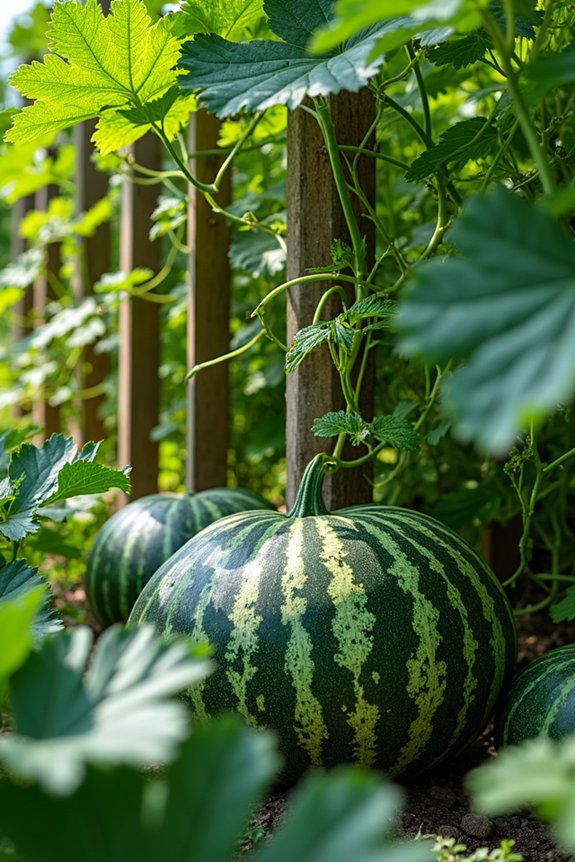
Why settle for sprawling vines that eat up half your garden? I’ve found that trellising watermelons changes how I grow them. Instead of vines sprawling across beds, they climb vertically, maximizing my limited space. This approach lets me cultivate large vines in a compact footprint—perfect for small gardens.
The real benefit comes when I use sturdy materials like cattle panels or thick-gauged fencing. These strong supports handle the weight of developing fruit. As melons grow heavier, I add slings made from stockings or fabric to cradle each fruit. The sling ties to the trellis, distributing weight evenly and preventing sagging.
You’re not just saving space; you’re creating plants with better air circulation and easier harvesting.
Pick Varieties That Thrive on Trellises
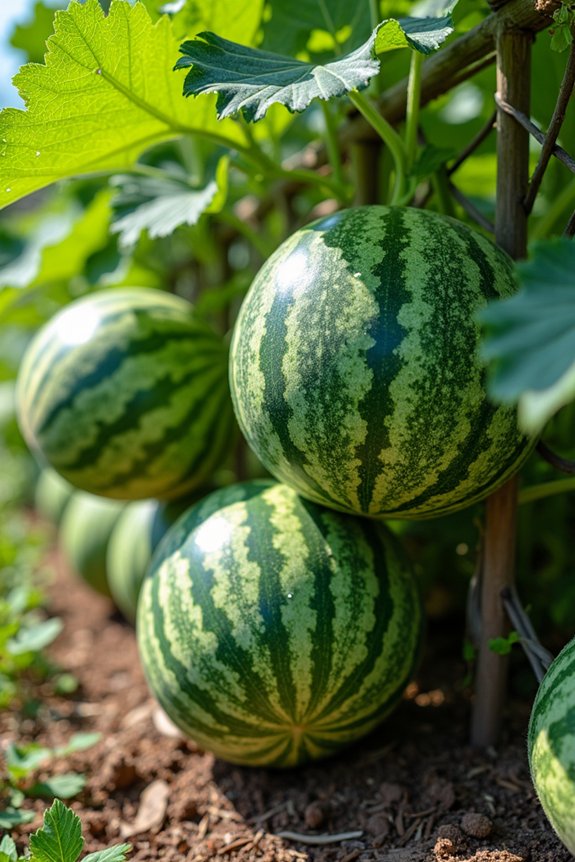
Which watermelon varieties actually work well on a trellis? I’ve found that choosing the right cultivar is important when you’re growing vertically. Lighter varieties perform well on vertical systems, while heavier melons need sturdier support and sling reinforcement.
| Variety | Weight | Support Level |
|---|---|---|
| Sugar Baby | 8-10 lbs | Netting only |
| Yellow Doll | 6-8 lbs | Light sling |
| Crimson Sweet | 15-20 lbs | Heavy sling |
I recommend starting with smaller cultivars if you’re new to trellising. They’re forgiving and require minimal sling adjustments as they mature. Once you’ve mastered the technique, you can move to larger varieties. The key is matching your melon’s final weight to your trellis frame’s capacity.
Build a Trellis Strong Enough to Handle Heavy Melons
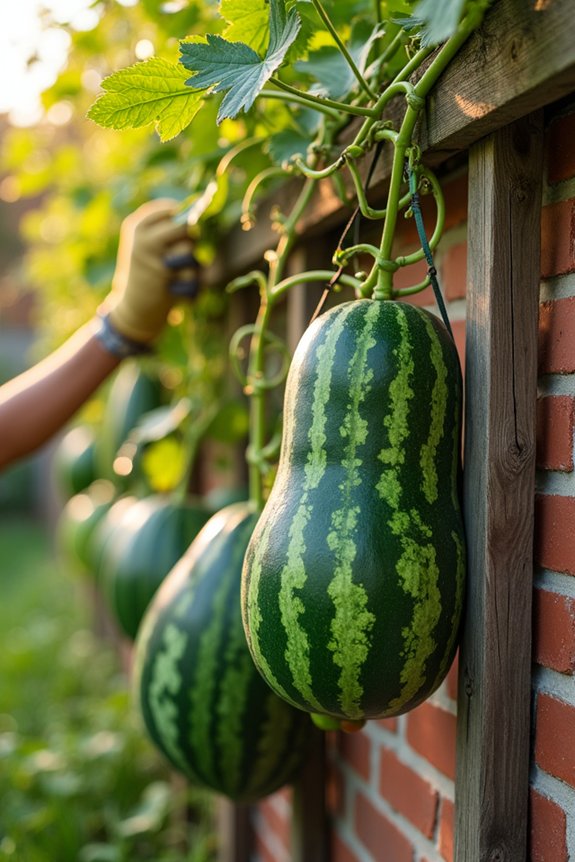
Now that you’ve picked varieties suited to vertical growing, it’s time to build the framework that’ll actually support them. I recommend sturdy cattle panels or thick-gauged field fencing as your trellis foundation—these materials won’t buckle under heavy melon weight.
Here’s where slings become your hidden asset. I use onion bag netting, old fabric scraps, or even pantyhose tied securely to the trellis, cradling each developing melon. These slings distribute weight evenly and prevent sagging as your fruit grows larger.
For smaller melons under seven pounds, basic netting works fine. However, heavier varieties demand reinforced frames and sling tension adjustments. I periodically retighten my slings as melons expand, maintaining even support throughout the growing season. Start with a well-anchored trellis, and your vertical melon system will perform reliably.
Plant on Mounds for Better Drainage and Root Health
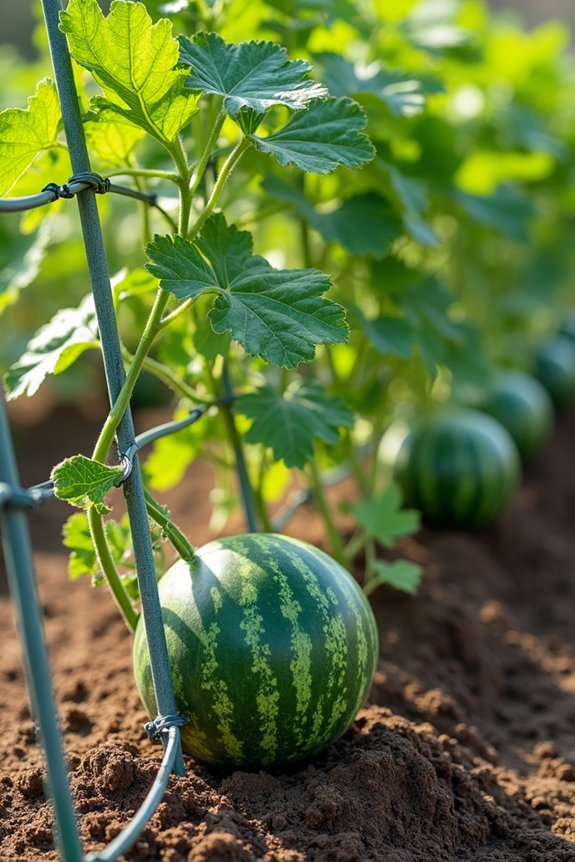
Mounding your watermelon beds is a practical gardening technique that improves plant performance. When growing watermelons on a watermelon trellis, proper mound preparation is necessary for success.
| Mound Dimension | Benefit |
|---|---|
| 12-18 inches wide | Optimal root spread |
| 3 inches tall | Enhanced drainage |
| Deep root zones | Extended growth |
| Weed-free spacing | Reduced competition |
| Aerated soil | Better oxygenation |
Direct-seed two seeds per mound, then thin to one strong seedling once two true leaves appear. These mounds support deep, extensive root systems extending several feet beyond the bed, supporting large harvests. Cultivate around your mounds regularly to maintain soil moisture, prevent root competition, and promote better oxygenation. You create ideal conditions for vigorous plants that perform well on your trellis.
Guide Vines Up the Trellis
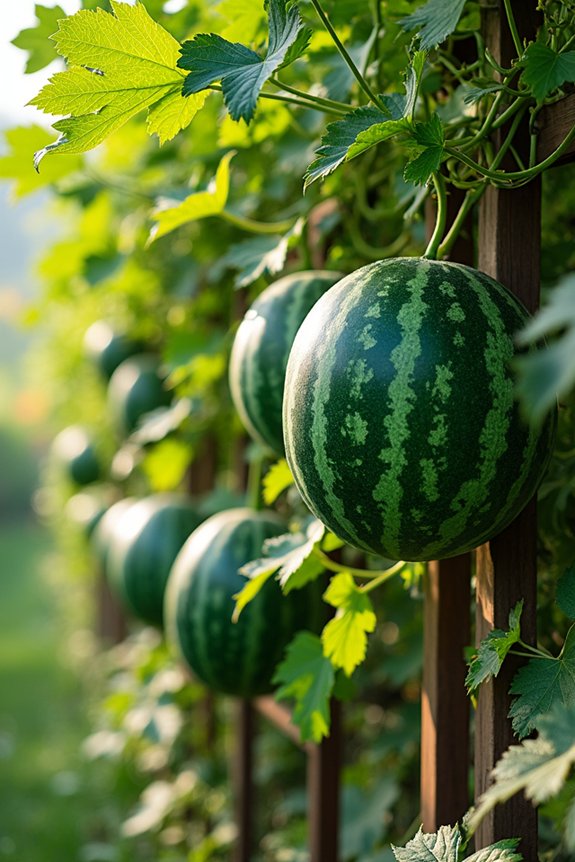
As your watermelon vines grow, you’ll need to actively direct them up your trellis structure to keep them off the ground and maximize your garden space. Gently weave developing tendrils through the trellis framework as they emerge, securing them loosely with soft ties or twine. This encourages upward growth rather than spreading horizontally.
As melons develop and gain weight, you’ll install slings beneath each fruit. Use knee-high stockings, netting, or fabric strips tied securely to your trellis to cradle the growing melons. These slings distribute weight evenly, preventing branches from sagging or breaking under the fruit’s heaviness.
Position your trellis vertically in Square Foot Garden beds to maximize limited space. This vertical approach lets you grow multiple plants while the vines continue developing upward, creating an efficient, productive growing system.
Create Slings to Cradle Heavy Fruit
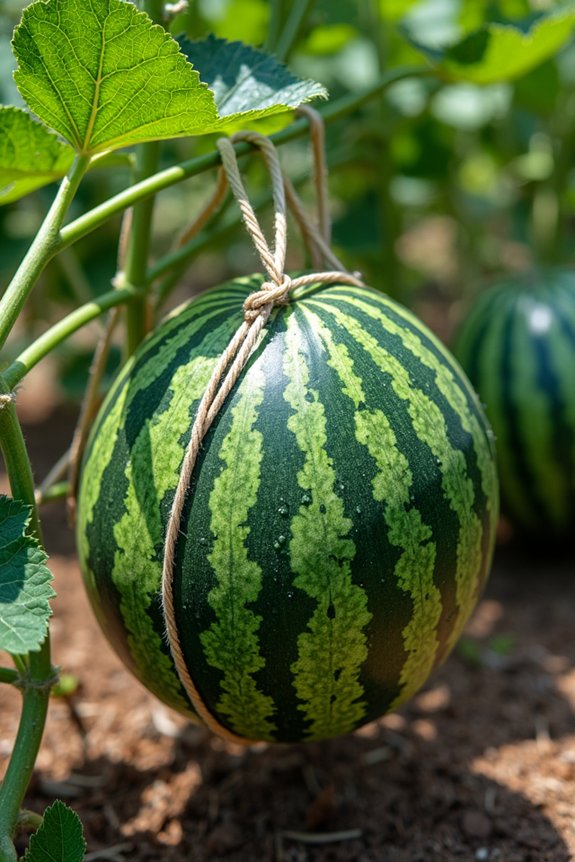
Support becomes your greatest ally when watermelons start packing on pounds. Slings distribute weight evenly, preventing the fruit from sagging or snapping branches. You’ll cradle the developing melon just beneath the fruit, keeping the stem pressure-free while securing everything firmly to your trellis.
| Sling Material | Best For |
|---|---|
| Onion or potato bag netting | Medium melons |
| Fabric scraps | Gentle support |
| Pantyhose | Growing fruit |
| Old bras | Sturdy hold |
| Leftover facemasks | Lightweight melons |
As your watermelon enlarges, adjust the sling’s tension regularly—snug enough for support, loose enough for growth. For heavier varieties, reinforce your trellis frame with additional supports. This approach keeps your fruit elevated and safe throughout the season.
Water Your Trellis Watermelons: Reduce Intake Before Harvest
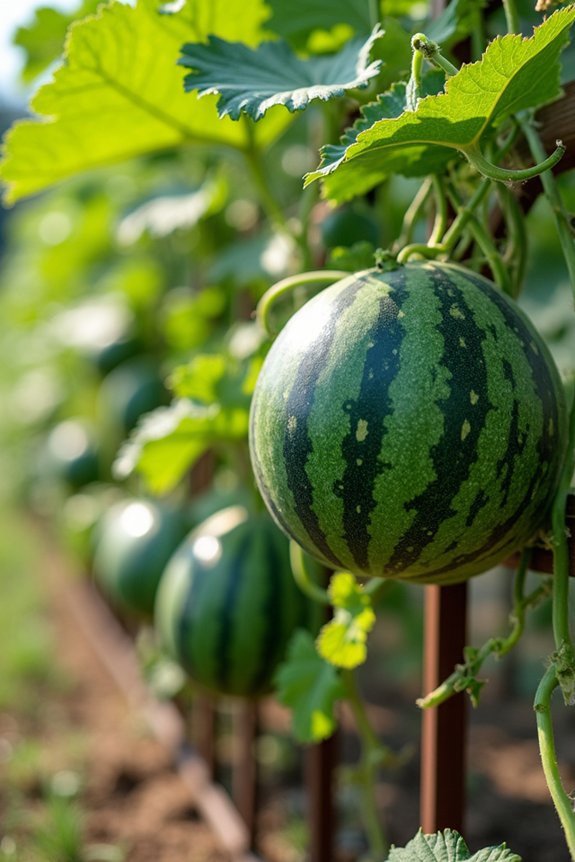
Once your slings are holding those melons securely, you’ll shift your focus to watering strategy. As your watermelons grow on the trellis, they’ll need consistent moisture to develop properly. However, about two weeks before harvest, reduce your watering frequency considerably. This adjustment concentrates the sugars in your fruit, making them sweeter and more flavorful.
What works best: water deeply but less often during this final stage. Your trellis watermelons will still need adequate moisture—don’t let them dry out completely—but cutting back prevents overly diluted fruit. Monitor soil moisture carefully and water only when the top inch feels dry.
This timing adjustment improves flavor quality, delivering the delicious melons your careful trellis work deserves.
Prune Excess Growth to Focus Energy
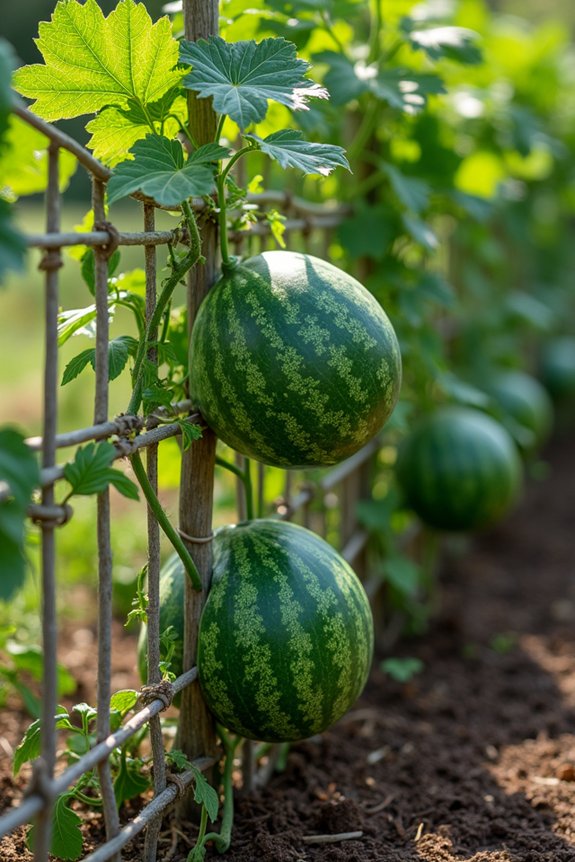
Once your watermelon vines reach 3–4 feet, you’ll want to remove competing plants from the bed and selectively prune excess shoots to redirect the plant’s energy toward fruit development rather than endless vine growth. By thinning unnecessary growth, you’re improving light penetration to developing fruits and reducing the shading that can slow ripening. This balance—keeping enough vigor for strong fruit set while removing the excessive vegetative growth—is what produces a productive trellis rather than a tangled one.
Remove Competing Vines Early
As your watermelon vines stretch toward the 3–4 foot mark, you’ll want to clear out any competing plants sharing the bed—and I mean all of them. This is your moment to claim the space entirely for your melons.
Here’s why: competing vines steal water and nutrients your watermelons need for fruit development. When you remove everything else, you’re directing all that energy toward your harvest. Mid-season is the right time to make this move.
Your trellising setup works best when watermelons have exclusive access to the bed. Whether you’re working with a 50-square-foot concrete block bed or smaller space, dedicate it completely to your crop. Clear soil means stronger growth, and stronger growth means the harvest you’re after.
Direct Energy To Fruit
Now that you’ve cleared competing plants from your bed, it’s time to fine-tune your watermelon vines themselves. Trellising saves space and directs your plant’s energy upward toward fruit production instead of sprawling growth.
Here’s what works: Once melons develop, cradle each one with netting, old stockings, or fabric scraps tied securely to the trellis. This supportive setup distributes weight evenly and prevents the fruit from snapping branches.
Start your cradle netting early while melons are small, then reinforce it as they grow larger. Adjust the sling regularly so it accommodates expanding fruit without sagging. This focused approach keeps your plant’s resources concentrated where they matter most—developing those sweet, mature watermelons you’re after.
Maintain Trellis Plant Health
How do you keep a trellised watermelon vine from squandering energy on unnecessary growth? Pruning excess growth directs the plant’s strength toward developing melons instead of sprawling foliage.
I recommend removing competing plants once vines reach 3–4 feet tall. This clearing gives your watermelons the space and resources they need. Next, selectively prune side shoots and leafy branches that aren’t supporting fruit development. This focused approach improves your trellis health by increasing airflow around the plant, reducing disease risk.
As melons grow, their weight demands attention. The pruning you’ve done strengthens the main vine, making it more capable of supporting heavier fruit. In your 50 sq ft bed, this targeted strategy boosts both melon size and harvest potential.
Space Trellis Plants to Prevent Disease and Improve Air Flow
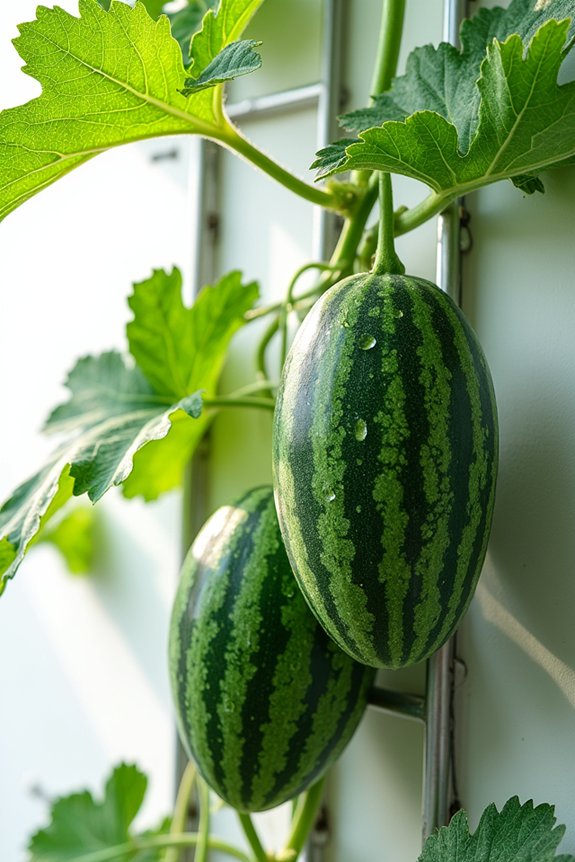
You’ll want to space your watermelon vines far enough apart so air can move freely between plants and reach all sides of the fruit. When foliage sits too close together, moisture gets trapped, creating the perfect environment for fungal diseases like powdery mildew and leaf spots. Proper spacing—typically 12–18 inches between vines along your trellis—reduces disease risk and makes it easier to spot problems early.
Spacing Requirements for Healthy Growth
Proper spacing separates a productive watermelon trellis from a disease-prone setup. Larger varieties need 6 feet by 4 feet per plant, while smaller Icebox types fit comfortably in 2 feet by 4 feet. This spacing matters because it keeps air flowing freely around your plants, which prevents humidity-related diseases that love crowded conditions.
When planning trellis spacing, remove competing bed crops once vines hit 3–4 feet long. This gives watermelons the sole access they need. Deep, well-spaced beds with generous soil depth support bigger, stronger plants.
Proper spacing prevents problems and creates an environment where your watermelons produce well.
Air Circulation and Disease Prevention
Building on that spacing foundation, you’ll find that airflow becomes your best defense against the fungal and bacterial diseases that thrive in humid, crowded conditions.
I’ve learned that proper spacing and trellis design work together to promote air circulation around your vines. When leaves stay drier, they’re far less prone to foliar diseases that plague ground-level watermelons.
Here’s what I do: I use sturdy frames—cattle panels or thick-gauged fencing—and secure slings or nets to keep fruit elevated and away from damp soil. I regularly tie and adjust these supports, maintaining even weight distribution and preventing fruit wounds that become infection points.
This disease prevention strategy keeps plants healthier. By combining thoughtful spacing with vertical growth, you’re creating an effective growing environment for successful watermelons.
Identify Ripe Watermelons on the Vine
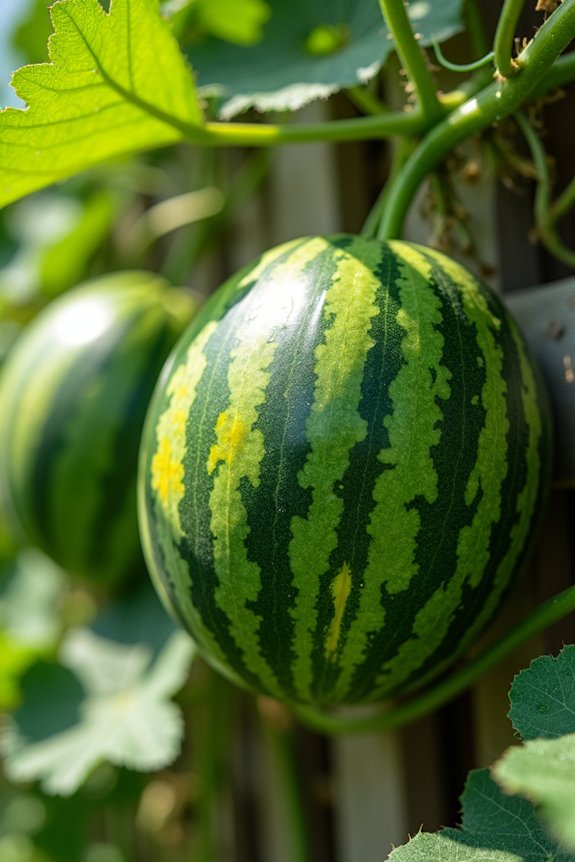
When should you harvest that watermelon hanging from your trellis?
Knowing the right ripeness indicators is important. You’re looking for these key signs:
Knowing the right ripeness indicators is important for harvesting perfectly sweet, trellised watermelons at peak flavor.
- A dull rind instead of a shiny one
- Browning tendrils near the stem attachment point
- A pronounced thud when you gently tap the fruit
The rind dulling combined with easy detachment indicates the sugar content is optimal. Gently lift each melon to check if it separates readily from the stem with minimal force—this matters for trellised varieties.
Thudding works especially well for larger types on your support system. If you’re uncertain, compare your watermelon to one you know is perfectly ripe from the same variety. With practice, you’ll develop a feel for perfect ripeness.
Troubleshoot Common Trellis-Growing Challenges
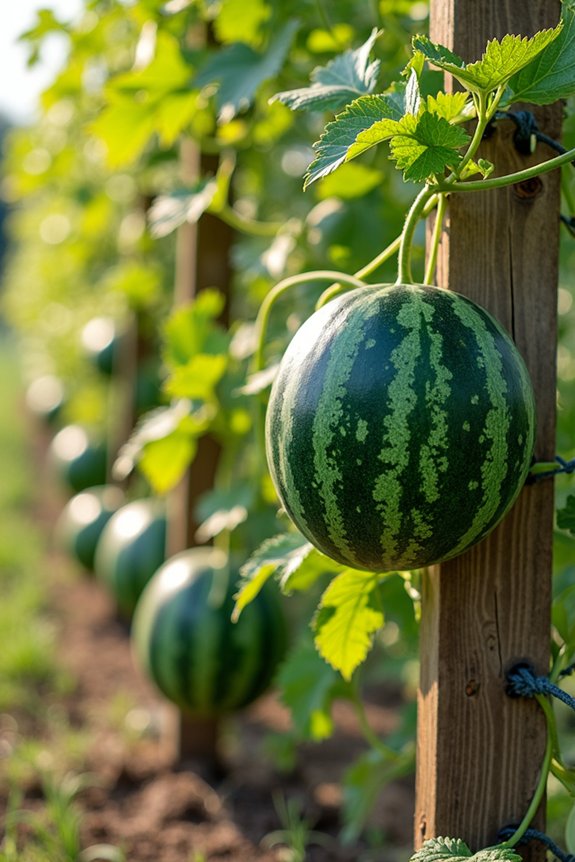
While vertical growing saves space, you’ll face a few predictable challenges that you can manage. The most common issue is sling failure—your support system needs reinforcement as melons grow heavier, so check tension weekly and upgrade to stronger materials like fabric or netting for fruit over seven pounds. Watch for sunburn on exposed fruit and create shade cloth barriers when needed, while ensuring your vines distribute their weight evenly across multiple trellis points to prevent sagging and structural damage.
Fruit Support and Sling Failure
How do you keep a heavy watermelon from crashing down through your carefully constructed trellis? Sling failure happens when we underestimate our fruit’s weight or overlook critical support details.
Here’s what causes most sling failures:
- Insufficient frame strength that can’t handle the melon’s growing mass
- Inadequate sling tension allowing the fruit to sag or pull away
- Improper attachment points where the fruit separates from the support
Reinforcing your trellis from the start prevents disaster. For melons around 7 pounds or heavier, use a hammock-style sling that distributes weight evenly. Stockings or pantyhose work well when stretched as your watermelon grows. Check your setup regularly—catching sagging early protects your harvest.
Vine Weight Distribution Issues
Beyond keeping individual melons from sagging, you’ll need to manage the weight your entire vine places on the trellis structure. As vines grow heavier with fruit, they’ll pull downward unevenly, straining certain sections of your trellis.
Distributing weight across multiple support points prevents this problem. Space your trellis sling attachments every twelve to eighteen inches along the vine’s main stems, not just at the fruit. This spreads weight distribution more evenly throughout your structure.
Cattle panels or thick-gauged fencing work best for this purpose—they’re built to handle substantial strain. As your vines mature, monitor how they’re settling on the trellis. Adjust sling positions slightly if you notice sagging between attachment points. This approach keeps your entire plant supported securely.
Sunburn and Fruit Protection
When you’ve successfully supported your melons on a trellis, you’ve solved one problem—but now you’ll face another challenge that catches many growers off guard.
Exposed fruit hanging on your trellis receives intense, direct sunlight that can cause sunburn—those ugly brown patches that ruin your harvest. Protection matters as much as support does.
Here’s what to do to shield your melons:
- Leave some foliage on the vine to naturally shade developing fruit
- Drape lightweight shade cloth over exposed areas during peak heat hours
- Paint fruit with diluted white latex paint for UV reflection
These methods work together. The leaves provide dappled shade while slings keep fruit properly positioned. This combination prevents sunburn while your trellis system handles weight distribution. You’re creating the right growing environment for quality melons.