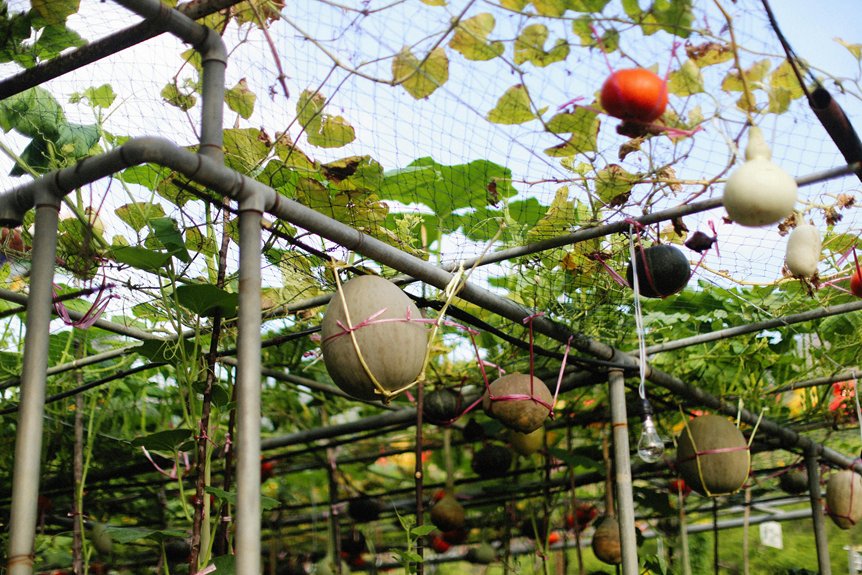
I’ll grow cantaloupe vertically by building a sturdy trellis from cattle panels or fencing—this saves space and keeps fruit healthy.
I start with a 4×8 foot raised bed filled with quality compost, then space plants 15 inches apart at the base.
As vines grow, I guide them upward with stretchy ties and create simple slings from pantyhose to support developing fruit.
I water deeply with drip irrigation, tapering off during ripening to increase sweetness.
Watching for color changes and a sweet aroma tells me when harvest time arrives!
Choose a Trellis Structure for Cantaloupe
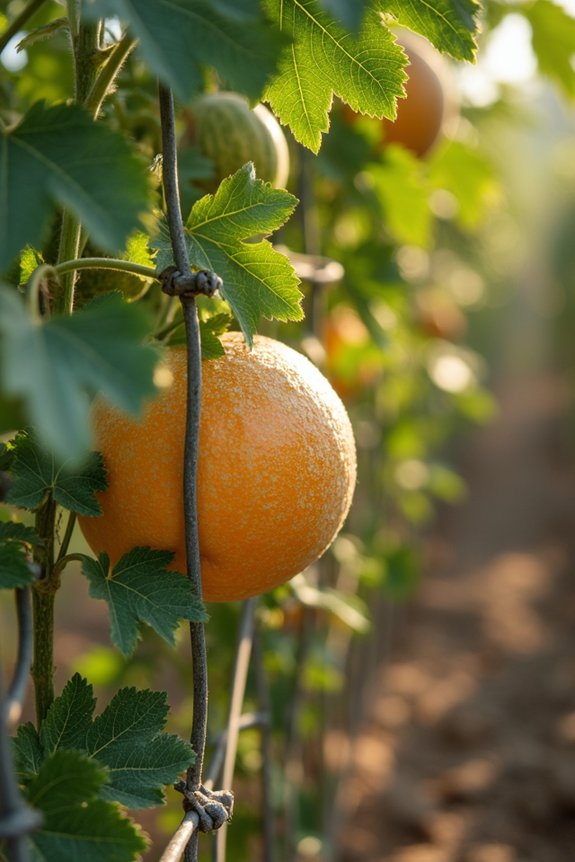
When you’re growing cantaloupe vertically, you’ll need a trellis that’s sturdy enough to support the weight of developing fruit—and that’s the first decision you’ll make! I’d recommend using cattle panels or thick-gauged fencing as your foundation. These materials handle the substantial weight of mature melons without bending or failing.
Your trellis structure options are flexible. You can choose arched trellises, gazebos, tall cages, or two-pole systems with twine. Each maximizes space in raised beds while keeping your cantaloupe off the ground.
The key to successful weight management is building your support system with strength in mind. Don’t compromise on frame quality—a weak trellis will collapse under fruit load. Start with robust materials, and you’ll create a solid foundation for vertical cantaloupe growing.
Prepare Soil and Build Your Growing Bed
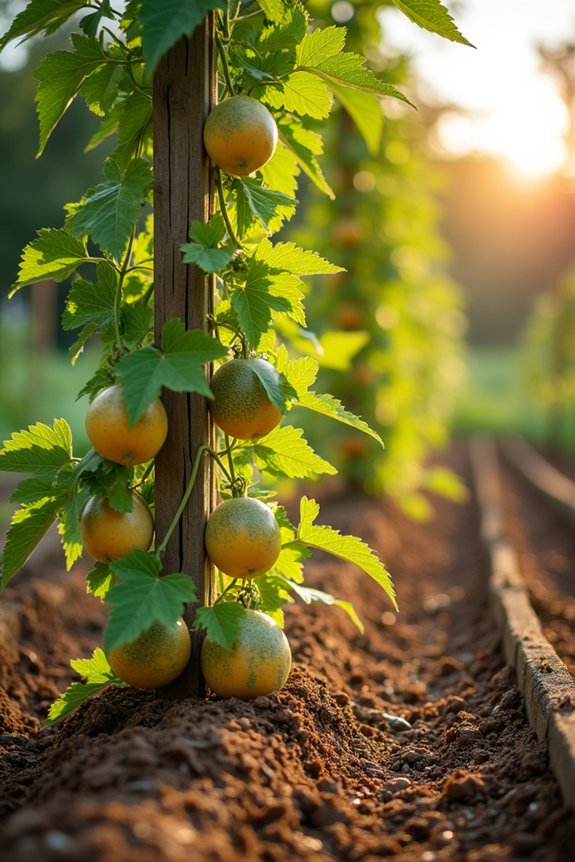
Now that you’ve selected your trellis structure, you’ll need to build a solid foundation for your cantaloupes. I’m going to walk you through preparing a 4×8 foot raised bed with quality soil composition, proper drainage, and the right pH level for vine growth. Let’s start by building your bed and getting that soil just right!
Soil Composition and Quality
Several critical steps go into preparing a soil bed that’ll support healthy, productive cantaloupe vines on your trellis.
I’ve found that creating the right soil composition is important for your success. Here’s what I focus on:
- Mix in compost – Incorporate several inches of aged compost into your existing soil to boost fertility and nutrient content
- Ensure proper drainage – Your soil must drain well to prevent waterlogging, which damages roots and encourages disease
- Consider Mel’s Mix – For Square Foot Gardens, this fertile blend supports vigorous growth and excellent fruit production
- Test soil quality – Rich, dark soil with good structure indicates you’re ready for planting
I treat soil as my foundation for everything. When you invest in quality composition upfront, your cantaloupe vines produce excellent results.
Building Raised Garden Beds
How ready are you to create the ideal growing environment for your trellised cantaloupes? I’ll walk you through constructing raised beds that’ll set your melons up for success.
Build your raised beds to measure 4 feet by 8 feet—the perfect size for trellised growth. Fill them with several inches of quality compost or aged compost-enriched soil mixes. This creates the fertile, well-drained conditions cantaloupe roots need.
Next, position your trellis so its high end sits about 4 feet above the bed surface. Raise the low end on a small riser and secure it with zip ties or staples.
Finally, install irrigation using drip lines or soaker hoses. This maintains consistent moisture while reducing weeds and keeping fruit off soil. You’re building a productive system!
Drainage and pH Testing
Before you plant a single seed, your soil’s drainage and pH level will determine your cantaloupe harvest. Getting these fundamentals right prevents problems later on.
Here’s what to do:
- Test drainage by watering deeply and watching for quick downward water movement within 30 minutes
- Check soil pH between 6.0 to 6.8 using a test kit to optimize nutrient availability
- Amend heavy soils with compost and aged manure, improving texture considerably
- Install drip irrigation or soaker hoses to deliver consistent moisture while keeping foliage dry
Building raised beds solves problematic soil issues and creates ideal growing conditions. Combine sandy-loam soil with ample organic matter, creating the right environment for trellised cantaloupes. This foundation supports plant development and quality fruit production.
Plant and Train Vines on the Trellis
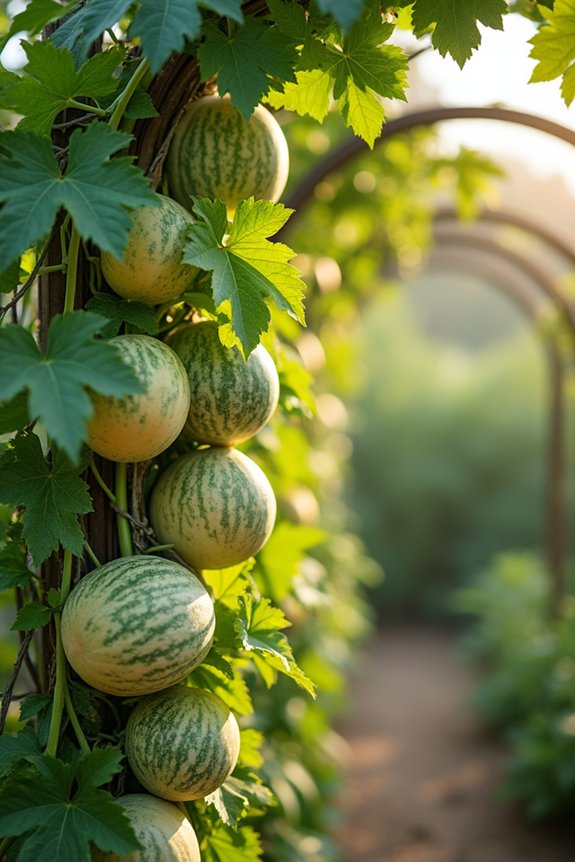
Once your cantaloupe vines start growing, guide them upward on your trellis to maximize space and keep fruit off the ground. Tie long vines gently using stretchy plant ties, being careful not to crush the delicate stems. As your vines climb, reposition them daily and use their natural tendrils to help support the fruit load. Space cantaloupe plants about 15 inches apart along the base so they develop underneath, on top, and around your trellis structure. For heavier fruit, create simple slings using old pantyhose or netting to cradle developing melons and prevent sagging branches. This training method keeps your cantaloupe vines organized and productive throughout the growing season.
Water and Feed Your Cantaloupe at Key Growth Stages
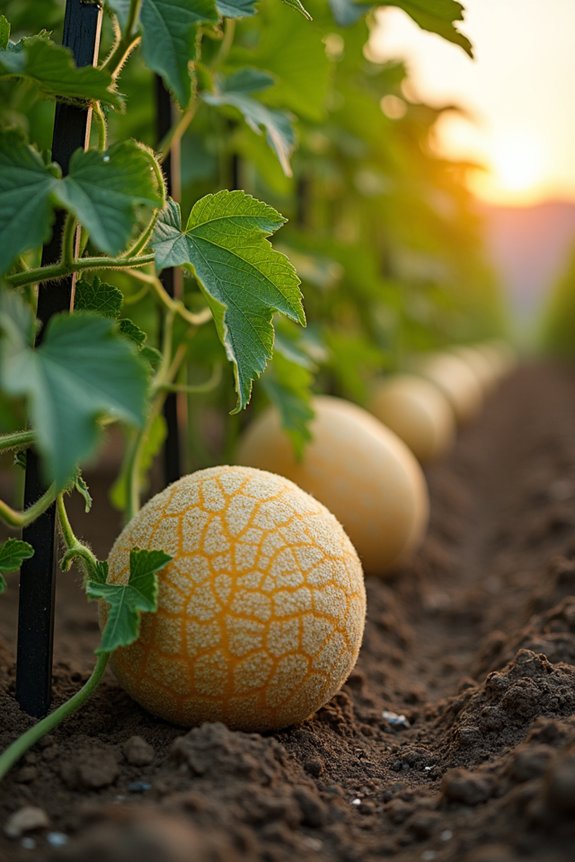
With your vines now climbing the trellis, shift your attention to watering and feeding—the two factors that’ll improve your cantaloupes from decent to deliciously sweet.
Timing matters. Here’s my approach:
- During active growth: Water deeply and regularly to support vigorous vine development and fruit formation on the trellis.
- As melons develop: Use drip irrigation or soaker hoses with mulch to maintain consistent moisture while keeping leaves dry and preventing disease.
- During ripening: Taper watering gradually to concentrate sugars naturally.
- Before harvest: Reduce water for about a week to boost sweetness, then resume afterward if you want regrowth.
For feeding, apply compost or aged manure throughout the growing season. This consistent nutrition supports robust fruit production.
Harvest Ripe Cantaloupe by Watching for These Ripeness Cues
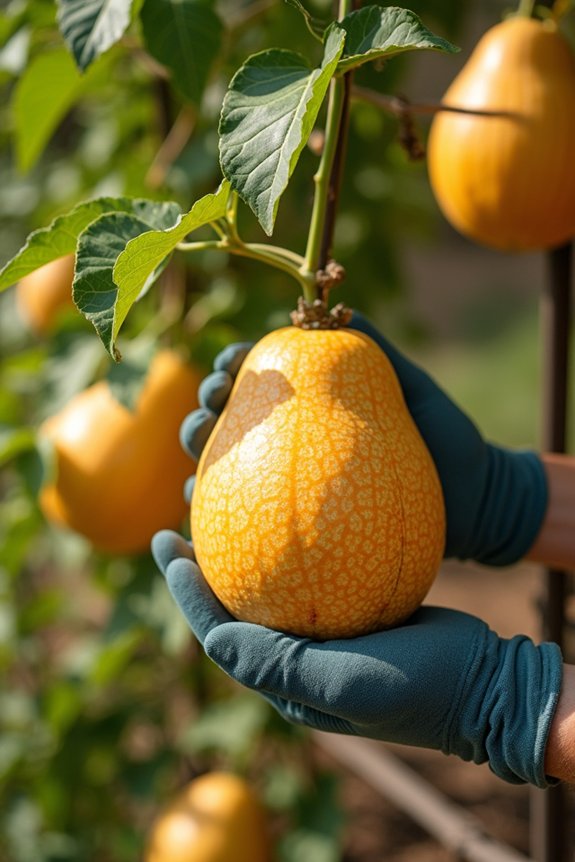
How do you know when your cantaloupe’s actually ready to pick? Ripe cantaloupe gives you several clear signals, especially when trellis growing.
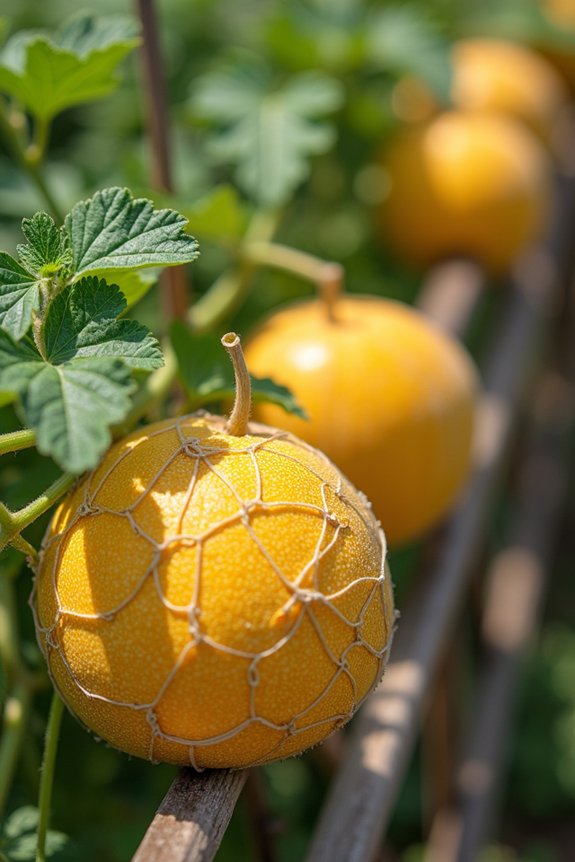
Watch for these harvest cues: the rind shifts from gray-green to yellow-buff, and you’ll notice a pronounced netting pattern across the surface. Smell near the fruit. A mature cantaloupe emits a musky, fruity aroma that’s unmistakable.
The most reliable cantaloupe ripeness indicator? Check the stem base for a crack encircling it. When you spot this, gently try slipping the fruit from the vine. A ripe cantaloupe releases with no tugging needed.
About a week before expected ripeness, reduce watering to concentrate sugars and enhance flavor. These signs will help you harvest perfectly ripe cantaloupes consistently.
Troubleshoot Common Issues: Poor Ripening, Fruit Drop, and Disease
Troubleshoot Common Issues: Poor Ripening, Fruit Drop, and Disease
Even with careful trellis setup, you’ll likely encounter a few growing challenges—but they’re manageable once you know what to watch for.
Even with careful trellis setup, growing challenges are manageable once you know what to watch for.
Addressing these issues early improves your harvest success:
- Poor ripening – Reduce watering about a week before harvest to concentrate sugars, while keeping vines hydrated enough to prevent wilting
- Fruit drop – Pick cantaloupes promptly when they slip easily off the vine; delayed harvesting increases drop risk
- Disease management – Space trellises for better air circulation, monitor regularly for Alternaria and powdery mildew, and water at the soil base only
- Weight stress – Use sling supports like netting or pantyhose to secure fruit and transfer stem weight
These preventative steps keep your trellised melons producing well.