
Hormel Foods Corp. owns Planters after acquiring the brand from Kraft Heinz for $3.35 billion in June 2021. Hormel has designated Planters as a cornerstone brand and is investing in expansion across production facilities in California, Virginia, and Arkansas. The company projects $50–$60 million in synergies by 2024 while introducing new flavors and formats to the product line.
Hormel Acquires Planters for $3.35 Billion

In June 2021, Hormel Foods Corp. completed a significant deal that reshaped its snack portfolio—acquiring the entire Planters brand family from Kraft Heinz Co. for $3.35 billion. This major purchase represented Hormel’s largest acquisition ever, combining cash reserves with strategic debt financing.
The deal brought iconic brands including Planters, NUT-rition, Planters Cheez Balls, and Corn Nuts under one roof. Beyond the brands themselves, Hormel gained dedicated production facilities across California, Virginia, and Arkansas, expanding its manufacturing capabilities considerably.
The acquisition positions Hormel Foods toward its long-term organic growth targets. Management estimates the deal will generate $50–$60 million in synergies by 2024. This investment strengthens Hormel’s competitive standing in the snack category while providing access to well-established, trusted brands.
Planters Ownership Timeline
You’ll find that Planters’ ownership story spans over a century, starting with Italian immigrant Amedeo Obici’s founding and moving through several major corporate hands before landing with Hormel Foods in 2021. I want to walk you through the key shifts—from the company’s early roots in Pennsylvania through its transformation into a mass-production powerhouse in Virginia, then its journey through Standard Brands, Nabisco, Kraft, and finally to Hormel. This timeline illustrates how a family-founded snack brand became part of some of the world’s largest food corporations.
Founding And Early Establishment
Planters’ story begins with Amedeo Obici, an Italian immigrant who arrived in Wilkes-Barre, Pennsylvania with ambition and a willingness to work his way up. He started as a bellhop and later ran a fruit stand before recognizing an opportunity in the peanut business.
In 1906, Obici partnered with Mario Peruzzi, whose innovative blanching method for whole roasted peanuts transformed their operation. Two years later, they incorporated the Planters Nut and Chocolate Company, formalizing what would become an industry leader. Their strategy was straightforward: compete on price while maintaining quality and building a memorable brand that would keep customers returning.
Corporate Acquisitions And Mergers
After building their foundation as an independent company and later becoming part of larger food conglomerates, Planters’ ownership story took a significant turn in the twenty-first century. Kraft Heinz acquired Planters, but eventually decided to streamline its portfolio by divesting non-core assets. That’s when Hormel Foods Corp. stepped in, completing a major acquisition in June 2021 that brought Planters and related brands—NUT-rition, Planters Cheez Balls, and Corn Nuts—into their family. This deal added roughly $1 billion in annual net sales to Hormel’s business. Unlike Kraft Heinz’s broad divestiture strategy, Hormel positioned Planters for focused investment within its branded foods division. Experts anticipated the acquisition would generate $50–$60 million in synergies by 2024, signaling strong confidence in Planters’ future growth potential.
Hormel Foods Current Ownership
How did Planters transform under new leadership? When Hormel Foods acquired Planters from Kraft Heinz in June 2021 for approximately $3 billion, the iconic brand entered a new chapter. This acquisition included Planters, NUT-rition, Planters Cheez Balls, and Corn Nuts—expanding Hormel Foods’ snacking portfolio substantially.
Hormel’s leadership recognized Planters as a valuable asset ready for focused investment and growth. The company strategically established dedicated production facilities across California, Virginia, and Arkansas to support Planters’ expanded reach. This move reflected Hormel Foods’ commitment to revitalizing the beloved brand within its growing snacking platform. You’re now part of a community backing a company committed to elevating classic snacks through innovation and dedicated resources.
Why Kraft Heinz Sold Planters to Hormel
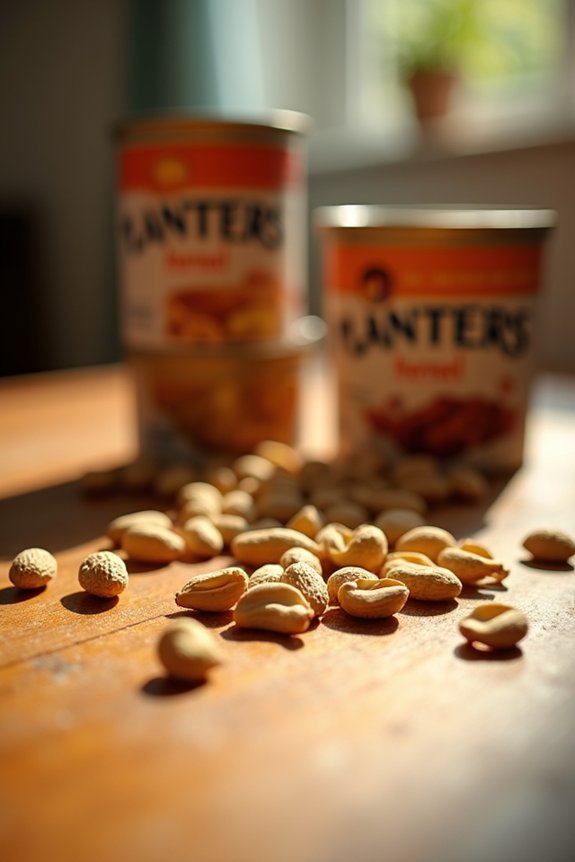
Why’d Kraft Heinz decide to let go of such an iconic snacking brand? The company needed to refocus its portfolio on higher-growth opportunities while tackling debt. This strategic divestiture of Planters aligned with their long-term vision.
Here’s what drove the decision:
- Streamlining priorities: Kraft Heinz wanted to concentrate resources on core brands with stronger growth potential
- Debt reduction: Selling Planters generated roughly $3 billion, helping strengthen their financial position
- Portfolio rebalancing: The company recognized Planters as non-core to their evolving strategy
- Market positioning: Hormel was better positioned to maximize the brand’s snacking potential
The $3 billion deal, which closed in June 2021, transferred Planters, NUT-rition, Planters Cheez Balls, and Corn Nuts to Hormel. This move let both companies focus on their respective strengths and serve snacking consumers effectively.
How Hormel Changed Planters’ Operations
When Hormel took over Planters, they didn’t just stick the brand on a shelf—they invested heavily in dedicated production facilities across California, Virginia, and Arkansas to give these snacks the focused attention they needed. By allocating specialized resources and equipment specifically for Planters products like the classic nuts, NUT-rition line, Cheez Balls, and Corn Nuts, Hormel signaled that this was a strategic acquisition and expansion into the snacking category. This operational overhaul positioned Planters to compete more effectively in the market while supporting Hormel’s goal of generating $50–$60 million in annual synergies by 2024.
Production Facility Expansion
What happens when a major food company takes over a beloved snack brand? Hormel didn’t just acquire Planters—they invested in its future through strategic expansion.
When Hormel closed the deal in June 2021, they inherited three dedicated production facilities that became the backbone of Planters’ operations:
- California’s advanced processing center handling roasting and packaging innovations
- Virginia’s heritage facility maintaining traditional nut preparation methods
- Arkansas’s distribution hub streamlining product delivery nationwide
- Capacity upgrades enabling faster production without compromising quality
These facilities represented more than real estate. They symbolized Hormel’s commitment to keeping Planters competitive. You’re part of a community that values quality snacks, and these production centers support that commitment. The infrastructure investments positioned Planters for sustainable growth while preserving what made it iconic in the first place.
Dedicated Brand Resources Allocation
Beyond maintaining those three production facilities, Hormel fundamentally reshaped how Planters operates as a standalone brand within its corporate structure. I’ll explain what this means for you: Hormel allocated dedicated brand resources specifically to Planters, treating it as a distinct entity rather than simply absorbing it into existing operations.
This approach meant assembling teams focused exclusively on Planters’ growth and innovation. You’re seeing the result through expanded nut butter opportunities, where Hormel strategically connected Planters with complementary brands like Justins and Skippy. These dedicated resources enable cross-brand collaboration while maintaining Planters’ identity.
The company invested in specialized staff, marketing initiatives, and product development centered on the Planters portfolio. This commitment to standalone brand resources demonstrates how seriously Hormel takes this acquisition, positioning Planters for sustainable growth within a supportive corporate environment.
Hormel’s Growth Plans for the Iconic Mr. Peanut Brand
How is Hormel positioning itself to transform Planters into a major growth engine?
When Hormel Foods acquired Planters from Kraft Heinz in June 2021, they weren’t just buying a brand—they were claiming a valuable asset. Hormel has committed serious resources to elevate Mr. Peanut and his portfolio toward aggressive organic growth targets.
What makes this transformation significant:
- Dedicated production facilities across California, Virginia, and Arkansas maintain quality control
- Synergies worth $50–$60 million by 2024 improve operational efficiency
- Cross-brand collaboration with Justins and Skippy strengthens the snacking platform
- Top-priority status guarantees focused marketing and innovation investment
Hormel is treating Planters as a cornerstone brand worthy of strategic attention. The company is making a substantial investment in revitalizing an established brand that will compete effectively in today’s expanding snack market.
New Planters Products and Campaigns
Since acquiring Planters in 2021, Hormel’s product development team hasn’t waited around—they’ve launched a series of inventive offerings designed to capture new consumer segments and strengthen shelf presence across multiple categories. Where Kraft Heinz had maintained a more traditional approach, you’ll now find Planters products pushing creative boundaries. The team’s tapped into dedicated California, Virginia, and Arkansas facilities to manufacture bold new flavors and formats that speak to today’s snacking preferences. From innovative nut blends to reimagined classics, these launches reflect Hormel’s commitment to evolving what Planters means to modern consumers. The company’s targeting those $50–$60 million synergies partly through smart product expansion, ensuring the iconic brand stays relevant and desirable in competitive markets.