Planters rarely labels cashews as certified gluten-free, even when ingredients don’t contain gluten. You’ll need to check the package for “may contain gluten” warnings and contact Hormel Foods directly about their shared equipment practices.
Independent testing with tools like Nima offers a snapshot but doesn’t guarantee ongoing safety across production batches.
Consider certified alternatives like Sahale Snacks or Trader Joe’s for stronger assurance.
Understanding the full picture of how Planters handles gluten risks requires additional investigation.
Why Planters Skips Gluten-Free Labeling
Why doesn’t Planters add a gluten-free label on products that don’t contain gluten ingredients? The answer lies in certified gluten-free standards and manufacturing reality. Planters hasn’t pursued formal certification because their facilities process both gluten-free and gluten-containing items on shared production lines. This cross-contamination risk means they can’t guarantee the safety levels required for official gluten-free claims.
Planters avoids gluten-free labels due to shared production lines and cross-contamination risks, prioritizing safety over marketing claims.
This situation may feel frustrating when you’re searching for reliable options. The brand has confirmed some products contain no gluten ingredients, yet they won’t make labeling claims without eliminating contamination risks entirely. Rather than mislead consumers who depend on accuracy, Planters takes a conservative approach.
This caution protects you. It indicates they prioritize transparency over marketing trends.
The Cross-Contamination Problem in Planters Facilities
How does a product end up gluten-free in ingredients but risky for those avoiding gluten? That’s the cross-contamination issue I’ve discovered with Planters.
Here’s the reality: Planters processes their cashews and nuts on equipment that also handles gluten-containing items. This shared facility setup means gluten particles can transfer onto supposedly safe products, even when gluten isn’t listed as an ingredient.
What frustrates me most is that Planters doesn’t provide gluten-free labeling despite these concerns. You won’t find reassuring certifications on their packaging. Multiple sources confirm this gap between ingredient safety and actual processing practices.
For those avoiding gluten, this matters greatly. You’re relying on labels that don’t tell the complete story about cross-contamination risks.
Decoding Planters Labels: What to Look For
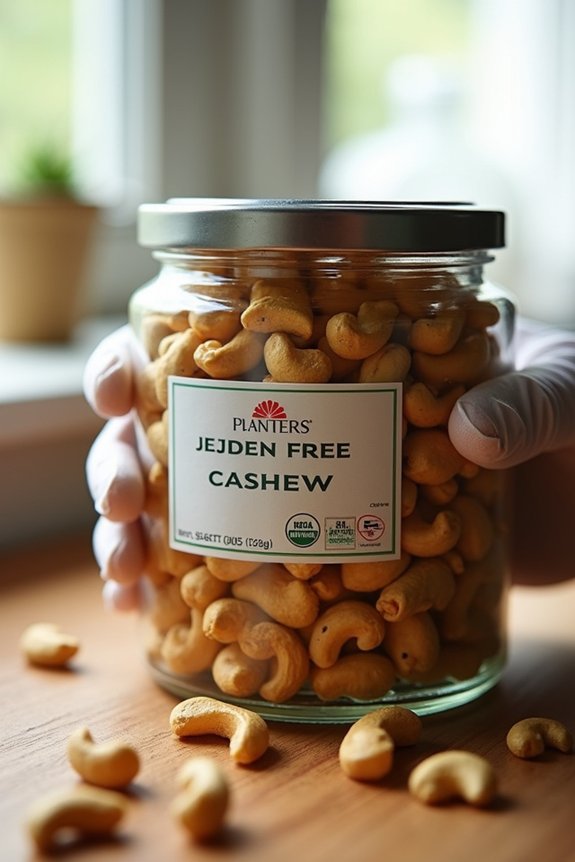
When you’re checking a Planters cashews label, scan the ingredient list first—look for any wheat, barley, or rye mentions, and pay close attention to that “may contain” or “processed on shared equipment” language since cross-contamination warnings tell you about potential gluten exposure. You should also look for third-party certifications like the Certified Gluten-Free seal, though Planters products often lack this stamp, which means you’re relying more heavily on what the manufacturer actually states. Finally, contact Planters directly if the label doesn’t clearly answer your questions, because manufacturer confirmation beats guesswork when you’re managing gluten sensitivity.
Label Ingredient Verification
Your best defense against hidden gluten in Planters cashews is a careful read of the ingredient label itself. I recommend scanning for any wheat, barley, or rye listings—these are the main gluten culprits you’ll encounter.
Check the allergen statement located near the ingredients. Planters products aren’t universally labeled gluten-free, so don’t assume safety from marketing claims alone. Instead, verify the gluten-free status through direct label verification.
Look for phrases like “may contain gluten” or “processed on shared equipment,” which signal cross-contamination risks. These warnings matter significantly if you’re highly sensitive.
I’d suggest photographing the label or keeping a list of approved Planters cashew varieties. Formulations change, so periodic rechecks protect you. When in doubt, contact Planters directly—they’ll provide current ingredient information and clarify their processing practices.
Cross-Contamination Risk Indicators
Now that you’ve scanned the ingredient list, it’s time to examine the processing statements—they’re where the real cross-contamination story unfolds.
Here’s what I want you to understand: Planters products typically aren’t labeled gluten-free, and that’s important information. You’ll find processing statements like “made on shared equipment” or “may contain traces of wheat” on many packages. These statements matter because they indicate cross-contamination risk.
Look specifically for these warning phrases on your cashew container. If you don’t see explicit gluten-free labeling, assume potential exposure exists. Independent testing on some Planters salted cashews showed no hidden gluten, but results don’t guarantee all batches are safe.
Contact Planters directly about current processing lines and contamination controls. This approach gives you the confidence you deserve when making informed choices about products you’re consuming.
Certification Status Recognition
The certification symbols on a product label tell you something that ingredient lists can’t: whether an independent third party has verified the product’s gluten status. These symbols are reassuring when shopping for cashews.
Look for certified gluten-free seals from organizations like the Celiac Support Association or NSF International. These certifications mean someone’s tested the product and confirmed it meets strict gluten standards. Unfortunately, most Planters products don’t carry these labels, which creates uncertainty for those managing gluten sensitivity.
That’s why I recommend seeking out gluten-free labeling explicitly stated on packaging. When you spot that certified seal, you’re getting third-party assurance beyond manufacturer claims. It’s worth the effort to find products with this verification—your peace of mind matters.
Contact Hormel About Gluten-Free Planters Products
How can you be absolutely certain that a specific Planters cashew product is gluten-free? Contact Hormel Foods, Planters’ parent company, directly. Reach out to their consumer relations team and ask which cashew varieties are formulated without gluten-containing ingredients on current production lines.
Request specific details about cross-contamination safeguards. Find out whether your chosen product uses dedicated gluten-free equipment or follows rigorous cleaning protocols to GF standards. Ask about current certifications like GFCO or facility disclaimers on packaging.
Inquire about recent formulation changes or supplier updates affecting gluten status. Request batch-specific testing results or third-party certification documentation. This direct communication provides you with confidence knowing exactly what you’re purchasing.
Test Planters Nuts Yourself: Independent Verification Methods
Independent Testing Tools
Use a Nima gluten sensor on a representative cashew batch. This device detects gluten presence quickly, though results apply only to that specific sample.
Test Multiple Varieties
Consider testing different Planters cashew types—raw, roasted, salted—across various lots. Formulations and facility usage change, so cross-contamination risks vary between products and batches.
Track Results Over Time
Document your findings carefully. You’re building personal data that reveals patterns about which products work safely for you.
Combine Testing Approaches
Pair independent testing with third-party certifications like GFCO or GFFP when available. This dual approach strengthens your confidence in safety decisions.
Which Planters Nuts Are Actually Safer?
If you’re serious about avoiding gluten, check whether a specific Planters product mentions cross-contamination risks on its label—many don’t carry explicit gluten-free certification, which means shared equipment with wheat-containing items could introduce trace gluten. Brands offering certified gluten-free nuts provide clearer safety guarantees, though some individual Planters products (like certain salted cashew varieties) have tested negative for gluten through independent verification. Compare Planters options against certified alternatives from companies that prioritize gluten-free processing, giving you confidence in what you’re buying.
Cross-Contamination Risk Assessment
When you’re checking whether a Planters nut product is safe for a gluten-free diet, the brand name alone won’t protect you—you need to dig deeper. Here’s why: Planters uses the same equipment for both gluten-containing items and plain nuts, creating real cross-contamination risks. I’ve found that some varieties may contain no gluten ingredients, yet they’re not consistently labeled as gluten-free. Even when independent testing like Nima showed no detectable gluten in Planters salted cashews, that’s just one snapshot in time. Product formulations and manufacturing practices change. You should verify each specific product label and contact the manufacturer directly. This diligence keeps you safe and confident in your choices.
Certified Gluten-Free Alternatives
Because Planters won’t commit to certified gluten-free labeling on most products due to shared manufacturing equipment, you’ll want to know which nuts actually offer the peace of mind you’re looking for.
I recommend seeking out brands displaying third-party certifications like GFCO or GFFP verification instead. These independent organizations test products thoroughly, confirming their gluten-free status beyond what manufacturers claim alone. When you’re shopping, look for these certification seals on packaging—they’re your guarantee that a product meets strict gluten-free standards.
While Planters salted cashews tested negative in one Nima detector test, single samples don’t ensure safety across entire product lines. Check current package labels directly, since formulations change. For reliable certified gluten-free options, prioritize brands that display third-party certification marks. These products provide the assurance you need.
Should You Test Planters or Switch Brands?
How do you decide whether it’s worth testing Planters cashews or moving to a certified gluten-free brand instead?
I’d recommend calling Planters directly to ask about their production lines and cross-contamination controls. This conversation gives you real answers about their safety measures. If you’re uncertain after talking with them, I suggest trying a certified gluten-free nut brand first—look for labels from GFCO or GFFP. These certifications mean rigorous testing happened.
Once you’ve found a safe alternative and feel confident, you can always reintroduce Planters later if you want. Testing individual products makes sense if you’ve confirmed their manufacturing practices. The goal? Finding cashews you can trust and enjoy without concern. You have the right to feel secure about what you’re eating.
Certified Gluten-Free Cashew Brands (Safer Than Planters)

If you’d rather skip the guesswork, certified gluten-free brands offer the peace of mind you’re looking for.
When you’re ready to invest in guaranteed safety, these trusted options deliver:
When you’re ready to invest in guaranteed safety, these trusted certified gluten-free brands deliver peace of mind.
- Sahale Snacks: Every product holds GFCO certification, making their cashews and mixed nuts reliably gluten-free
- Nuts.com: Combines GFCO-certified items with independent Nima testing that confirms no hidden gluten
- Trader Joe’s: Their labeled gluten-free nuts undergo independent testing below 20 ppm gluten limits
- Emerald: Check labels carefully since recent ownership changes affected their certification status
Choosing certified gluten-free nuts means you’re joining others who prioritize safety without compromise. These brands invest in rigorous testing and third-party verification, so you don’t carry contamination concerns into your snacking routine. You’ll know exactly what you’re getting!