

Yes, your immune system can clear plantar warts on its own—but it often takes 1–2 years or longer. During that wait, the wart may grow deeper from walking pressure, spread to other foot areas, and transmit to household members. Meanwhile, you’re dealing with potential pain and discomfort.
Professional treatments like cryotherapy or laser therapy offer faster relief in weeks to months. If your wart’s causing problems or growing despite time, professional evaluation helps you understand your best options.
Why Plantar Warts Develop and How They Persist
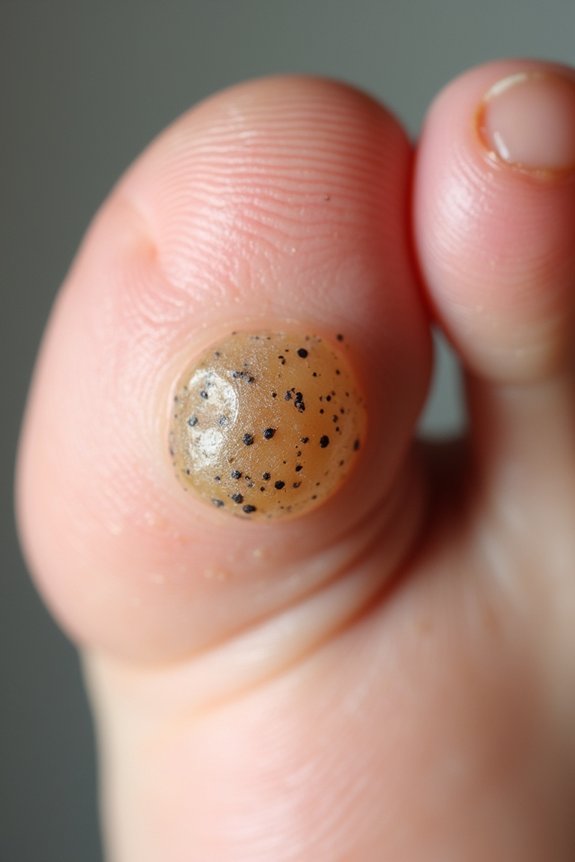
How do plantar warts actually take root on your feet? You need two things: an HPV infection and an entry point. The virus sneaks through tiny cuts or weakened skin on your sole, often from barefoot public exposure in pools, locker rooms, or showers. Once established, your plantar warts can stick around because the virus persists while your immune response works to clear it—a process taking months or years. Walking pressure constantly pushes the wart deeper into your skin, making treatment harder and persistence more likely. Without intervention, your immune response may eventually win, but don’t count on quick resolution. Meanwhile, direct contact or contaminated damp environments can spread the infection, potentially creating mosaic warts.
Do Plantar Warts Go Away on Their Own: and How Long?

The positive news is that your body can actually win this battle without outside help. Your immune system fights HPV, the virus causing plantar warts, and spontaneous resolution does happen. About one-third of warts clear within two years, though the time to go away varies considerably based on wart size, foot location, and your immune health.
Here’s the catch: even when warts disappear, HPV may linger in your skin, creating recurrence risk. Meanwhile, symptom progression and spreading to others remains possible during self-resolution.
If you’re experiencing pain, functional problems, or no improvement after waiting, treatment vs. self-resolution becomes worth discussing with your doctor. Medical intervention can shorten your timeline considerably and reduce spread during the healing process.
Why Waiting Often Backfires
While your immune system *can* clear plantar warts on its own, banking on spontaneous resolution often creates more problems than it solves. Here’s why waiting backfires: treatment delay allows warts to spread to other body areas and transmit to household members through shared surfaces and warm, moist environments. The contagious period extends months or years during spontaneous resolution, increasing transmission risk. Meanwhile, warts grow larger and more painful as pressure from standing and walking intensifies the infection. In adults especially, the duration stretches 1–2 years or longer before natural clearance occurs. Rather than hoping your immune system handles everything eventually, addressing plantar warts promptly prevents complications, reduces household spread, and brings faster relief. Early intervention beats extended waiting.
When Professional Treatment Makes Sense
If you’re dealing with foot pain that’s affecting how you walk or stand all day, or if your wart keeps spreading to other areas, that’s when you should consider seeing a podiatrist or dermatologist. Professional treatment becomes especially important because these specialists can stop the virus from creating mosaic warts (multiple connected warts that are harder to treat) and prevent you from passing the infection to others, particularly in shared spaces like gym showers. A healthcare provider can also customize their approach based on your wart’s size and location, potentially combining different methods for faster, more complete results than home treatments alone can offer.
Pain Impacts Daily Function
How much discomfort can you tolerate before seeking help? I understand that plantar warts can notably impact your daily function. When foot pain interferes with standing, walking, or running, you’re dealing with real consequences that affect your quality of life.
Here’s what I’ve learned: pressure-related pain from plantar warts doesn’t just disappear quietly. If your wart grows deeper or becomes progressively painful, that’s your signal to seek professional evaluation. A podiatrist can reduce that pressure pain and improve your mobility faster than waiting for natural resolution.
Consider this: multiple warts create greater mechanical stress on your foot. Rather than accepting limited mobility, professional treatment offers you faster relief and prevents potential worsening. You can move comfortably again.
Risk Of Viral Spread
Beyond the personal discomfort you’re experiencing, plantar warts pose a real contagion risk that shouldn’t be ignored. When you delay treatment, your viral spread intensifies—especially in shared spaces like showers and communal bathmats where moisture accumulates. Without intervention, you’re more likely to develop mosaic warts, where multiple lesions cluster together across your sole, becoming increasingly contagious to others through direct contact.
What matters: adults rarely clear plantar warts independently without professional help. The longer you wait, the deeper they embed, raising both your pain levels and contagiousness. Professional treatment—cryotherapy, laser therapy, or surgical removal—dramatically reduces viral burden faster than your immunity alone can manage. This stops the spread to your other body parts and protects those around you. Getting evaluated by a podiatrist or dermatologist now prevents extended complications and keeps your community healthier too.
Persistent Warts Require Intervention
You’ve now got a clear picture of why waiting out a plantar wart isn’t just uncomfortable—it’s risky for you and those around you.
Consider professional intervention in these situations:
- Warts that don’t budge beyond the typical 1–2 year timeline deserve expert attention
- Multiple warts merging together into mosaic warts signal you need treatment options now
- Pain in weight-bearing areas that worsens over time requires professional care
- Rapid spreading across your foot or household means intervention stops contagious spread
If your persistent warts are causing real distress or limiting how you move, don’t tough it out alone. Professional intervention addresses what self-care can’t, especially when warts deepen under pressure points. Seeking help isn’t giving up—it’s taking control of your health. Dermatologists understand plantar warts thoroughly and offer effective solutions tailored to your situation.
Plantar Wart Treatment Options Explained

When you’re ready to tackle your plantar wart faster than waiting it out, you’ve got choices ranging from what you can do at home to what a doctor can offer in their office. I’ll walk you through both professional treatment methods—like cryotherapy and laser therapy—and at-home remedies so you can figure out what fits your situation best. Understanding how each option works will help you make an informed decision about moving forward with treatment.
Professional Treatment Methods
Several highly effective options exist when plantar warts resist home remedies or cause significant pain. Dermatologists and podiatrists commonly recommend:
- Cryotherapy with liquid nitrogen freezes wart tissue, requiring repeat sessions every 2–4 weeks until complete removal
- Laser therapy and immune therapy target infected cells directly, offering faster results for stubborn cases
- Prescription-strength topical medications like cantharidin outperform over-the-counter options by destroying tissue more effectively
- Swift Microwave Therapy delivers focused energy with minimal downtime, making it suitable for active patients
Your specialist tailors treatment based on lesion depth, location, and your pain tolerance. Minor surgical removal works well for persistent warts, though it carries slight scarring risk. Sessions typically span weeks to months, with improvement evident as treatment progresses.
At-Home Remedy Options
How long are you willing to wait before trying professional help? While your immune system may eventually clear the HPV infection causing plantar warts, at-home remedies can speed up spontaneous resolution.
Salicylic Acid Treatment
This is your most effective at-home option. Apply prescription or OTC salicylic acid peels consistently over several weeks to months. This approach works better than duct tape alone, which lacks solid evidence and can irritate healthy skin.
Other Options
Over-the-counter cryotherapy products exist, but their effectiveness varies. Used improperly, they irritate surrounding tissue.
What to Expect
Even with dedicated home treatment, plantar warts may persist or recur. Success requires patience and consistency. If your warts aren’t responding after months, professional methods become worth considering for faster, more reliable results.
Next Steps: Treating Your Plantar Warts
Whether you’ve decided waiting isn’t an option or you’d simply prefer faster relief, you have solid treatment choices available.
Waiting isn’t your only option—solid treatment choices exist for faster plantar wart relief and control.
While spontaneous resolution happens when your immune system clears HPV, it takes time—especially for adults facing recurrence. If your plantar warts grow, cause pain, or sit on weight-bearing areas, professional help makes sense.
Your treatment options include:
- Cryotherapy: Freezing warts with liquid nitrogen to destroy infected tissue
- Laser therapy: Targeting the wart with focused light energy for removal
- Topical treatments: Applying medicated solutions directly to affected areas
- Professional evaluation: A podiatrist or dermatologist assesses your specific situation
These treatments reduce duration compared to waiting for natural clearance. You’ll regain comfort faster and prevent spread to other body parts or household members. Taking action puts you back in control.