
Standard sliding patio doors typically come in three widths: 5, 6, and 8 feet. The 6-foot option is most popular because it balances light and space for typical homes. Two-panel doors measure 60 or 72 inches, while three-panel units reach 108–144 inches, and four-panel doors stretch to 144–192 inches. Wider doors allow more daylight into your space and improve traffic flow, though they require stronger structural support.
Choosing the right width depends on your rough opening size, natural light goals, and how you’ll use the doorway. There are several factors to consider regarding measurements and installation.
Standard Sliding Patio Door Widths: 5, 6, and 8 Feet
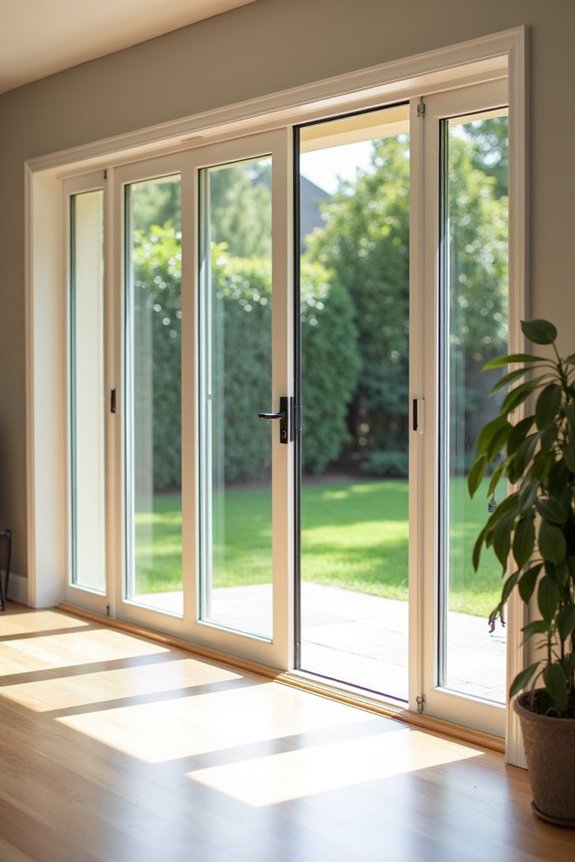
What width works best for your space? Understanding your options helps you make the right choice for your home.
The most common standard widths are 5 feet, 6 feet, and 8 feet. A 5-foot door typically pairs with heights between 6 feet 8 inches and 8 feet, working well for smaller openings. The 6-foot-wide option ranks as one of the most popular configurations since it balances functionality with style.
For larger spaces, 8-foot sliding patio doors create impressive openings using multi-panel configurations. These wider units often match 8-foot-tall frames, maximizing your view and light.
Measure your opening carefully before selecting. Each standard width offers flexibility, so you’ll find the right fit that complements your home and lifestyle.
Why Patio Door Width Matters: Light, Privacy, and Traffic Flow
When you’re deciding on a patio door width, you’re really making choices about how much natural light floods your space and how easily people move between indoors and outdoors. A 72-inch door lets in considerably more daylight than a 60-inch model, but it also means you’ll have less wall space for furniture or privacy curtains. Consider these factors carefully to select a patio door that fits your home’s layout and daily needs.
Light Penetration And Brightness
How does doubling your patio door width affect your home’s natural light? The difference is significant.
When you expand from standard 60–72 inch openings to wider 3- or 4-panel configurations reaching 144–192 inches, your total door width increases daylight penetration substantially. You’ll notice brighter interiors through those expanded glass panels.
| Door Width | Panel Count | Light Level | Best For |
|---|---|---|---|
| 60–72 inches | 1–2 panels | Moderate | Small rooms |
| 96–120 inches | 2–3 panels | Bright | Medium spaces |
| 144–192 inches | 3–4 panels | Very bright | Open floors |
Vertical height (80–96 inches) also matters—taller openings boost brightness floor-to-ceiling. Strategic glazing options like Low-E glass help you control glare while maintaining brightness. Pair wider doors with light-colored interiors for maximum luminosity.
Space Access And Flow
Beyond brightening your space, patio door width fundamentally shapes how you and your family move through your home. When you choose a wider opening width, you’re investing in unobstructed traffic between indoor and outdoor living areas. Standard width options like 60 to 72 inches work for many homes, but multi-panel configurations spanning 108 to 144 inches significantly improve accessibility. Wider doors eliminate pinch points that slow movement and complicate furniture placement. You’ll notice how a 3-panel setup creates an inviting passage that encourages gatherings and entertainment. Consider your space access needs—do you frequently move large items outside? Will multiple people traverse this threshold simultaneously? These questions guide your decision toward the opening width that matches your lifestyle, ensuring your patio doors enhance both movement and connection to the outdoors.
Two-Panel Sliding Patio Doors: The Most Common Width
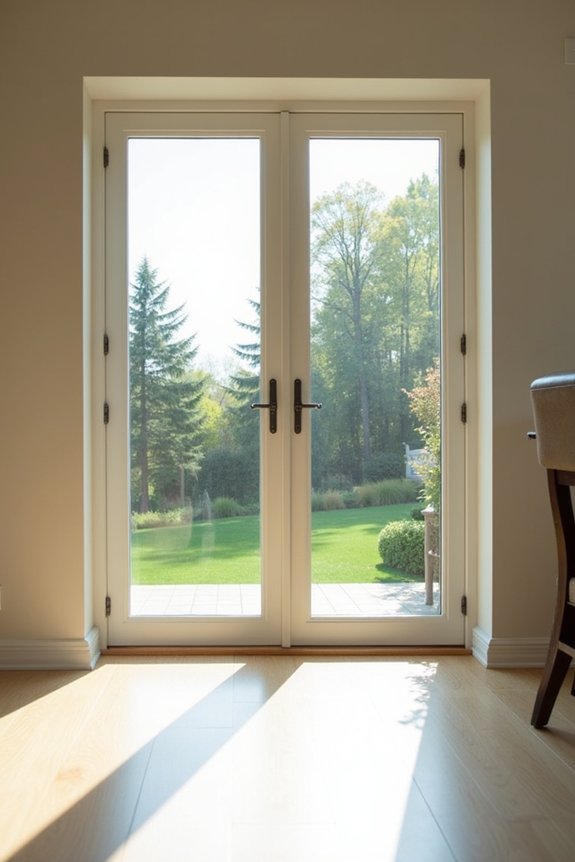
When you’re shopping for a sliding patio door, you’ll find that two-panel configurations dominate the market because they offer a practical balance between openness and functionality. This guide covers the standard widths you’ll encounter (60, 72, and 96 inches), explains the difference between actual unit sizes and nominal dimensions on the label, and details why rough opening measurements are important for your installation planning.
Standard Two-Panel Widths
If you’re shopping for a sliding patio door, you’ll find that two-panel models dominate the market. These standard two-panel widths offer the perfect balance between accessibility and affordability for most homes.
The most common two-panel widths are 60 inches and 72 inches, both typically standing 80 inches tall. A 60-inch nominal size has an actual door dimension of 59.5 by 79.5 inches. The 72-inch option measures 71.5 by 79.5 inches actual size.
When planning your installation, remember that rough opening requirements differ from your door dimensions. A 72-inch door needs a rough opening around 74 by 82 inches to accommodate shimming and hardware. These measurements allow proper fit and smooth operation in your home.
Actual Unit Size Measurements
Now that you know what rough openings look like, let’s talk about the actual measurements that matter most—the Actual Unit Size, or AUS.
The AUS differs from your rough opening because it’s the door’s precise dimensions. This distinction matters when you’re replacing an existing door or ordering a new one. I’ll show you how standard two-panel width options compare:
| Width Option | Actual Unit Size | Rough Opening |
|---|---|---|
| 60″ | 59.5″ x 79.5″ | 60″ x 80″ |
| 72″ | 71.5″ x 79.5″ | 72″ x 80″ |
| 96″ | 95.5″ x 79.5″ | 96″ x 80″ |
Notice how the AUS consistently runs smaller than the rough opening? That’s intentional—it accommodates framing and installation materials. When ordering replacement doors, always provide your Actual Unit Size measurements for proper fit.
Rough Opening Requirements
What makes the rough opening so important? Your rough opening needs to be roughly 1 inch larger than your door’s Actual Unit Size in both width and height. This extra space gives you the clearance necessary for proper shimming and wall framing adjustments.
For a standard 60 x 80 door, your rough opening should measure 61 x 81 inches. If you’re installing a 72 x 80 model, plan for a 73 x 81 inch opening. That 1-inch allowance in width measurement and height ensures you’ve got adequate space to work with during installation.
I recommend allocating about 1/2 inch per side for plumbing and framing alignment. This clearance prevents binding and lets your door operate smoothly.
Three-Panel Sliding Patio Doors: When You Need More Width
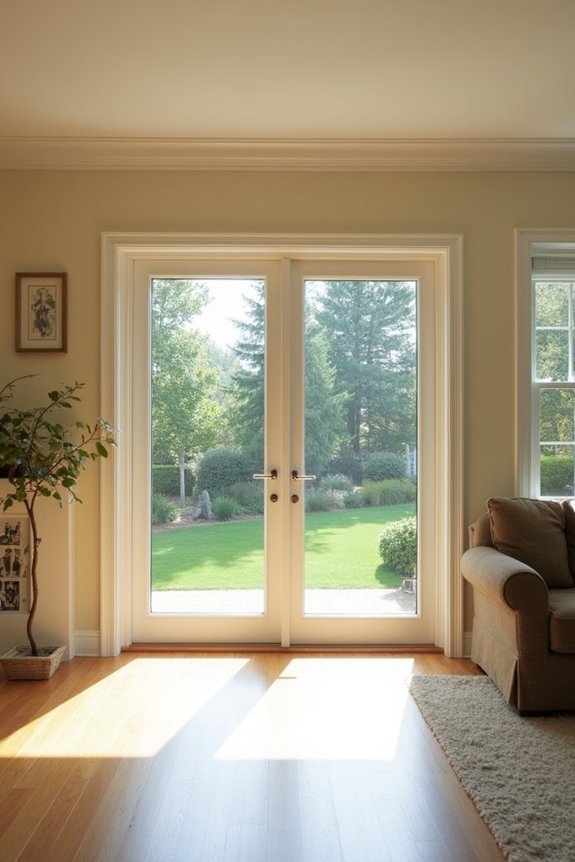
When you’re looking to flood your home with natural light and create uninterrupted indoor-outdoor flow, standard two-panel doors might leave you wanting more. Three-panel sliding patio doors deliver the expansive openings you’re seeking, with widths ranging from 90 to 144 inches. 108, 120, and 144 inches are the most popular standard widths, while heights typically span 80 to 96 inches.
| Width | Height | Best For |
|---|---|---|
| 108 inches | 80 inches | Moderate openings |
| 120 inches | 96 inches | Large living spaces |
| 144 inches | 82.5 inches | Maximum width views |
What makes three-panel configurations valuable is their balance. You get expansive views and energy efficiency without sacrificing structural support. For non-standard rough openings, customization options exist beyond these increments, ensuring your home gets the perfect fit and unobstructed connection to outdoor spaces.
Four-Panel Sliding Patio Doors: Maximizing Natural Light
Four-panel sliding patio doors provide a way to flood your space with natural light, coming in standard widths of 144 inches (12 feet) or 192 inches (16 feet) to suit different home layouts. I’ll walk you through the specific dimensions that work best, explain how these wider configurations improve your room’s brightness and view, and cover what you need to know about installation and framing so your project goes smoothly.
Four-Panel Door Widths
How do you maximize natural light and create uninterrupted indoor-outdoor living? Four-panel sliding patio doors offer the solution you’re seeking! These standard sliding patio doors come in two primary widths:
- 144 inches (12 feet) – perfect for medium-to-large openings
- 192 inches (16 feet) – ideal for panoramic views and maximum daylight
- Heights typically range from 80 to 96 inches, matching your home’s ceiling
- Two fixed panels paired with two sliding panels create smooth operation
- Rough opening allowances require roughly 2 inches added to your door widths for proper framing
When you’re planning your installation, these wide openings deliver that connected feeling between indoor and outdoor spaces. The generous door widths provide functional benefits for your home.
Natural Light Expansion Benefits
Why settle for dim interiors when you can flood your space with daylight? Four-panel sliding patio doors increase opening width and daylight penetration across your wall opening.
| Panel Configuration | Opening Width | Panel Height | Light Benefit |
|---|---|---|---|
| Two-panel | 8 feet | 80 inches | Moderate sunlight |
| Three-panel | 12 feet | 88 inches | Enhanced brightness |
| Four-panel | 16 feet | 96 inches | Maximum panoramic light |
| Four-panel | 16 feet | 80 inches | Expansive horizontal glow |
| Custom four-panel | Up to 16 feet | Variable | Tailored illumination |
Upgrading to four-panel doors delivers measurable improvements. The expanded glass expanse connects your interior to outdoor views while reducing reliance on artificial lighting. This configuration pairs well with 80–96 inch panel heights, creating a panoramic effect that makes rooms feel larger and more open. Customize your setup to match your architectural constraints while maximizing daylight penetration for your home.
Installation And Framing Requirements
Getting your rough opening right is what separates a smooth installation from costly callbacks. I’ve found that nailing the framing requirements upfront makes everything else fall into place.
Here’s what you’ll need to consider:
- Rough opening should measure 2 inches wider and 2 inches taller than your four-panel unit
- Account for interior wall thickness to achieve an energy-efficient fit
- Check existing frames for warping or rot before starting work
- Decide between retrofit installation into the current opening or full-frame installation for a flush result
- Lift-and-slide systems require stronger structural support than standard configurations
When you’re measuring, capture the total system width across all panels. This precision prevents shimming issues later. Whether you’re retrofitting or doing a full-frame installation, taking time now will help your new doors function properly for years to come.
Matching Heights to Standard Patio Door Widths
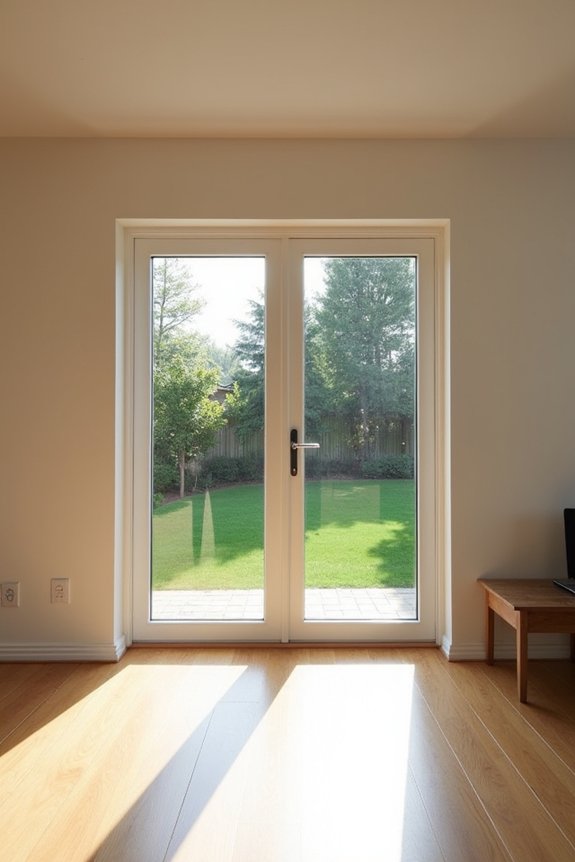
When you’re shopping for a sliding patio door, you’ll notice that height and width don’t work independently—they’re connected by how many panels your door has. Two-panel doors typically measure 60 or 72 inches wide and 80 inches tall, creating balanced proportions that fit most standard openings. Three-panel doors jump to 108–144 inches wide while maintaining that same 80-inch height or stretching to 96 inches for a larger appearance. Four-panel configurations reach 144–192 inches wide with comparable heights. Understanding these panel configurations helps you select standard widths and door heights that match your space. The consistency across these measurements means you’re choosing from proven, reliable options that contractors and homeowners trust for straightforward installations.
Measuring Your Patio Door Opening: Width, Height, and Depth
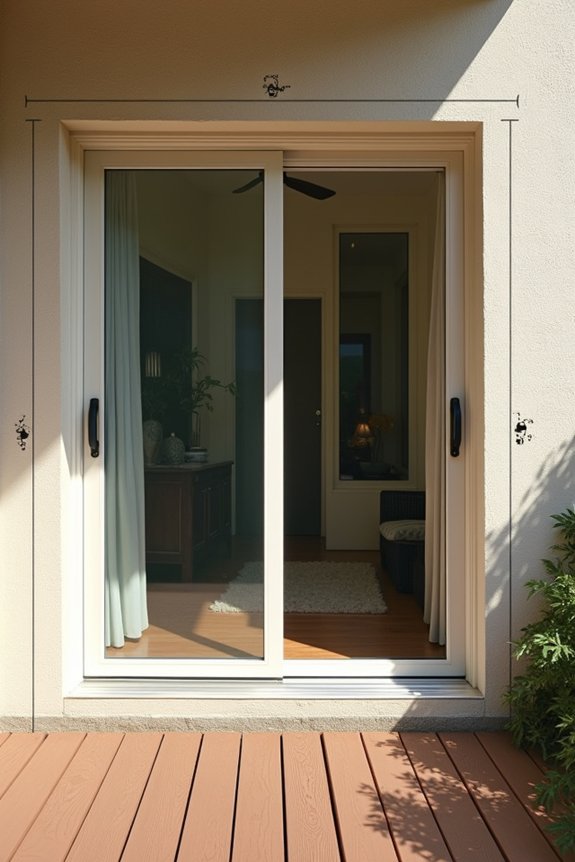
To get your patio door installation right, you’ll need to measure three key dimensions accurately—and I’ll show you how to do each one. Width, height, and depth all matter because they determine whether your door fits properly and functions smoothly in your space. Let’s walk through the right way to measure each, so you have the exact numbers before you order!
Measuring Width Accurately
How do you know if your patio door opening is truly wide enough for a standard unit?
Measuring your rough opening’s width requires precision. I measure inside one jamb to the other jamb at multiple points—top, middle, and bottom. Here’s what you need to know:
- Take at least three separate measurements across your opening
- Record the smallest measurement as your actual width
- Standard widths are 60, 72, or 96 inches for two-panel doors
- Add 1 inch to your unit’s width for shimming space
- Account for the threshold depth when planning installation
Recording the smallest measurement protects you from installation problems. This approach ensures your standard sliding patio door fits properly with adequate shimming room. Being thorough now prevents costly mistakes later.
Height And Depth Considerations
Now that you’ve nailed down your width measurements, height and depth deserve the same careful attention. Standard sliding patio doors typically range from 80 to 96 inches in height, regardless of panel count. When you measure height, go from your threshold straight up to the head jamb—this gives you your actual unit size.
Here’s where rough openings matter: you’ll want about 1 inch of extra space in both directions for leveling and shimming. This means if your unit size is 80 inches tall, your rough opening should be roughly 81 inches. Remember, whether you’re installing a 2-panel door or expanding to 3 or 4 panels, height stays consistent while panel count increases your width. Getting these dimensions right ensures smooth installation.
What Rough Opening Size Your Door Really Needs
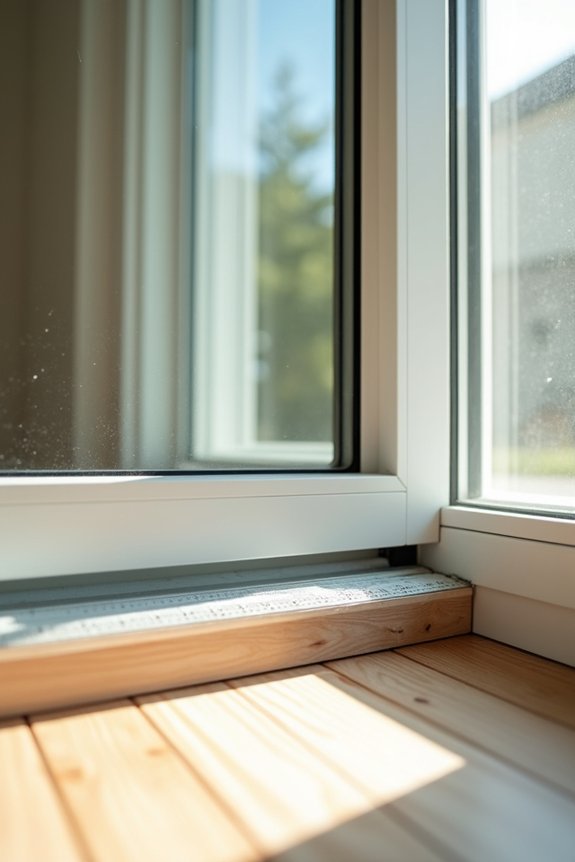
When you’re planning to install a sliding patio door, getting the rough opening size right is necessary—it’s the difference between a smooth installation and a frustrating one.
Here’s what you need to know about rough opening allowances for standard sliding patio doors:
- Add approximately 1 inch to both width and height for shimming and leveling space
- A typical 72″ × 80″ door requires a rough opening around 74″ × 82″
- Include about 1/2 inch per side for plumbing or framing alignment clearance
- Account for total allowances that add up to roughly 2 inches overall on each dimension
- Always check your manufacturer’s installation manual since requirements vary by door type
Getting these measurements right means your installation goes smoothly. I recommend double-checking specifications before you start framing—it’ll save you headaches down the road.
Framing Considerations for Sliding Patio Door Installation
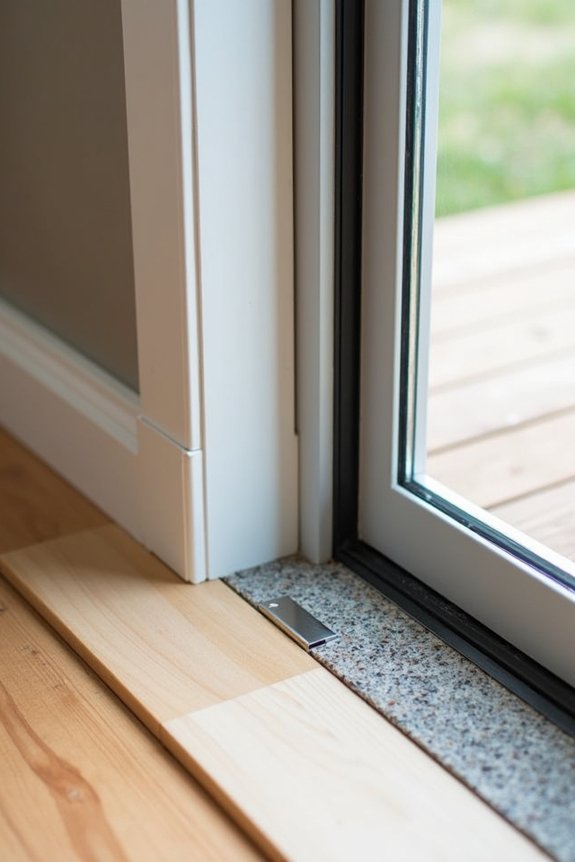
Once you’ve got your rough opening measurements confirmed, the actual framing work begins.
You’ll need to allow about 1/2 inch clearance per side for plumbing or vertical framing alignment. This space accommodates insulation and prevents binding during shimming. Before installing, inspect your existing frame for warping, rot, or structural issues that could compromise your installation.
What matters: your door measurement should match your installation manual specs exactly. Do not skip this step. Check the rough opening with a level and square—these tools are necessary.
Once framing clearance is confirmed and any structural damage addressed, you’re ready to position your door. Proper preparation prevents problems.
French Patio Doors vs. Sliding: Width and Dimensions Compared
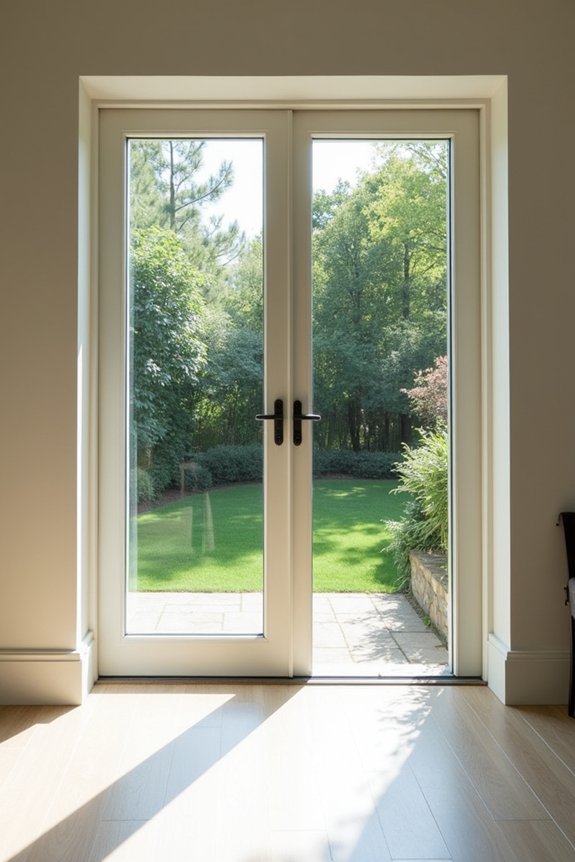
How do you choose between French doors and sliding patio doors when you’re working with a specific opening size?
Key differences between these styles:
- French patio doors measure per leaf (24–36 inches each), with double sets totaling around 72 inches
- Sliding patio doors vary by panel count—2-panel systems span 60–72 inches, while 3-panel reach 90–144 inches
- Standard width increases when you add more panels to your sliding system
- Panel count determines total system width, letting you customize for larger openings without changing door style
- Door dimensions remain consistent in height (80–96 inches) across both styles, making height less of a deciding factor
These distinctions help you select the right configuration for your opening and lifestyle needs.
Custom Patio Door Widths for Non-Standard Openings
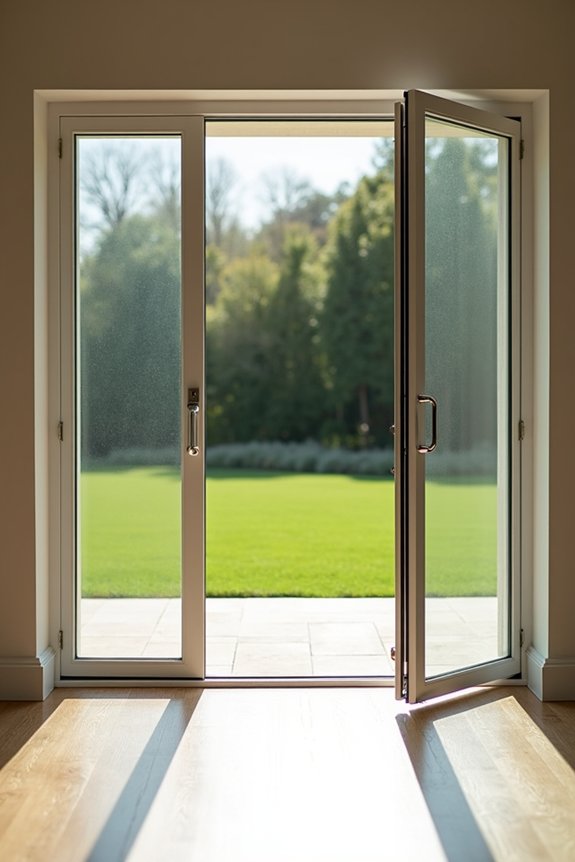
What if your doorway doesn’t match those standard 60, 72, or 90-inch widths? You’re not alone, and custom widths are your solution. Many homes, especially older ones, have unique rough opening dimensions that standard panels can’t accommodate.
Here’s what I recommend: remove your interior trim to reveal the actual rough opening, then measure your width and height precisely. These measurements guide manufacturers in creating your custom doors.
Yes, custom widths require longer lead times and higher costs due to bespoke manufacturing. However, you’ll gain exact fits that provide proper weather sealing and structural integrity. Installers can tailor solutions specifically for your non-standard opening, converting challenging spaces into functional entrances that fit your home’s requirements.
Measurement Mistakes That Waste Time and Money
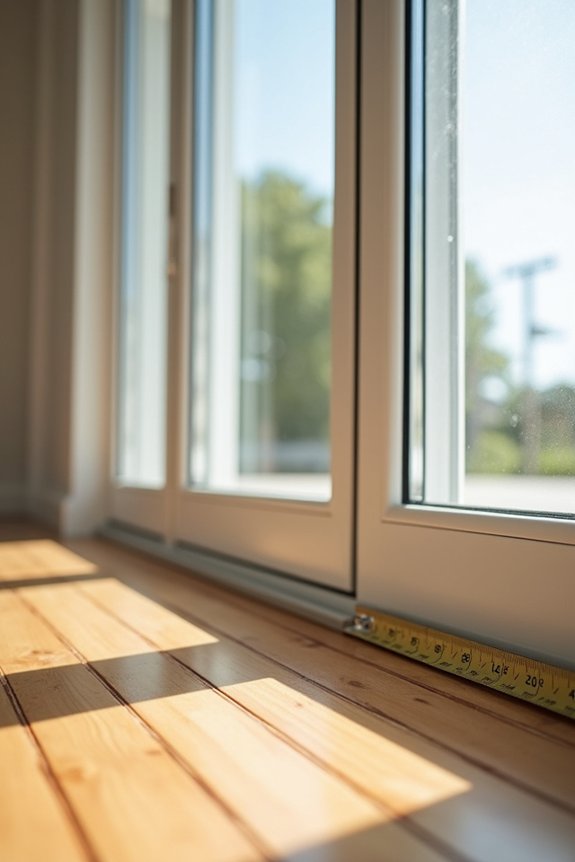
Why do so many patio door installations go wrong before the doors even arrive?
You’re measuring the rough opening, but here’s where we all stumble. I’ve seen homeowners and installers make costly measurement mistakes that delay projects and waste money. Let me share what trips us up:
- Measuring from the glass instead of the inside-to-inside jamb dimensions
- Forgetting to account for the door track or threshold height
- Using external measurements rather than the actual door frame width
- Skipping the required 1-inch installation clearance on all sides
- Measuring only the glass portion, ignoring the frame entirely
Your sliding patio doors won’t fit properly without accurate rough opening measurements. Take time measuring the existing door frame carefully—not shortcuts. This prevents ordering wrong sizes and costly returns that derail your installation timeline.
Width’s Role in Installation Complexity and Labor
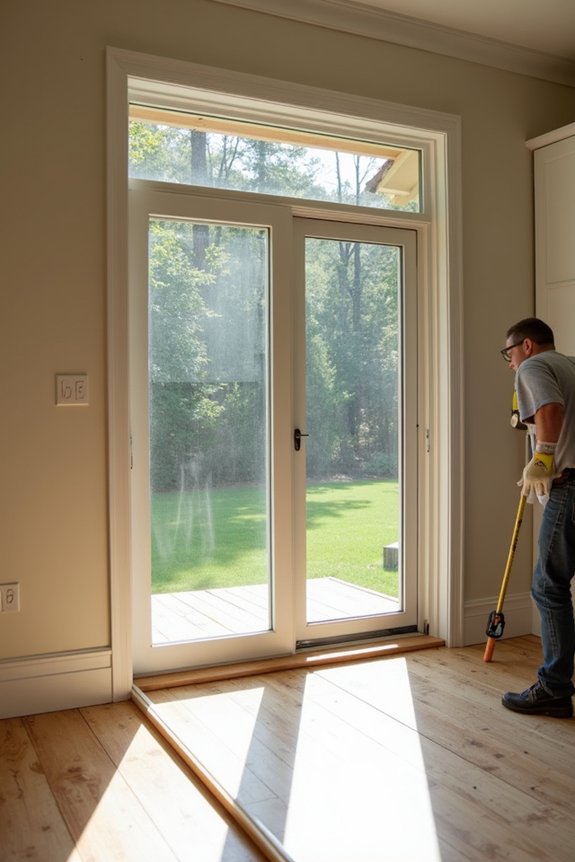
The width of your sliding patio door directly impacts how much work—and cost—your installation will require. Wider doors demand larger rough openings, heavier panels, and notably more installation labor. This complexity increases with multi-panel configurations and custom sizes.
| Door Type | Installation Complexity |
|---|---|
| Standard width (6–8 ft) | Low to moderate |
| Pocket doors | High (specialized framing) |
| Multi-panel configurations | High (precision alignment) |
| Custom sizes | Very high (extended timelines) |
| Lift-and-slide doors | High (heavy-duty hardware) |
Rough openings require about 1 inch extra width and height for shimming and leveling. When you choose custom sizes or pocket doors, you’re investing in bespoke fitting and on-site adjustments. Understanding this relationship helps you budget accurately and communicate with installers about your project’s scope.
Retrofit vs. Full-Frame Installation: Choosing Your Approach
Once you’ve mapped out the installation complexity your door width demands, you’ll face a fundamental decision: do you retrofit into your existing frame, or remove everything and start fresh?
Retrofit installation fits your new door into the existing frame—faster and less invasive. However, frame condition matters. Rot, warping, or damage limits this approach. Full-frame installation removes the entire old frame and sill, letting you build a new rough opening to standard dimensions. This costs more and requires greater labor, but gives you complete flexibility for non-standard opening sizes.
Consider these factors:
- Frame condition and structural integrity
- Your door’s width specifications
- Budget and timeline constraints
- Opening size versus standard dimensions
- Labor availability and expertise
Either way, precise rough opening sizing—typically 1 inch wider and taller than your unit—is necessary for proper fit and square installation.