I’ve tested every major material, and here’s what lasts longest: teak wood (20–40 years) ages well with minimal care, while cast aluminum stays rust-free for 15–25 years without warping.
Wrought iron endures 15–25 years if you maintain it regularly, and resin wicker resists fading effectively.
Stainless steel (316 marine-grade) suits coastal homes well, though it’s best in shade.
Polywood offers eco-friendly durability with a 20-year warranty.
Each material trades maintenance demands against longevity—understanding these tradeoffs helps you pick what actually fits your lifestyle.
Teak Wood: Premium Durability That Ages Well
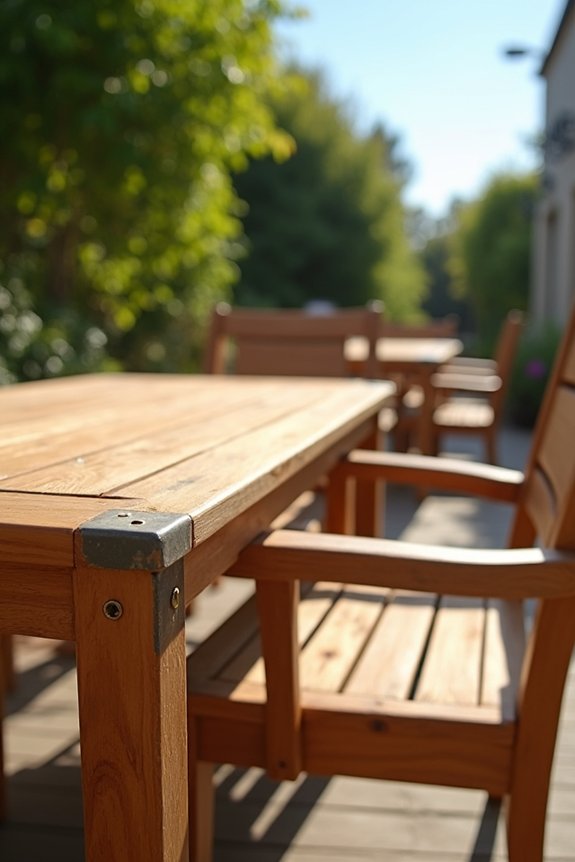
Why does teak command such respect among outdoor furniture enthusiasts? This premium material contains natural oils that make it weather-resistant and rot-resistant, performing exceptionally well in humid or coastal climates. You’re investing in outdoor durability that lasts 20 to 40 years with proper care.
Teak wood’s dense hardwood construction keeps furniture stable, even in windy areas. The best part? You’ll watch your pieces develop a beautiful silver-gray patina over time—that’s genuine aging, not deterioration.
Your maintenance options are flexible. Apply teak oil to preserve the original color, or leave it untreated and embrace the natural weathering process. Both approaches work well. While teak’s upfront cost is substantial, the long lifespan and timeless aesthetics make it a sound investment for outdoor spaces you’ll cherish for decades.
Cast Aluminum Patio Furniture: Lightweight and Rust-Free
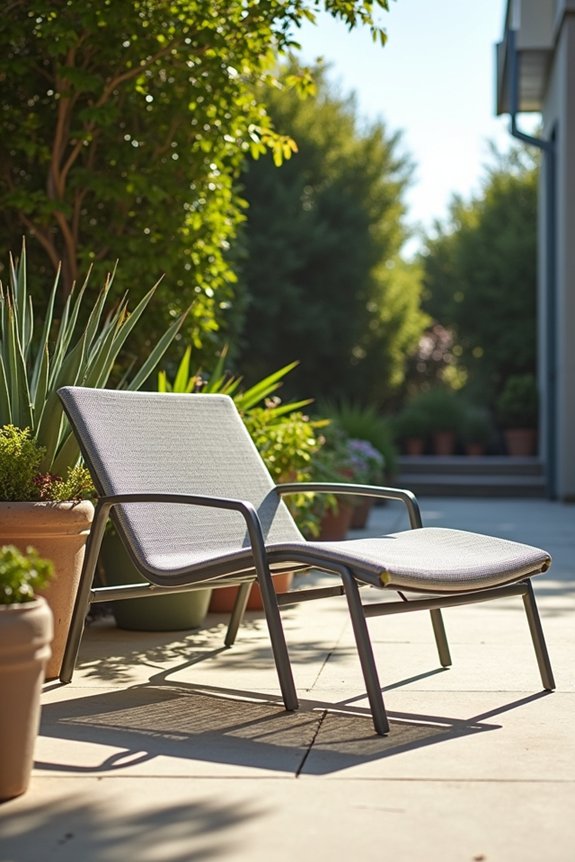
How do you get furniture that’s both feather-light and built to last? Cast aluminum delivers exactly that combination. I’ve found that this durable material offers impressive corrosion resistance without the weight of traditional options. Manufacturers pour aluminum into molds, creating dining sets, lounges, and conversation pieces with intricate details.
What makes cast aluminum special is its weather-resistant nature. It’ll withstand extreme temperatures and harsh conditions for 15–25 years. Unlike wood, it won’t warp or rot. The powder coating enhances UV stability, making maintenance-free upkeep a reality for busy homeowners.
Yes, it can dent if mishandled, but that’s a small trade-off. You’re joining countless others who’ve chosen rust-free outdoor furniture that lasts.
Wrought Iron: Heavy, Durable, Built to Last
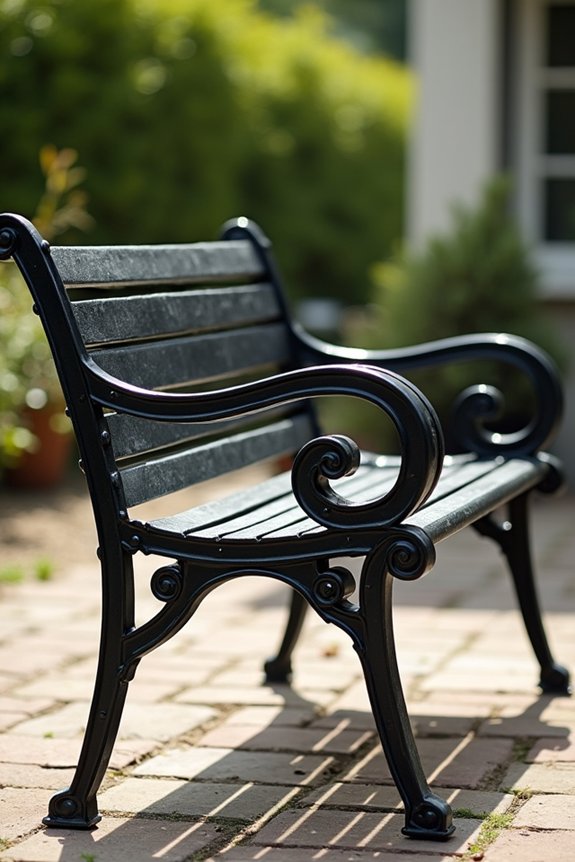
While cast aluminum gives you feather-light convenience, wrought iron takes the opposite approach—and that’s exactly why many of us prefer it. This heavy-duty material delivers exceptional stability that resists strong winds and maintains its form over time. With proper care—regular cleaning, repainting, and rust prevention using sealants or powder coatings—you’re looking at a long-lasting investment spanning 15 to 25 years. Yes, wrought iron’s weight makes moving it challenging, and it’ll heat up under direct sun. But that is the point: that durability and corrosion resistance in humid climates make it worth the tradeoff. Add weather-resistant outdoor cushions for comfort, and you’ve created a timeless patio space. You can refinish or repaint whenever you want a fresh look.
Resin Wicker: Synthetic Strength, Minimal Maintenance
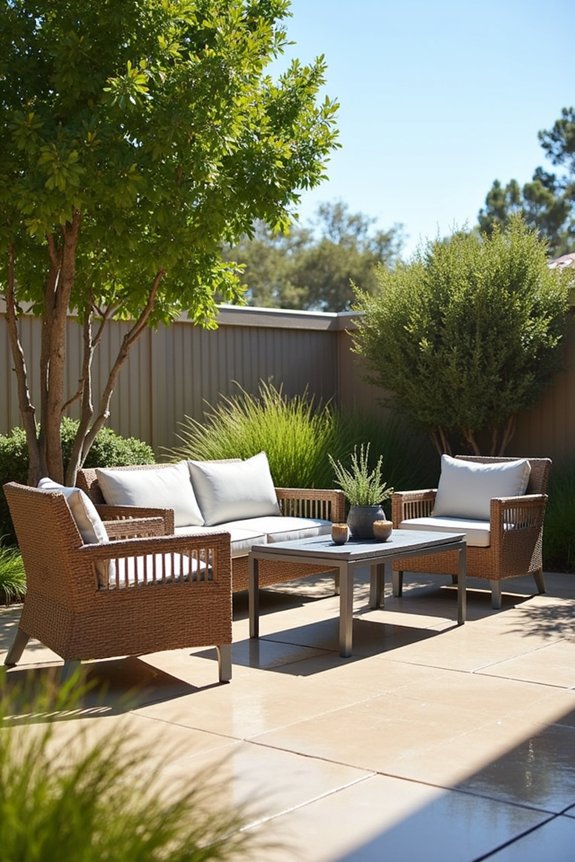
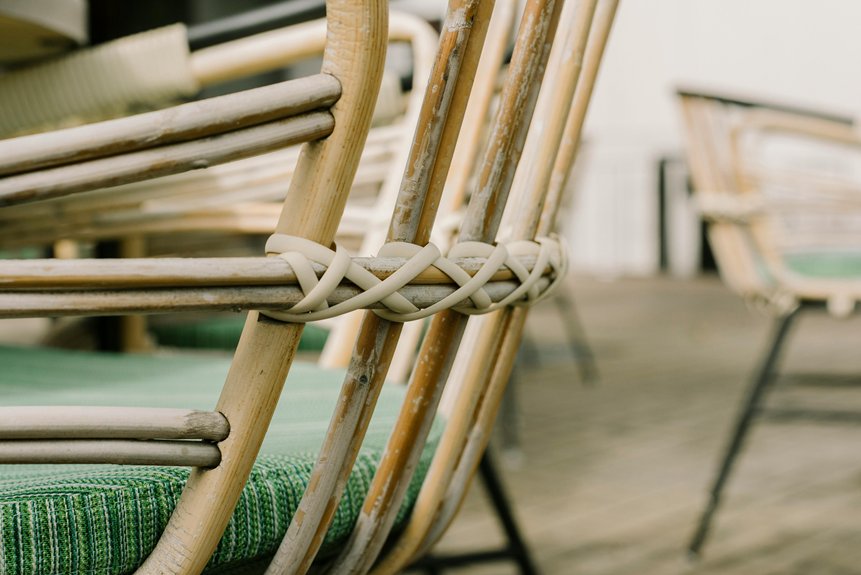
If you’re drawn to wicker’s classic look but tired of natural materials’ constant upkeep, resin wicker delivers practical benefits. Synthetic wicker resists fading and weather damage far better than traditional options. Paired with lightweight aluminum frames, these pieces combine rust-free durability with easy portability—perfect for rearranging your space.
What sets resin wicker apart is its UV-stable construction, which maintains color even in harsh sunlight. You’ll appreciate the low maintenance requirements; regular cleaning with mild soap and water keeps your outdoor furniture looking fresh without demanding much effort.
Since resin wicker withstands rain, humidity, and coastal conditions, it’s suitable for any climate. Skip harsh chemicals during cleaning and care to extend longevity. This weather-resistant solution lets you enjoy functional patio furniture for years.
Stainless Steel: Modern Durability for Coastal Homes
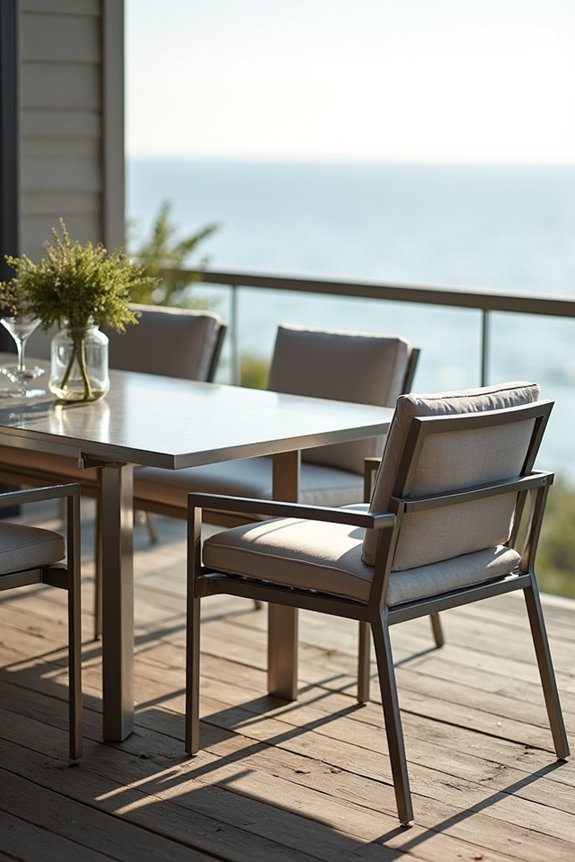
If you’re furnishing a coastal patio, you’ll want to consider stainless steel—especially 316 marine-grade—because it resists the corrosion that salty air throws at other metals, and it can last 10–15 years with minimal fuss. I’ll explain why this material’s durability and low-maintenance properties make it particularly suitable for homes near the ocean, plus what upkeep actually looks like in practice. You’ll also learn when stainless steel truly outperforms other options and where it might have some drawbacks worth knowing about.
Corrosion Resistance And Longevity
How can you keep your patio furniture looking sleek and polished for years without constant maintenance? Stainless steel delivers exceptional corrosion resistance and tarnish resistance, making it perfect for outdoor durability. I’ve found that standard grades work well in most climates, but if you’re near the coast, marine grade stainless steel performs well. It resists salt spray and moisture far better than lower grades, extending your outdoor furniture lifespan substantially.
What makes stainless steel weather-resistant materials so appealing? You’ll appreciate minimal maintenance requirements—just occasional polishing keeps it in good condition. The tarnish resistance means you’re not constantly fighting rust or discoloration like with other metals.
One consideration: direct sunlight causes heat resistance challenges, so I’d recommend placing yours in covered or partially shaded spots. This simple placement strategy protects your investment while maintaining that modern, sleek aesthetic you’re after.
Maintenance And Coastal Performance
Maintenance And Coastal Performance
Why does stainless steel remain the go-to choice for homeowners living near the ocean? It’s simple: 316 marine-grade stainless steel delivers superior corrosion resistance that standard grades can’t match. This investment pays off through extended longevity—typically 10–15 years of reliable coastal performance.
Maintenance keeps your furniture looking sharp. Clean regularly with mild soap and water, then dry thoroughly. Occasional polishing prevents tarnish and maintains that lustrous finish. Fingerprints show up, but they’re easily wiped away.
One trade-off: stainless steel absorbs heat in direct sun. Despite this minor drawback, its weather resistance and durability make it ideal for demanding coastal environments. You’re choosing furniture that stands up to salt spray and moisture—that’s peace of mind worth having.
Polywood: Eco-Friendly Durability Without Rot or Rust
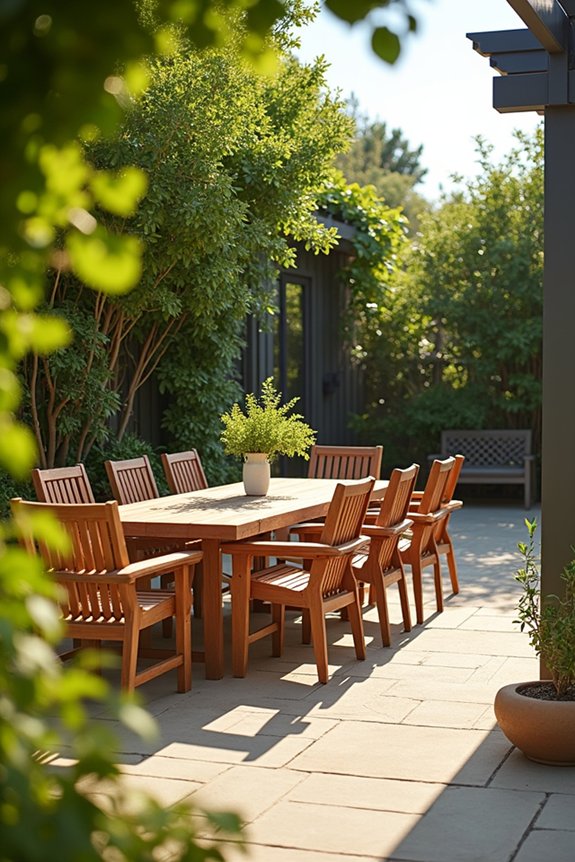
If you’re tired of watching wood rot or metal rust, Polywood furniture offers a practical solution built to last. Made from recycled plastic (HDPE), these pieces won’t decay or corrode in any climate, and they’re environmentally responsible too. You’ll benefit from minimal maintenance requirements and exceptional durability that typically includes a 20-year warranty, with multiple colors and frame styles available to match your patio’s aesthetic.
Recycled Materials and Sustainability
When you’re shopping for patio furniture that’ll last decades without falling apart, recycled plastic might not be your first thought—but it should be. I find that Polywood’s HDPE recycled materials offer something special: genuine sustainability paired with serious durability. You’re investing in furniture made from reclaimed plastics, which means less waste in landfills and more protection for your patio space.
What makes this approach effective? HDPE delivers weatherproof, fade-resistant performance that matches natural wood aesthetically while eliminating rot and rust concerns entirely. I appreciate that you’re getting maintenance-free durability without sacrificing eco-friendly values. The material withstands extreme temperatures and harsh climates consistently. You’re not just buying eco-conscious furniture—you’re choosing a twenty-year warranty backed by real, tested resilience that keeps working season after season.
Weather Resistance and Longevity
Beyond the sustainability story, Polywood’s real strength shows up year after year in actual outdoor conditions. I’ve watched this recycled HDPE material withstand harsh weather without the rot or rust that plagues traditional furniture. Your investment stays protected through extreme temperatures, resisting fading and cracking that compromise other outdoor pieces.
| Feature | Polywood | Traditional Materials |
|---|---|---|
| Corrosion Resistance | Complete | Requires treatment |
| Fade Resistance | Excellent | Fades within 1-2 years |
| Rot/Rust Risk | Zero | Significant |
The durability and longevity you’ll experience means minimal maintenance—just occasional cleaning. If you choose cushions, that’s where upkeep focuses. Otherwise, weatherproof Polywood demands virtually nothing from you. That’s the longevity advantage that makes this recycled HDPE option a genuine investment in outdoor furniture materials built to last decades.
Maintenance and Cost Trade-Offs: Which Material Fits Your Needs
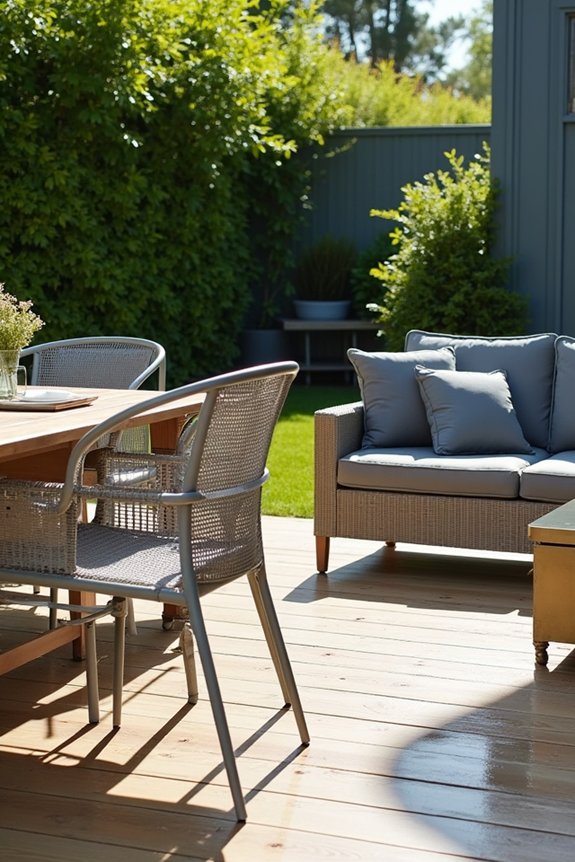
How do you balance what you’re willing to spend upfront with what you’re ready to maintain over time?
I’ve learned that higher initial costs often mean lower maintenance. Teak costs more but needs minimal upkeep and lasts 20–40 years. Aluminum is budget-friendly and lightweight, yet dents easily. HDPE wicker offers excellent weather resistance and recyclability without demanding much work.
Wrought iron requires regular rust prevention despite its 15–25 year lifespan. Stainless steel resists rust but shows fingerprints easily. For coastal areas, 316 marine-grade stainless justifies the expense.
Consider your climate and lifestyle. High-UV areas? HDPE wicker wins. Want durability with minimal effort? Teak’s worth the investment. Prefer affordability? Aluminum suits you, though maintenance matters more.