
Building without a permit sets you up for serious trouble. You’re looking at fines that stack up daily, stop-work orders that freeze your project, and insurance companies denying claims on unpermitted work. Local authorities can demand removal at your expense, and you’ll face appraisal problems when selling. Permits cost just $50–$500 upfront, but consequences balloon into thousands. The good news? Retroactive permits can legalize your patio through inspections. Understanding each penalty type shows why getting ahead of this matters.
Fines for Building Without a Permit
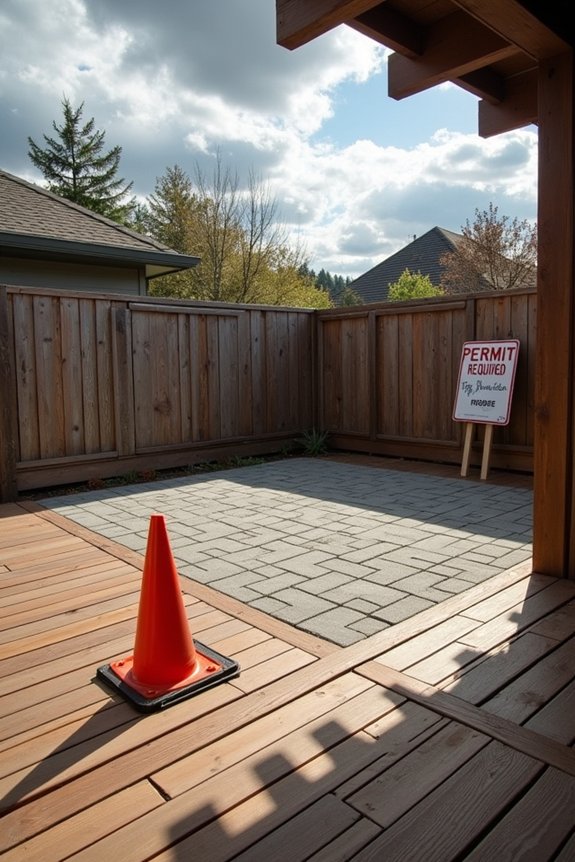
When you skip the permit process for your patio project, you’re not just cutting corners—you’re opening yourself up to real financial consequences from your local city or county government.
Those fines aren’t one-time charges either. They accumulate until you achieve compliance with local building codes. You might face a stop-work order that halts all construction immediately, forcing you to cease activity on your unpermitted structure entirely.
Fines accumulate until compliance is achieved, and stop-work orders can halt construction immediately on unpermitted structures.
Beyond initial penalties, authorities can require you to remove or demolish your non-compliant construction at your own expense. This transforms a budget-friendly project into a costly mistake. The financial burden grows as you delay addressing the violations.
Getting ahead of these consequences means pulling that permit from the start. It’s the most straightforward way to protect your investment and avoid mounting penalties.
Stop-Work Orders That Halt Your Project
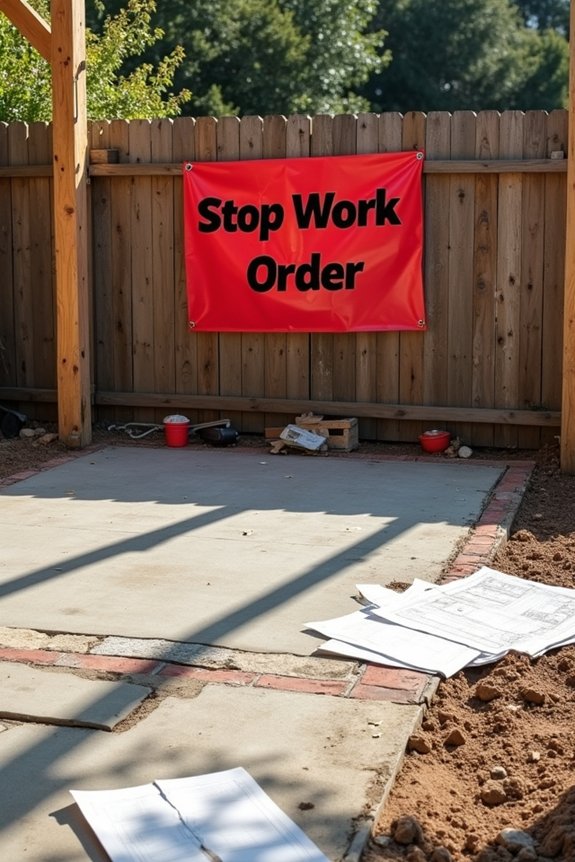
When inspectors discover your unpermitted structure, they can issue a stop-work order that immediately halts all construction. You must cease work right away—no exceptions. Resolving it requires submitting corrected plans, obtaining the proper permit, and passing all required inspections before resuming work.
This process typically delays projects by days or weeks. You also face potential removal of the unpermitted patio if you cannot bring it into compliance. Beyond the penalties and fines, a stop-work order complicates insurance coverage and resale processes. Addressing it quickly through proper permitting allows you to resume work. Obtaining permits from the start prevents this situation entirely.
When Local Authorities Demand Removal
What happens when your local building department decides your unpermitted patio must go?
You’re facing a serious situation that requires immediate action. When authorities determine your patio violates zoning setbacks or safety codes, they’ll issue removal orders you cannot ignore. Here’s what typically unfolds:
- Official notices arrive stating your structure doesn’t meet compliance standards and must be demolished at your expense within a specified timeline.
- Daily or monthly fines accumulate until you either remove the patio or pursue retroactive permitting to legalize it.
- Future projects get blocked because authorities won’t issue permits for other renovations until you’ve addressed the violation.
Your best move? Contact your building department immediately about retroactive permitting options. Sometimes you can legalize the work through inspections and fees rather than complete removal. Acting quickly protects your property investment and prevents escalating penalties.
How Insurance Companies Deny Unpermitted Claims
When you file a claim for patio damage, your insurer will investigate whether the structure complies with local building codes and permits—and if you built without one, they’ll likely deny coverage based on policy non-compliance. You’ll find that insurers view unpermitted work as a major red flag because it violates the terms of your coverage agreement, which requires all structures to meet legal standards. To get your claim approved, you’ll need to obtain retroactive permits, pass inspections, or prove the patio has been corrected to code—otherwise, you’re facing denial and potentially higher premiums or policy exclusions down the road.
Coverage Denial Triggers
your insurance company can refuse to pay for damages or injuries connected to unpermitted patio work, and they’ll have solid legal ground to stand on.
When you skip the building permit, you’re triggering several coverage denial scenarios that’ll create serious problems when you need help most:
- Voided area coverage – Your insurer can deny claims specifically tied to the unpermitted patio, leaving you completely exposed financially
- Missing documentation requirements – Without permits and inspection records, insurers have grounds to reject your claim entirely or demand higher deductibles
- Remediation delays – Before processing repairs, your company may require you to remove or fix the unpermitted construction first
Even retroactive permitting won’t guarantee reinstatement. Many insurers won’t renew your policy or’ll increase premiums substantially due to code compliance issues. You’re essentially gambling with protection you’ve paid for.
Policy Non-Compliance Issues
How exactly do insurance companies deny unpermitted construction claims? They’re following their policies strictly, and you need to understand why.
| Denial Reason | What Happens |
|---|---|
| Missing permits | Claims get rejected outright |
| Failed inspections | Coverage becomes invalid |
| Code non-compliance | Subrogation kicks in |
When you skip the permitting process, insurers view your patio as a non-covered risk. They’ll cite code compliance violations and demand documentation you don’t have. If they’ve already paid out, don’t be surprised when subrogation claims arrive—they’ll seek reimbursement once discovering the unpermitted work.
Here’s what really stings: insurers can deny non-renewal or terminate your entire policy. One unpermitted patio could cost you your homeowner’s coverage entirely. They’re not being unreasonable; they’re protecting themselves. You’re protecting your investment by getting proper permits and inspections upfront. It’s the smarter move.
Why Buyers Reject Homes With Unpermitted Patios
Why does an unpermitted patio become such a dealbreaker for buyers?
When you’re selling your home, you want the best offer possible. However, an unpermitted patio creates serious concerns that make buyers hesitate or walk away entirely. Here’s why:
- Appraisal and financing troubles – Appraisers flag unpermitted work, which lowers home value and triggers mortgage denial or reduced loan amounts.
- Code compliance risks – Buyers worry about code violations, potential fines, mandatory removal, or expensive retrofits to meet current standards.
- Disclosure obligations and closing delays – You’re legally required to reveal unpermitted additions, reducing buyer confidence and delaying closing while inspections occur.
Buyers reject homes with unpermitted patios because they’re purchasing liability, not improvement. Getting proper permits protects everyone involved.
How to Legalize Your Unpermitted Patio
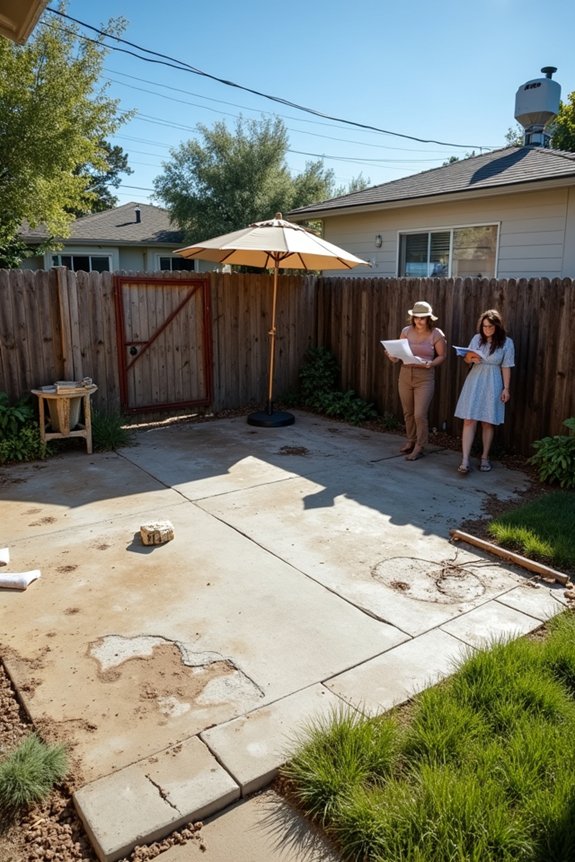
If you’ve built without a permit, you’ll need to file a retroactive permit application with your local building department—asking for permission after the fact. Once you submit your application along with revised plans showing how your patio meets current building codes, you’re committing to a structural inspection and any remediation work required to bring it up to standard. This process takes time and money, but it’s your path to a legal, insurable patio that won’t create complications during your home sale.
Retroactive Permit Application Process
Once you realize your unpermitted patio needs legal standing, you have a clear path forward—even though it requires some extra steps and fees. Filing a retroactive permit application puts your unpermitted work on the city’s radar, but it’s the legitimate way to achieve code compliance.
Here’s what you’ll navigate:
- Submit updated plans showing your patio’s exact dimensions, materials, and construction details to your local building department
- Pay applicable fees for the retroactive permit application, which covers administrative processing and inspections
- Undergo re-inspections where officials verify your structure meets current setback, drainage, and safety requirements
Yes, inspections might reveal corrections needed for foundations or anchoring. However, completing this legalization process protects your property value and clears the way for future sales or financing. Consider hiring a permit specialist who knows your city’s specific requirements.
Structural Inspection And Remediation
After you’ve submitted your retroactive permit application, a building inspector will schedule a site visit to assess whether your patio meets current code standards—and that’s where you’ll discover what fixes, if any, are needed.
During the structural inspection, the inspector examines footing depth, anchoring systems, and roof loads if applicable. They’re checking whether your unpermitted patio can safely support its own weight and weather conditions. If issues surface, remediation becomes necessary.
You might need partial demolition to access footings or adjust setback distances from property lines. The remediation process ensures code compliance before final inspection approval. While it’s costly and time-consuming, bringing your patio up to standard protects your home’s value and insurance coverage.
Contractor Liability and Mechanics’ Liens
What happens when you hire a contractor who builds your patio without the required permits? You’re exposing yourself to serious contractor liability and financial risk.
- Mechanics’ liens can be filed against your property if the contractor or subcontractors don’t get paid, securing their unpaid fees and complicating your ownership.
- Stop-work orders halt construction immediately, with daily fines accumulating until the unpermitted work gets legalized or removed entirely.
- Inspection failures trigger costly penalties and potential demolition requirements to bring the structure into compliance with building codes.
Hiring a licensed contractor protects you both. They navigate permits, plan checks, and inspections properly—avoiding liens and penalties altogether. This approach keeps your patio investment secure and legally compliant.
Permits Cost Less Than the Consequences

How much does a patio permit actually cost compared to what you’d pay if something goes wrong? Permit costs are typically modest, often ranging from $50 to $500 depending on your location and project scope. That’s a small investment compared to the consequences of unpermitted work.
If authorities discover your patio, you’re facing stop-work orders, substantial fines, and mandatory removal at your expense. Insurance claims get denied. Your home fails inspection during resale, triggering appraisal problems and price reductions. Retroactive permits demand additional fees that exceed original permit costs, plus planning delays.
You’re looking at thousands of dollars in consequences versus hundreds upfront. Getting permits protects your investment, your property value, and your peace of mind. It’s the smarter financial choice.
(Note: the Improved Outline Contains Only 8 H2S. a 9th H2 Is Needed to Meet Your Requirement.)
Consequences of Building Without a Permit
The consequences of building without a permit don’t stop after the initial discovery—they keep snowballing. You’ll face cascading problems that affect your home’s future in ways you might not anticipate right now.
Immediate Financial Penalties
Fines and stop-work orders from local authorities halt your plans and drain your wallet. Local governments assess penalties based on violation severity, and these costs accumulate quickly.
Structural Removal Requirements
Removal or demolition at your expense occurs if inspectors deem the structure unsafe or non-compliant. This represents one of the costliest consequences of unpermitted work.
Insurance and Sale Complications
Insurance implications deny claims when undisclosed work causes damage. Home sale impact delays closing or kills deals entirely when buyers discover unpermitted additions or modifications.
Future Renovation Obstacles
Future remodeling becomes complicated. You can’t expand or improve without first correcting past violations. This creates a barrier to any additional work on your property.
Inspection Disclosure Requirements
Inspection disclosure requirements create headaches when appraisers discover undocumented work. Banks and title companies won’t clear properties with unresolved violations.
Permit Backlog and Correction Costs
You’re trapped fixing yesterday’s shortcuts before building tomorrow’s projects. Correcting violations requires new inspections, revised plans, and additional contractor fees.
Lender and Financing Challenges
Lenders refuse to finance properties with unpermitted work on record. Refinancing becomes impossible until violations are resolved and documented.
Legal Liability Exposure
Unpermitted work creates personal liability if someone is injured on the property. Your homeowner’s insurance may not cover accidents involving non-compliant structures.
Getting permits upfront prevents all these problems.