
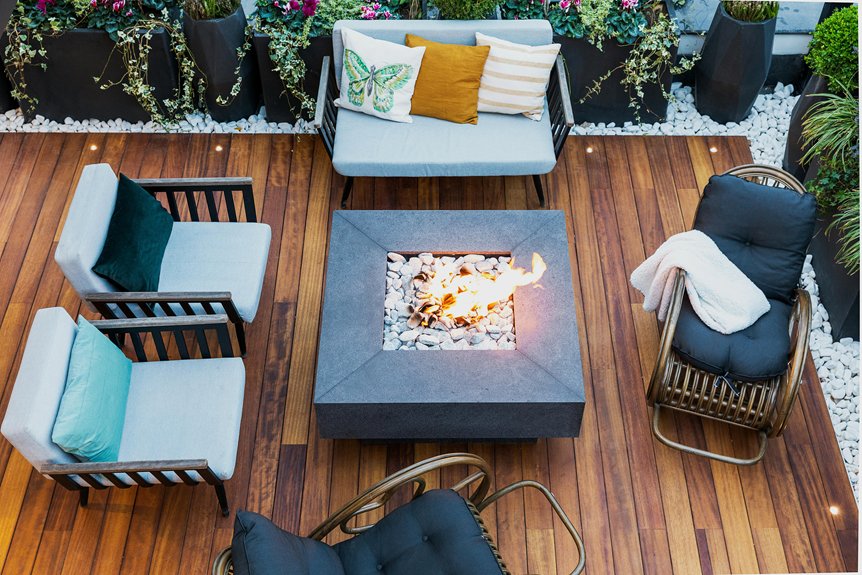
Patios sit ground-level on compacted soil—perfect for flat yards—while decks elevate on posts and adapt to slopes. Patios use concrete or pavers ($4–$5/sq ft); decks run $21–$30/sq ft with wood or composite. Concrete patios last 25+ years with minimal upkeep; wood decks need annual sealing but composite decking offers 50-year warranties. Decks deliver better ROI (66% composite vs. 50% basic patio) and elevated views, while patios provide affordability and closer ground connection. Your terrain, budget, and lifestyle really shape the best choice.
Flat or Sloped? How Terrain Decides Between Patio and Deck
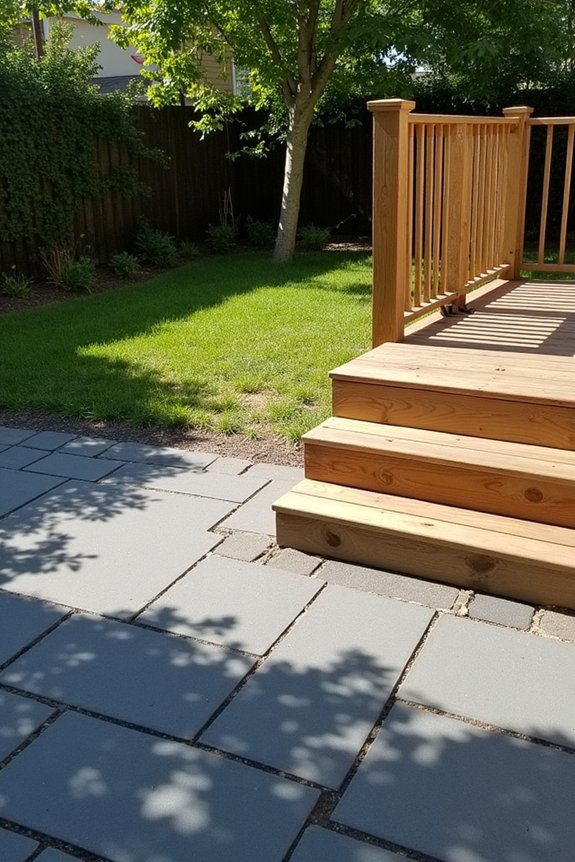
How much does your yard slope? This question matters more than you’d think when choosing between a patio and deck.
If you’ve got flat terrain, a patio’s your straightforward choice. You’ll skip the complex elevation work and expensive subgrade prep that slopes demand. Patios sit ground-level, requiring minimal foundation adjustments on even surfaces.
But here’s where decks work best: sloped terrain. They’re built on raised framing with posts and joists that adapt to your yard’s natural grade. Instead of fighting uneven ground, you’re working with it. Decks create multiple level living spaces with ease, turning problematic slopes into advantages. You’ll gain better drainage, easier maintenance, and that stable, walkable surface you’re after.
Consider your terrain honestly. Flat yards favor patios; slopes favor decks. Choose what matches your ground, not against it.
Ground Level vs. Elevated: The Structural Difference Explained
Patios sit ground-level on prepared soil, while decks require elevated beams and posts for structural support.
The structural foundation determines your outdoor space’s design. Patios sit on-grade, meaning they rest directly on the ground without any supporting framework underneath. Decks, however, are elevated structures built on beams and posts that create that raised platform you’re standing on.
Here’s what makes this difference matter:
- Ground-level patios use durable materials like concrete, brick, or stone laid flat on prepared soil
- Elevated decks require a complete substructure of beams and posts to support the raised platform safely
- Maintenance access differs significantly—patios are easier to service, while decks need regular inspection underneath
This structural distinction affects everything from installation costs to long-term maintenance. When you choose a patio, you’re selecting simplicity and direct ground contact. When you select a deck, you’re investing in elevation and the engineering that supports it.
Patio vs. Deck Materials: What Works Best in Your Yard
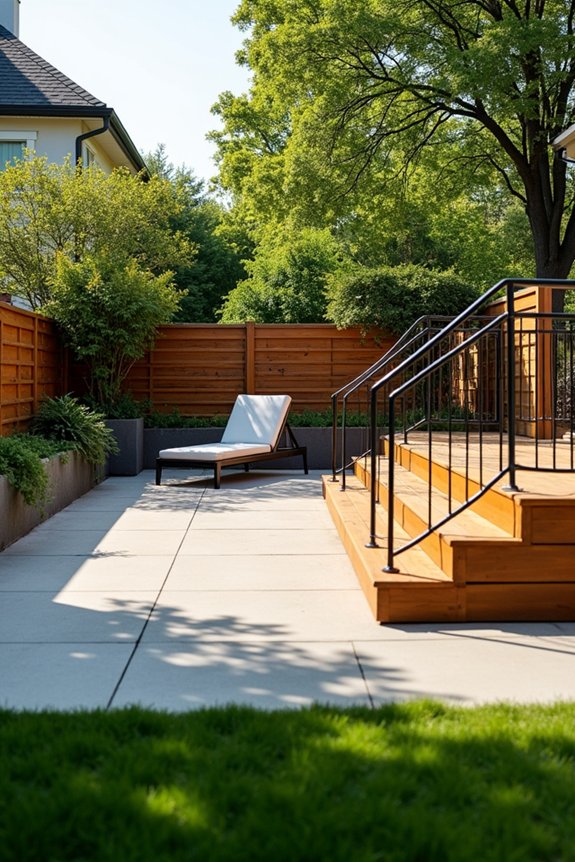
When you’re choosing between a patio and a deck, the materials you select will shape everything from how often you’ll maintain your outdoor space to what you’ll spend over the years. I’ll walk you through how different materials hold up over time, what kind of upkeep each one demands, and how your initial investment stacks up against long-term costs. Understanding these three factors will help you pick the right surface for your yard and your budget.
Durability Across Material Types
Which outdoor surface truly stands the test of time—a patio or a deck?
I’ll be honest: durability depends on what you choose. Here’s what I’ve learned:
- Concrete patios last 25+ years but crack from uneven foundations and harsh weather
- Composite decking (like TimberTech) resists mold and requires minimal maintenance with warranties up to 50 years
- Wood decks need annual cleaning, sanding, and sealing to prevent rot and moisture damage
The real difference? Moisture sensitivity. Wood struggles against dampness, while composite materials perform consistently in wet conditions. Your patio’s durability hinges on proper ground preparation—shifting foundations spell trouble. With composite decking, you’re investing in longevity. Wood demands constant attention. If you want low-maintenance performance, composite wins. If you prefer traditional aesthetics and don’t mind regular upkeep, wood works well. Choose based on your commitment level, not just upfront cost.
Maintenance Requirements By Material
How much time are you willing to invest in keeping your outdoor space looking great?
If you’re seeking low-maintenance living, a concrete or brick patio aligns perfectly with your goals. These materials need only regular cleaning and occasional sealing. Wood decks, however, demand annual attention—think power washing, sanding, and resealing to fight rot and mildew.
Here’s where composite decking offers a different option. Products like TimberTech reduce your maintenance burden significantly, requiring less frequent cleaning and fewer sealing applications than traditional wood.
The reality? Patios win for effortless upkeep. Wood decks require genuine commitment. Composite materials split the difference, offering you that middle ground if you want deck aesthetics without constant work.
Choose based on your lifestyle and energy level.
Long-Term Cost Performance
What you’ll actually spend over time matters more than that initial price tag. When I calculate long-term costs, I’m looking beyond the upfront investment to see what maintenance and repairs will demand from your wallet down the road.
Patios offer solid long-term value with minimal upkeep—just occasional sealing and washing. Decks provide stronger ROI, with wood averaging 60–80% return on investment. Composite decking strikes a smart balance, reducing maintenance while boosting your resale prospects.
Material costs shape your financial picture:
- Concrete patios run $4–$5 per square foot versus decks at $21–$30
- Wood deck maintenance compounds expenses through regular sanding and sealing
- Composite decking lowers long-term costs despite higher initial material prices
The winner depends on your maintenance tolerance and investment timeline.
Installation: What Site Prep Really Involves
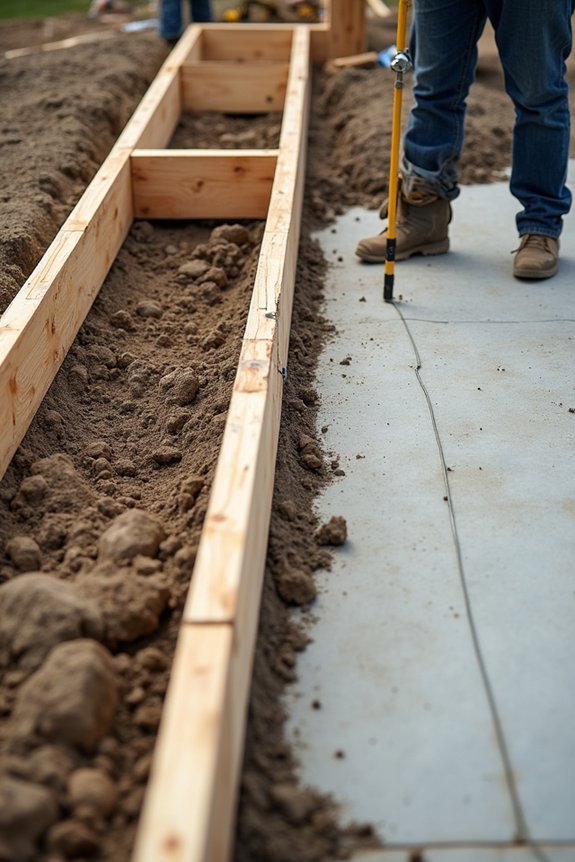
When you’re planning your outdoor space, you’ll quickly discover that patios and decks demand completely different approaches to site preparation—and understanding these differences will shape your entire project. A patio needs solid ground prep: you’ll grade the soil for proper drainage, compact the base, and often add a sand or gravel foundation to keep your concrete or pavers from cracking. Decks, on the other hand, require structural planning from the ground up, with posts sunk into the earth (or frost footings in colder climates) to support the weight of beams and joists that’ll carry your deck above the yard.
Ground Preparation Requirements
Before you pour concrete or drive the first post into the ground, understanding site prep differences between patios and decks will save you money and prevent problems.
Patios demand extensive ground prep. You’ll need to compact soil, grade the surface, and sometimes excavate to create a level base. This foundation work prevents cracking from settling. Decks, however, sit on a substructure of posts and beams that adapts to uneven terrain—you’re building up, not leveling down.
Here’s what each requires:
- Patios: Compaction, grading, excavation for stability
- Decks: Solid footings, drainage planning, beam/joist layout
- Both: Permits (though decks need more approvals)
Your elevation choices differ too. Patios stay on-grade, while decks accommodate slope and enable stairs naturally. Understanding these ground prep requirements helps you choose what fits your property and budget.
Foundation Structural Differences
Now that you’ve got your ground prepped, the real difference between patios and decks shows up in how they actually sit on your property.
| Feature | Patios | Decks |
|---|---|---|
| Foundation Type | Ground foundation with proper grading | Posts and footings with substructure |
| Elevation | On-grade, ground level | Deck elevation on beams and joists |
| Support System | Solid base, no frame needed | Elevated structure requiring posts |
| Installation Complexity | Leveling uneven terrain as needed | Foundation work below surface |
Patios rely on a solid ground foundation and proper grading to stay level and stable. You’ll prepare the earth itself as your base. Decks demand something entirely different—they need posts and footings driven deep into the ground to support that elevated structure. You’re building upward, which means additional requirements like railing and stair requirements, plus permits. That substructure handles all the weight, keeping everything safe and secure.
Patio and Deck Costs: What You’ll Actually Spend
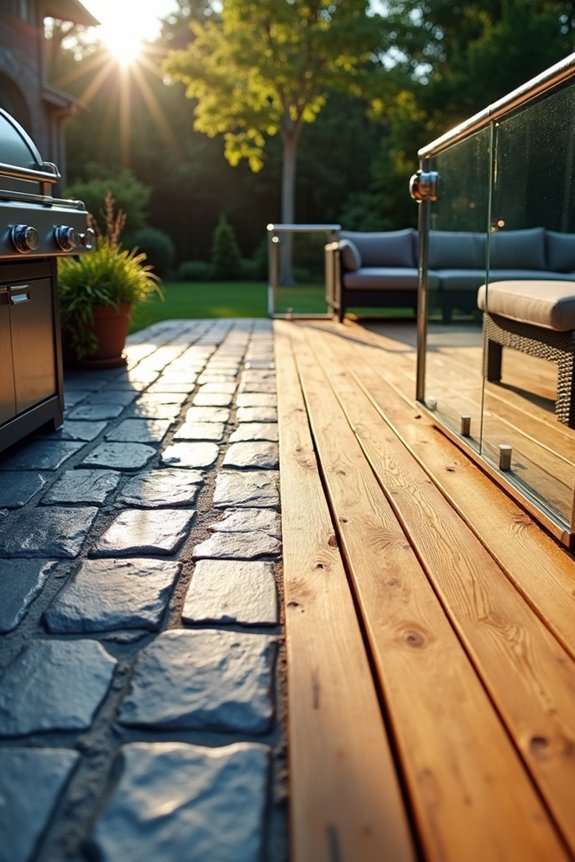
How much should you budget for your outdoor space? You’re looking at $2,000–$5,000 for a 10×10 installation either way, though the real differences emerge when you examine price per square foot and materials.
Here’s what shapes your final investment:
- Materials matter most: Concrete and pavers run about $15 per square foot, while composite decks cost $21–$30 per square foot
- Installation and features add up: Built-in seating, multiple levels, and lighting significantly increase both patios and decks
- Long-term value differs: Decks offer stronger ROI but demand ongoing maintenance; patios cost less upfront with minimal upkeep
I’d recommend weighing your budget against maintenance comfort. Patios deliver affordability and simplicity, while decks provide better resale returns if you’re willing to invest in regular care.
The Maintenance Treadmill: What Wood and Composite Actually Require
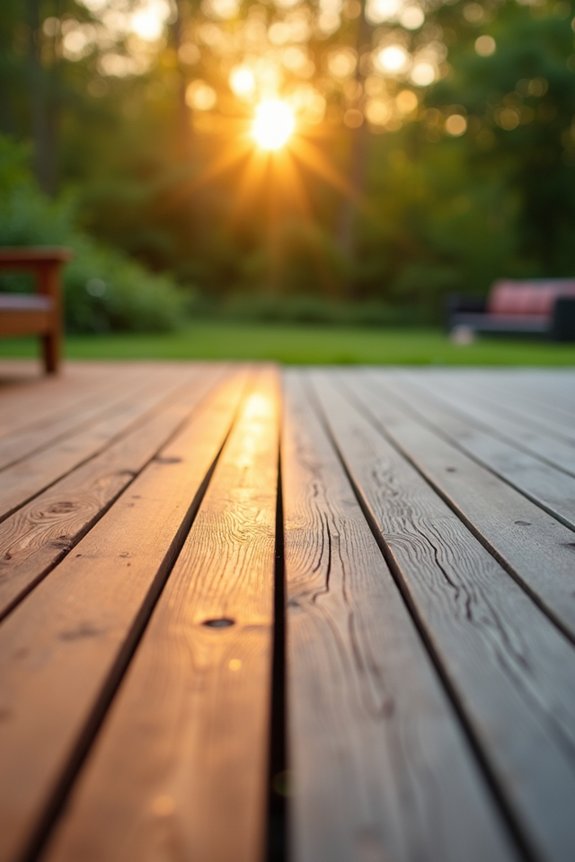
Choosing between wood and composite decking means accepting different maintenance schedules—and wood demands significantly more of your time. You’ll need annual cleaning, sanding, and sealant applications to fight rot and deterioration. Wood also fades from UV exposure and stains from spills, requiring periodic refinishing to maintain its appearance.
Composite decking like TimberTech offers a practical alternative. It resists mold better and needs fewer sealants and less frequent cleaning. While composite carries higher upfront costs, you’ll save substantially on long-term maintenance expenses and effort.
Both materials require moisture management, but wood needs constant attention. If you’re considering a deck purchase, evaluate whether you’re prepared for wood’s demanding maintenance schedule or prefer composite’s lower upkeep requirements.
How Long Do Patios and Decks Last?
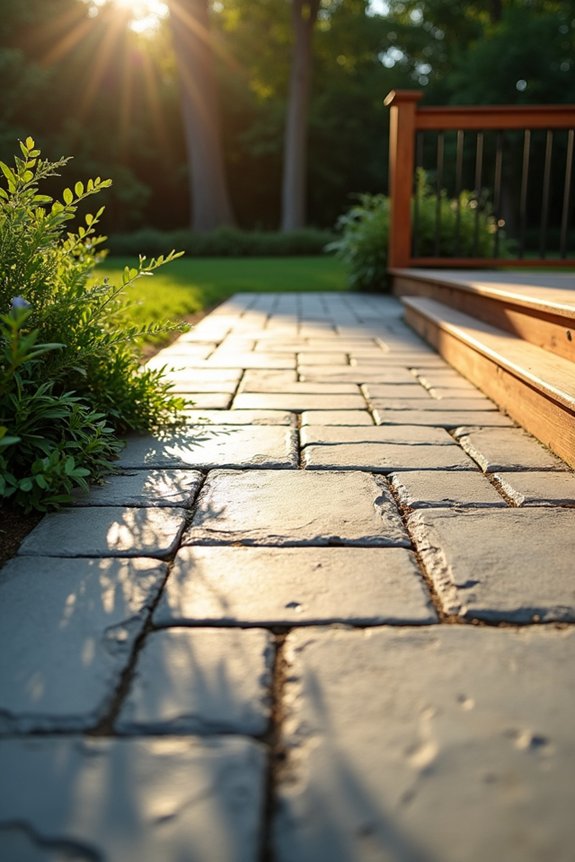
Once you’ve decided on your material, you’ll want to know how long your investment will actually last—because longevity directly shapes whether you’re making a smart choice or setting yourself up for early replacement costs.
Patios longevity typically exceeds deck lifespan significantly. Concrete patios last 25+ years with proper maintenance, though they crack from uneven foundations and extreme weather. Stone and brick offer similar durability. Wood decks last only 10–15 years, requiring constant care. Composite decking rivals patios in lifespan while demanding less effort.
Here’s what shapes materials durability:
- Weather durability: Concrete withstands elements better than untreated wood
- Maintenance impact: Wood decks need annual sealing; composite requires only cleaning
- Foundation matters: Poor base preparation causes paver cracking and settling
Your maintenance commitment directly determines deck lifespan and patio longevity.
ROI Reality: Which Recovers Its Cost at Resale
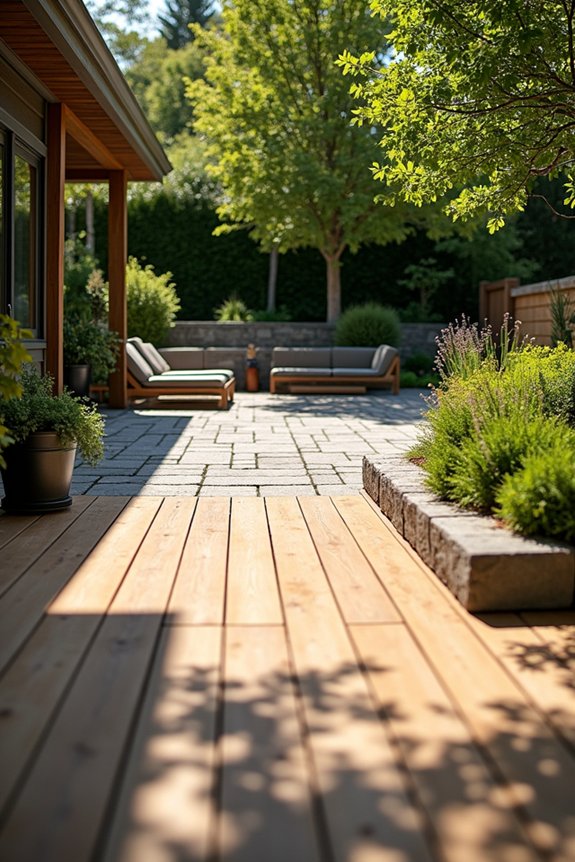
What you spend on your patio or deck isn’t just an expense—it’s an investment that’ll either pay dividends or drain your wallet when you sell. Here’s where material choice really matters for your resale value.
| Material | ROI |
|---|---|
| Composite Decking | ~66% |
| Wood Decks | ~60% |
| Stamped Concrete | ~55% |
| Flagstone Patio | ~53% |
| Basic Patio | ~50% |
Composite decking wins because low-maintenance materials preserve your investment longer. You’ll skip constant sealing and power washing that drain resources from wood decks. Regional climate affects longevity too—harsh winters demand more upkeep, reducing net resale value.
When buyers see composite decking, they’re buying peace of mind. You’re recouping two-thirds of your deck investment at resale, compared to half your patio investment. That’s a significant difference.
Aesthetics: Matching Style to Your Home’s Architecture
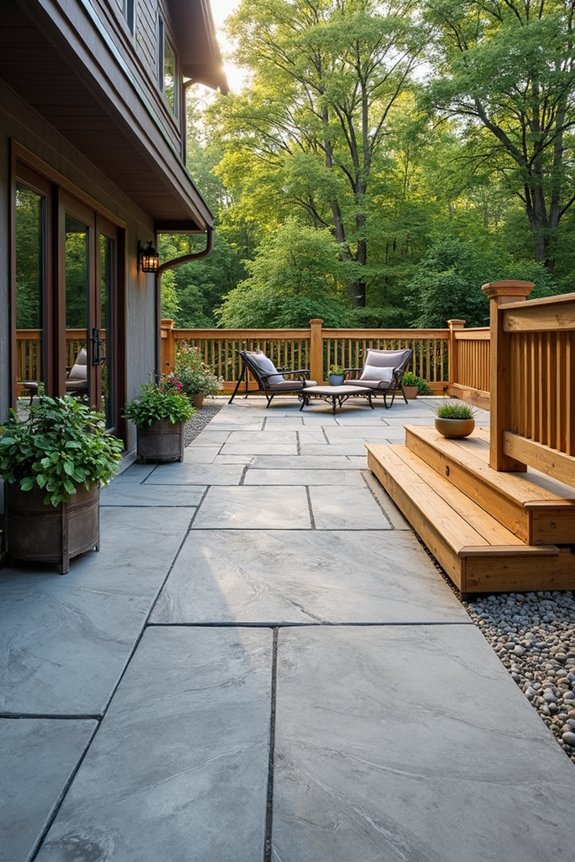
When you’re choosing between a patio and deck, you’re really deciding which surface will complement your home’s character and age well. Patios offer flexible shapes and materials—from curved stone patterns to geometric pavers—that adapt to modern or rustic styles, while decks provide elevated views and natural wood tones, though traditional wood fades over time unless you choose composite options like TimberTech that maintain their appearance for decades. Your choice determines whether your outdoor space looks polished and integrated with your home’s architecture or feels disconnected from it.
Material Appearance and Color Options
How important is your outdoor space’s visual appeal to you—especially regarding matching your home’s existing style?
Your choice between patios and decks shapes how your outdoor area looks and feels. Patios offer versatility with stone, concrete, brick, pavers, or tile, giving you warm to cool tones that complement any home. Decks start with natural wood or composite decking like TimberTech, which provides wood-like aesthetics without constant maintenance.
Here’s what sets them apart:
- Traditional wood fades over time, requiring regular staining to maintain appearance
- TimberTech composite decking resists fading and stains, with warranties protecting long-term color consistency
- Patio materials let you choose from varied color options immediately
Your material choice affects resale value too. TimberTech’s durable, fade-resistant finish appeals to future buyers, while patios offer classic appeal through diverse material selections.
Design Versatility and Home Integration
Beyond material choices, how your patio or deck integrates with your home’s architecture shapes your entire outdoor experience. Decks offer design versatility through elevation—they create views and can be detached or covered to match various home styles. You’ll customize them with railings and stairs that mirror your home’s details, achieving architectural harmony.
Patios stay on-grade, staying close to your foundation while allowing you to shape stone, brick, or pavers around your yard. Ground-level patios require privacy walls sometimes, but they blend with landscaping and your facade. Your deck integration works when every element—from structural choices to finishing details—connects visually with your home’s character. Choose elevation or on-grade based on what suits your space and lifestyle.
Long-Term Visual Durability and Fading
Your outdoor space’s visual appeal doesn’t stay frozen in time—it evolves with your material choices and how well you protect them. Here’s what you need to know about maintaining that fresh look:
- Wood decks fade quickly from UV exposure and require regular refinishing to preserve their original color
- Composite decking resists fading and staining better than wood, maintaining colors for years with minimal effort
- Patios hold their appearance longer when properly installed, though extreme weather can cause cracking or discoloration
The wood vs composite debate comes down to commitment. Traditional wood demands ongoing maintenance for long-term visual durability, while composite decking offers superior stain resistance and color retention. Patios deliver consistency too, but need solid ground prep. Choose based on how much upkeep you’re willing to invest in keeping your outdoor retreat looking its best!
Entertainment, Privacy, or Views: Which Option Matches Your Goals
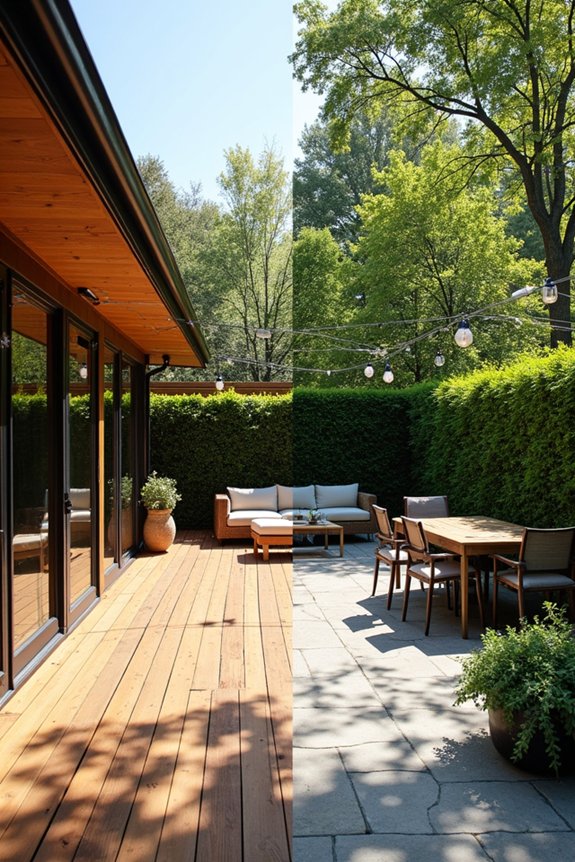
When you’re deciding between a patio and a deck, your choice really depends on what matters most to you—whether that’s entertaining guests, enjoying privacy, or taking in views.
For entertainment, decks work well with their railings, stairs, and potential for multi-level layouts that create dynamic outdoor spaces. Patios offer flat, accessible areas with durable surfaces perfect for seating and dining arrangements.
Privacy needs? Patios rely on ground-level landscaping and privacy walls, while decks use elevation changes and strategic rail placements to form secluded spots away from neighbors’ eyes.
If views drive your decision, decks are the better option. Their elevated position delivers visual impact and increased privacy. Patios offer closer ground-level connection with your surrounding yard instead.
Consider what you’ll use most—that answer guides your choice.