
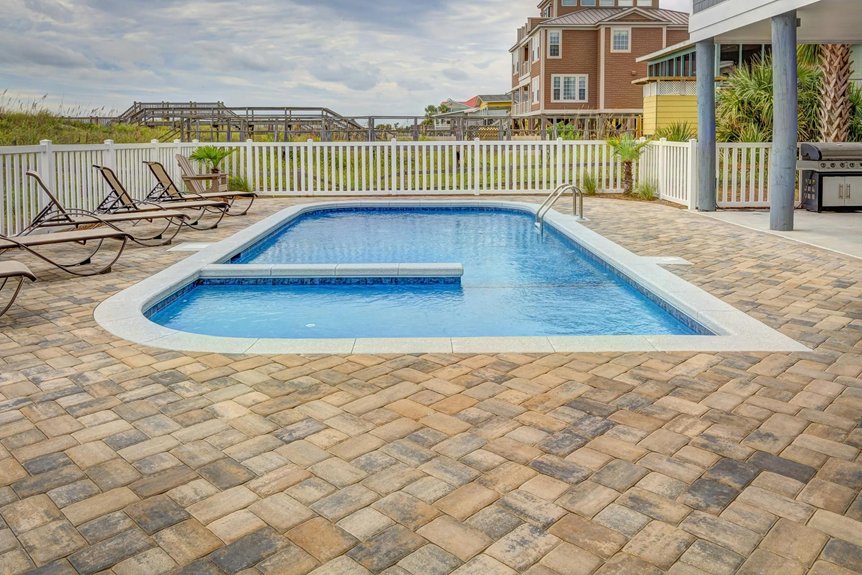
You’ll need a 48-inch minimum fence with no more than 4-inch gaps between pickets and under the fence line. Install a self-closing, self-latching gate with the latch positioned 54 inches high. Remove ladders when the pool is unused, and check your local building codes—requirements vary by jurisdiction. Some areas accept 48-inch walls alone if there’s no deck or climbable structures nearby. Noncompliance risks insurance denial and serious liability exposure. Specific state rules and inspection requirements differ, so verify regulations before installation to avoid costly oversights.
Do You Need an Above-Ground Pool Fence?
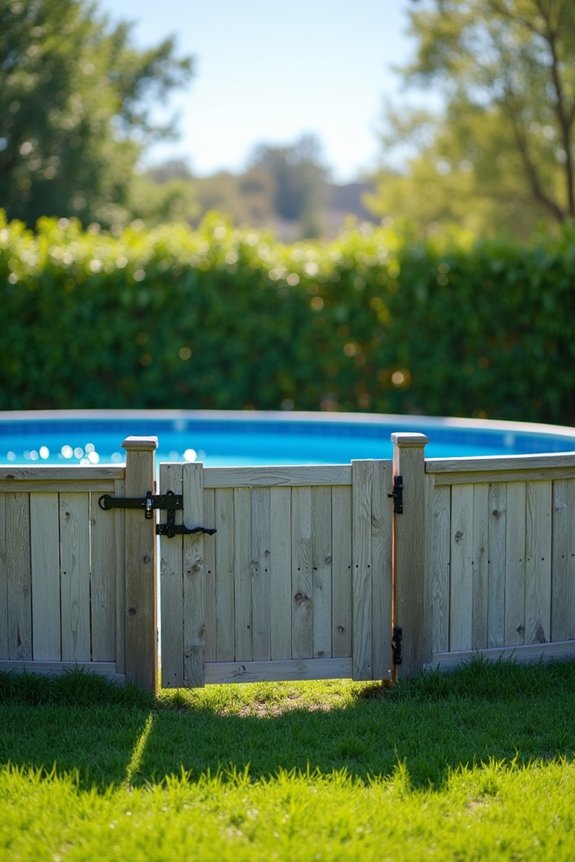
Why would you need a fence around your above-ground pool? Safety regulations require an above-ground pool fence as a critical barrier requirement in most jurisdictions. Your pool needs a minimum height of 48 inches to prevent unsupervised access, especially for young children.
You’ll want a self-closing gate with a self-latching latch installed at least 54 inches high. This keeps your pool secure when you’re not using it. Removable ladders are necessary—they maintain barrier integrity by preventing easy entry when locked away.
Here’s what matters: you’re protecting your family and neighbors. Check your local building codes before installation, since requirements vary by municipality. Your local building department can clarify specific regulations for your area. This investment demonstrates responsible pool ownership and care for everyone’s safety.
Above-Ground Pool Fence Laws and Safety Standards
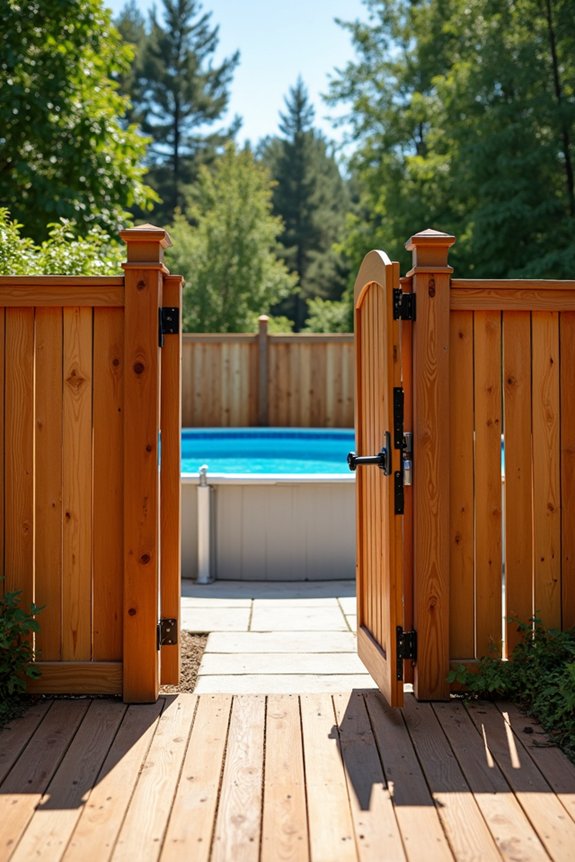
Now that you understand why fences matter for pool safety, let’s look at the specific laws and standards you’ll need to follow. Your above-ground pool fence requirements depend on your local building code, but most jurisdictions share similar standards.
| Requirement | Standard |
|---|---|
| Fence Height | 48 inches minimum |
| Clearance Under Fence | No more than 4 inches |
| Picket Spacing | Maximum 4 inches apart |
| Self-closing Gate | Required for all entry points |
| Self-latching Latch Height | 54 inches above ground |
The pool barrier must create a complete isolation around your pool. Your self-closing gate and self-latching latch prevent unsupervised access. If your pool has a deck, you’ll need a full isolation fence separate from the pool wall itself. Check with your local building department for exact requirements—they’re your best resource for compliance specifics!
Exceptions: When Above-Ground Walls Eliminate Fence Requirements
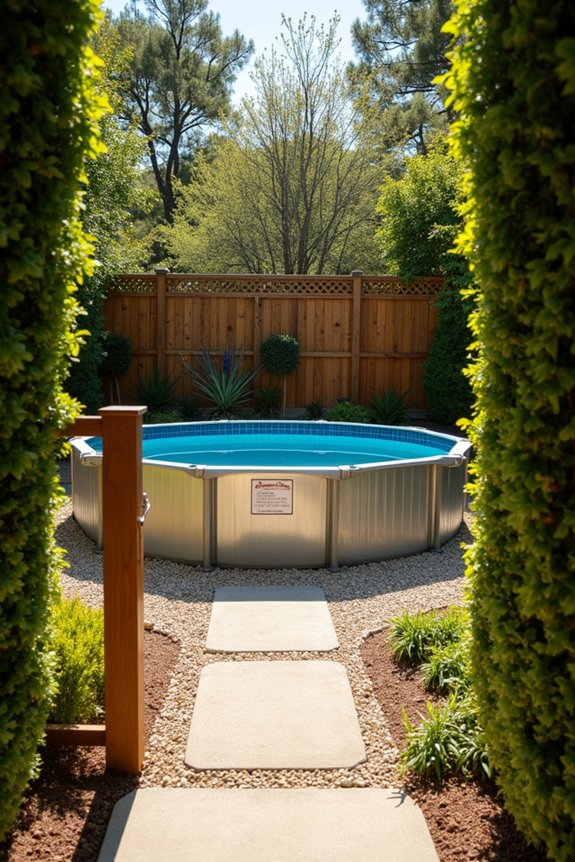
Can your pool’s walls actually do the job of a fence? In some jurisdictions, your above-ground pool barrier might qualify as the sole protection if it meets specific requirements.
Requirements for wall-only compliance:
- Wall height of 48 inches measured from grade with no permanent ladders attached
- Lockable ladder that’s removable or protected by a self-closing gate
- No deck or climbable surroundings that could compromise barrier integrity
- Local code exceptions that vary significantly by location
Your wall alone won’t work if you’ve got an elevated entry, deck, or nearby structures kids could climb. Many places still demand additional fencing or access restrictions despite meeting wall height standards.
Next steps:
Check your local codes and schedule an inspection. What works in one area might not satisfy your jurisdiction’s regulations, so verify before assuming you’re compliant.
State-by-State Fence Requirements
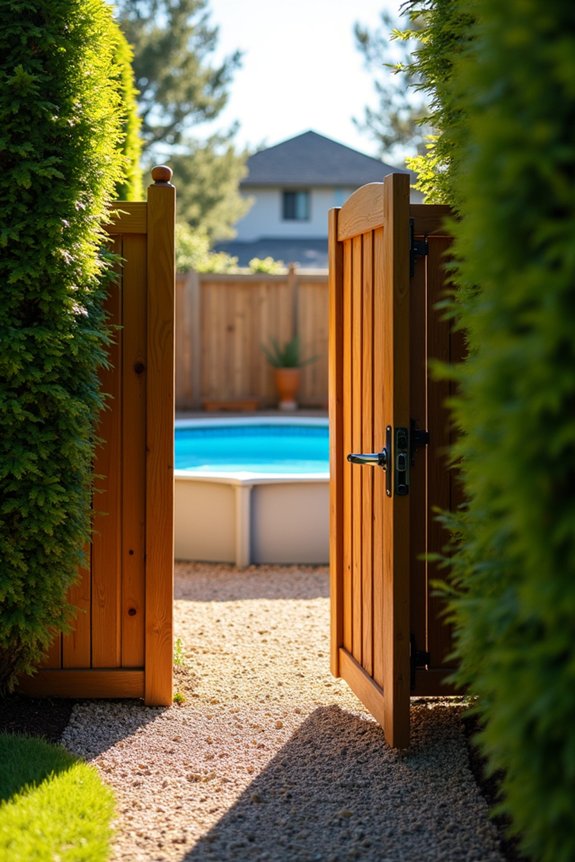
Where you live matters—a lot. Your state’s pool barrier regulations determine what you’ll need to install around your above-ground pools. Most states require a minimum fence height of 48 inches, though some mandate 60 inches for added safety. You’ll want a gate that’s self-closing and self-latching, with the latch positioned at least 54 inches above ground—keeping it out of children’s reach. Vertical spacing between pickets shouldn’t exceed 4 inches, and gaps under your pool barrier must stay within 2–4 inches. This is an important consideration: local building codes can override state baselines. Before you purchase materials or start installation, contact your city or county office. They’ll clarify exactly what your specific location requires for above-ground pool compliance.
Why Pools Fail Inspection: Spacing, Height, and Gate Mistakes
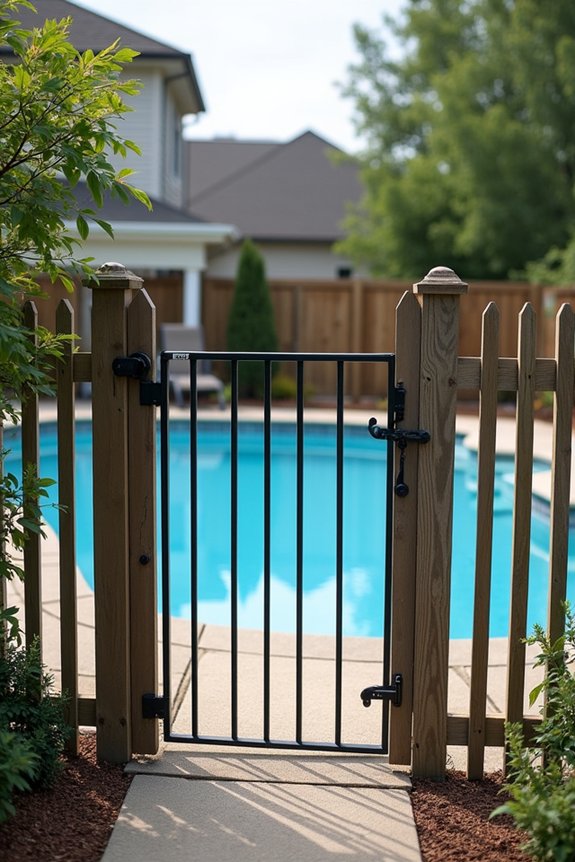
Most pool inspections fail because homeowners overlook three critical details: picket spacing that’s too wide, height measured incorrectly from ground level, and gates without proper latching hardware. You’ll want to check that no gaps exceed 4 inches between vertical slats and measure your fence height at ground grade (not on a slope or raised deck) to meet the 48-inch minimum. The gate latch—which must sit at least 54 inches high and close automatically—is where most violations occur. Here’s what inspectors examine in each of these areas.
Spacing And Picket Gaps
- One of the most common reasons pools fail inspection involves picket spacing. Your pool fence’s pickets must be spaced no more than 4 inches apart. This measurement prevents small children from squeezing through gaps that could compromise your safety barrier.
- When you’re installing your above-ground pool fence, check spacing regularly along the entire perimeter:
- Measure gaps between every picket with a ruler or measuring tape
- Test with a 4-inch ball to ensure nothing passes through
- Account for wood settling or warping over time
- Inspect after weather changes or seasonal shifts
- Bottom clearance under your fence shouldn’t exceed 2 to 4 inches either. These requirements work together with proper fence height and gate latch positioning to create comprehensive protection around your pool area.
Height Measurement From Grade
After you’ve confirmed your pickets are properly spaced, you’ll need to check another measurement that catches many pool owners off guard: your fence’s overall height.
Your fence height must measure at least 48 inches from the grade—that’s ground level—to the top of the fence. Inspectors measure from actual soil elevation, not your pool deck or any adjacent structure. This distinction matters because sloped ground or irregular footing can create gaps underneath.
You’re allowed a maximum bottom clearance of 2 to 4 inches, depending on your local code. Check your measurement at multiple points, especially near gates and corners where height often dips unexpectedly. Gate latch height requirements—54 inches minimum—work alongside this 48-inch fence height to create your complete inspection-ready barrier.
Gate Hardware And Latching
How many pool inspections fail because of a latch that’s positioned just inches too low? You’d be surprised. I’ve seen countless gates rejected simply because the hardware didn’t meet code requirements.
Your gate hardware is essential for keeping your pool secure:
- Self-closing and self-latching gates eliminate human error when someone forgets to shut the gate
- Latch height of at least 54 inches keeps latches out of children’s reach
- Tamper-resistant and weather-resistant hardware prevents rust and maintains secure closure over seasons
- Proper vertical spacing (no gaps larger than 4 inches) stops climbing attempts
I recommend installing heavy-duty hardware designed specifically for pool applications. Check that hinges are tight and the latch aligns perfectly with the strike plate. These details matter—they’re what separates passing inspections from costly failures.
Insurance, Liability, and Your Legal Risk
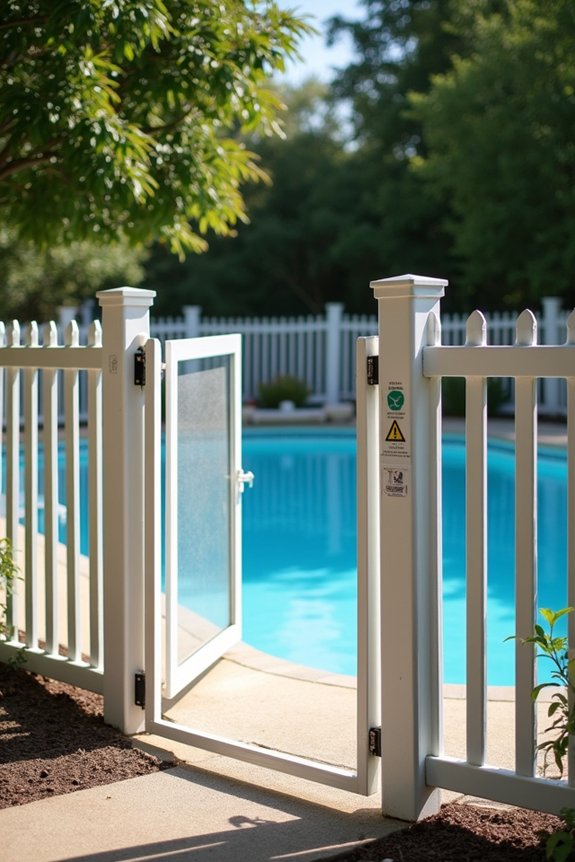
If you don’t meet fence requirements, you’re risking serious consequences that go beyond just fines—your homeowner’s insurance might deny claims if someone gets hurt at your pool, or worse, they could cancel your policy entirely. You’re also exposing yourself to major liability if a child or neighbor is injured on your property, which means you could face expensive lawsuits and medical bills on your own dime. Building to code isn’t just about passing inspection; it’s about protecting your wallet and your peace of mind.
Insurance Coverage Denial Risks
What happens when your insurance company discovers your above-ground pool doesn’t meet local fence requirements? You’re facing serious financial consequences that could devastate your protection when you need it most.
Insurance carriers require compliant barriers—including proper self-closing gates with latch height around 54 inches—as a condition of your coverage. Here’s what’s at stake:
- Claim denial: Your insurer may refuse to pay if someone’s injured at your noncompliant pool
- Premium increases: Expect significantly higher rates once violations are discovered
- Policy cancellation: Your coverage could be terminated entirely without warning
- Out-of-pocket liability: You’ll personally face medical bills and legal fees
Your fence requirements aren’t just local rules—they’re directly tied to your insurance coverage. Meeting those measurements protects both your wallet and your peace of mind. Don’t let compliance slip!
Liability Exposure Without Barriers
Beyond the insurance penalties we’ve covered, you’re also facing direct legal and financial risk when your pool lacks proper barriers. Here’s what matters: if a child or pet gains unsupervised access to your above-ground pool, you’re potentially liable for injuries or worse. That liability exposure doesn’t disappear just because you weren’t present. Courts view fencing as a standard safety measure, and your absence of it suggests negligence. Even if you’ve installed removable ladders or locked gates, many jurisdictions still require a compliant barrier for code compliance. Without proper fencing, you’re personally responsible for damages—medical bills, legal fees, settlements. Local authorities enforce this seriously too. Stop-work orders and fines follow noncompliance. Protecting your above-ground pool with appropriate barriers is your legal responsibility and provides peace of mind.
Policy Cancellation Due Noncompliance
Your homeowners insurance company can cancel or refuse to renew your policy if your above-ground pool doesn’t meet fencing requirements.
Your insurance carrier views ISPSC/ICC compliance as non-negotiable for coverage eligibility. When noncompliance penalties apply, you face serious consequences:
- Policy cancellation without warning or renewal options
- Claim denial for any pool-related incidents or accidents
- Loss of coverage leaving you personally liable for injuries
- Difficulty obtaining new homeowners insurance at competitive rates
Insurance companies aren’t being unreasonable—they’re protecting themselves from unnecessary risk. That protection comes at your expense if your above-ground pool barriers don’t meet code. Document your local code verification now. This step prevents inspection issues and protects your insurance eligibility long-term.