
Yes, Cheyenne requires a fence permit for all new fences under Unified Development Code Section 5.8.4. However, some residential fences under 6 feet tall may skip permitting if they stay behind setback lines and away from sight lines. Front yard fences have stricter rules—they’re capped at 4 feet and must stay off public right-of-way. Side and rear fences allow up to 6 feet. Before you break ground, verify exact requirements with your local zoning office, since neighborhood-specific rules sometimes create exceptions. Understanding your specific yard type and property lines ensures a smooth approval.
Do You Need a Fence Permit in Cheyenne? Yes: Here’s Why
Why would Cheyenne require a fence permit when you’re building on your own property? The city enforces these rules to protect community safety and maintain neighborhood consistency. You’ll need a fence permit for all new fences in Cheyenne, governed by the Unified Development Code Section 5.8.4.
This requirement exists because proper placement matters. Your fence must follow front yard setbacks, stay behind designated lines, and maintain specific height limits. The building department verifies fences don’t encroach on public right-of-way or sidewalks—protecting both you and neighbors.
Front yard fences typically max out at 4 feet, while taller structures need additional permits. By obtaining your fence permit upfront, you’re following the rules that responsible property owners adhere to. It’s a straightforward step that prevents costly violations down the road.
Height and Placement Rules: Where and How High Your Fence Can Go
How you position your fence matters just as much as how tall it stands. In Cheyenne, your fence permit application must address specific height limits and placement requirements outlined in the Unified Development Code (UDC).
Front yard fences can’t exceed 4 feet, and they must stay behind your front yard setback line. On corner lots, both abutting streets count as front yards. Side and rear yards allow up to 6 feet from finished grade.
Fences over 6 feet need a building permit. The finished side faces outward—this detail matters for your permit approval. Never extend your fence into public rights-of-way. Corner lot owners, remember: both street-facing sides follow front yard rules.
Following these regulations before you build saves time and avoids delays.
When Your Fence Doesn’t Need a Permit
Now that you know the height and placement rules that trigger permits, you might be relieved to learn that not every fence project requires one. In Cheyenne, many residential fences under 6 feet tall don’t need a fence permit, which means you can move forward without additional paperwork and fees. However, Cheyenne city code and local zoning regulations do specify exceptions. Front yard fences often face stricter requirements, particularly regarding height restrictions and visibility. Before breaking ground, check your specific neighborhood’s rules, as some areas have unique restrictions. If your fence stays under six feet and remains in your backyard away from sight lines, you’re likely in the clear. Always verify with your local zoning office to confirm your project’s requirements.
Determine Property Lines Before Your Cheyenne Fence Permit
Before you submit your fence permit application, you’ll want to pinpoint exactly where your property line sits, and I recommend starting with the Laramie County GIS Database or checking your city’s Right-of-Way Boundaries map online. If you need absolute certainty—especially for corner lots or properties with unclear boundaries—a professional survey gives you the documented proof that protects you legally and confirms your fence stays on your land. Getting this step right upfront saves you from costly mistakes and maintains good relations with your neighbors.
Laramie County GIS Database
Where exactly does your property end and your neighbor’s begin? You’ll find that answer through the Laramie County GIS Database, an online tool I recommend using before submitting any fence permit application.
This interactive mapping system lets you identify precise property lines and parcel boundaries for your Cheyenne property. You can verify setbacks—the required distances from your property edge to structures—and confirm you’re building entirely on your own land.
The GIS database also shows street setbacks and right-of-way limits that directly impact where you can legally place your fence. I’d suggest cross-checking your findings with local zoning and planning staff to verify accuracy. This step prevents costly encroachment issues and code violations.
City Right-of-Way Boundaries
Once you’ve pinpointed your property lines through the GIS database, you’ll need to verify one more critical boundary: the city right-of-way.
Fences can’t extend into the public right-of-way, which is land the city controls for roads, utilities, and pedestrian access. This setback requirement protects everyone’s interests. You can check right-of-way boundaries using the City GIS data or Laramie County GIS Database—both show exactly where public land begins.
Before investing in materials, contact the Planning and Development Department directly. They’ll confirm your permit requirements and whether your fence location complies with setback rules. They’ll also flag any utility easements that might affect placement. This step prevents costly mistakes and keeps your fence project on track legally.
Professional Survey Recommendations
Why should you invest in a professional survey before building your fence? Getting a surveyed boundary prevents costly mistakes and disputes with neighbors. Before you apply for your fence permit, hire a licensed surveyor to establish your exact property lines. They’ll create a detailed site plan showing where your surveyed boundary actually sits—this document becomes necessary when you submit permits to the City Planning and Development Department.
A professional survey costs several hundred dollars, but it pays for itself. You’ll know precisely where to build, keeping your fence entirely on your property. This protects you from potential legal issues and keeps your project moving smoothly. When you have accurate property lines documented, getting your fence permit approval becomes straightforward. A professional survey is the foundation for a successful fencing project.
The Permit Application Process and Review Timeline
Once you’ve confirmed your property lines, you’re ready to submit your fence permit application. You can apply online through BSAOnline.com or submit in person. The city typically requires a detailed site plan showing your fence’s location, height, and materials. The review process takes up to 10 business days, though holidays and busy periods may extend this timeline.
Permit Review Timelines
How long does it actually take to get your fence permit approved in Cheyenne? Most residential fence permits process within two to seven days, though your permit review timeline can extend up to ten business days depending on application volume and holidays.
What affects your processing time: submitting complete documentation upfront speeds things along significantly. Use BSAOnline.com for online applications—they accelerate approval considerably. Your fence permit undergoes Planning, Zoning, and Engineering review before final approval, which takes additional time for complex projects.
To keep things moving efficiently, include detailed site plans and construction drawings with your submission. Larger or more complicated fence projects naturally require longer processing periods. Check BSAOnline.com’s status tracker to monitor your application’s progress in real time.
Application Submission Requirements
Getting your fence permit application right the first time speeds up the approval process.
You’ll submit your fence permit application through BSAOnline or in person at the Inspections office. Paper forms are also accepted. Here’s what you need: detailed site plans showing your property layout and fence location, plus construction drawings that specify materials and dimensions.
Your plan requirements must align with Cheyenne’s UDC regulations and setback rules to maintain compliance from the start. Include measurements for height, length, and distance from property lines.
Online submission reduces processing time. You’ll pay permit fees based on project valuation before approval. Submitting complete documentation upfront minimizes revision requests and accelerates your path to construction.
Fence Permit Requirements by Yard Location (Front, Rear, and Side)
Where you’re planning to build your fence matters considerably in Cheyenne, because the city enforces different height limits and setback rules depending on whether you’re installing it in your front yard, side yard, or rear yard.
For your front yard, you’ll need a fence permit, and height typically maxes out at 4 feet. Your fence must stay behind the front setback line—never in the public right-of-way. Side and rear yards allow you more flexibility, with fences reaching up to 6 feet from finished grade. Corner lots treat both abutting streets as front yards, affecting placement rules. Any fence exceeding 6 feet requires a building permit regardless of location. Always verify current requirements with Cheyenne’s planning office before starting your project.
Building Without a Fence Permit in Cheyenne: Consequences
What happens when you skip the permit process and build your fence anyway? You’re inviting trouble with Cheyenne’s Planning and Development Department. Building without a fence permit triggers zoning violations under UDC Section 5.8.4, leading to enforcement actions against your property.
Here’s what you’ll face: the city can order you to remove or modify your fence to meet code standards. You’ll likely owe retroactive permitting fees and costs for required modifications. These violations don’t disappear—they create official records affecting your property.
Get ahead of this situation. Verify permit requirements before breaking ground. Whether you’re installing a standard residential fence or partition fence, the Planning and Development Department can guide you through proper channels. It’s simpler and cheaper than facing enforcement later. Protect your investment by doing it right from the start.
Request Your Cheyenne Fence Permit Inspection
Once your fence permit’s approved, you’re ready to schedule an inspection. After permit reviews conclude, you’ll contact the Building Inspection Department to arrange your inspection appointment.
Once your fence permit’s approved, contact the Building Inspection Department to schedule your inspection appointment.
Schedule inspections at least 24 hours in advance by calling 616-530-7285. Provide your permit number and preferred inspection dates.
Before the inspection:
- Ensure your fence is fully constructed and accessible
- Have property boundaries clearly marked for the inspector
- Keep permit documentation readily available on-site
The Building Inspection Department will verify your fence meets all Cheyenne requirements, including height restrictions and property line placement. They’ll confirm finished sides face outward and that your installation complies with approved plans. Once inspection passes, you’re done with the permit process. This final step protects your investment and confirms your fence meets community standards.
After Your Cheyenne Fence Permit: Build and Beyond
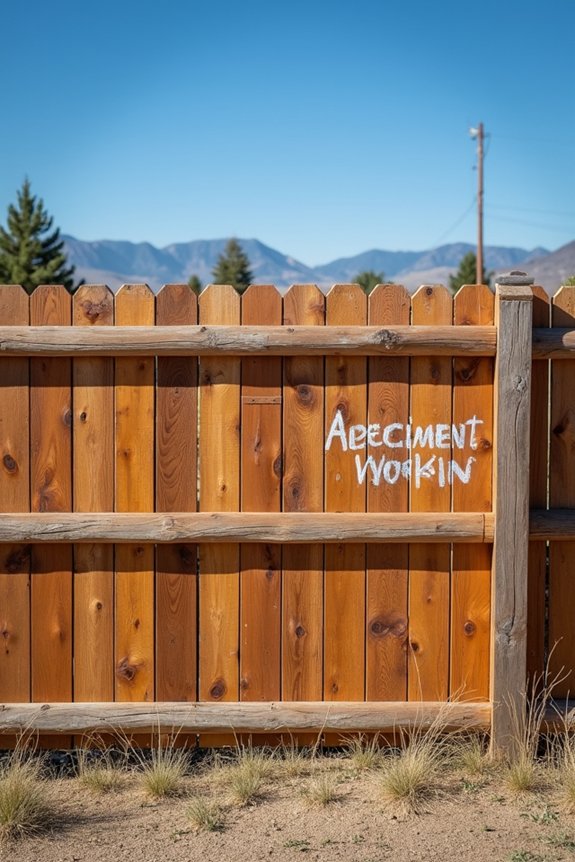
Now that your inspection’s complete and you’ve got the green light, construction can begin. Your fence permit gives you the authority to build within Cheyenne’s Unified Development Code standards. Follow your approved plans exactly, respecting all height restrictions and your front yard setback requirements. Keep measurements precise—front fences stay at 4 feet, side and rear at 6 feet maximum. Document your progress with photos for your records. Once construction finishes, request a final compliance inspection to confirm zoning compliance. This verification protects your investment and meets all UDC regulations. Stay organized, follow guidelines, and complete your fencing project successfully.