
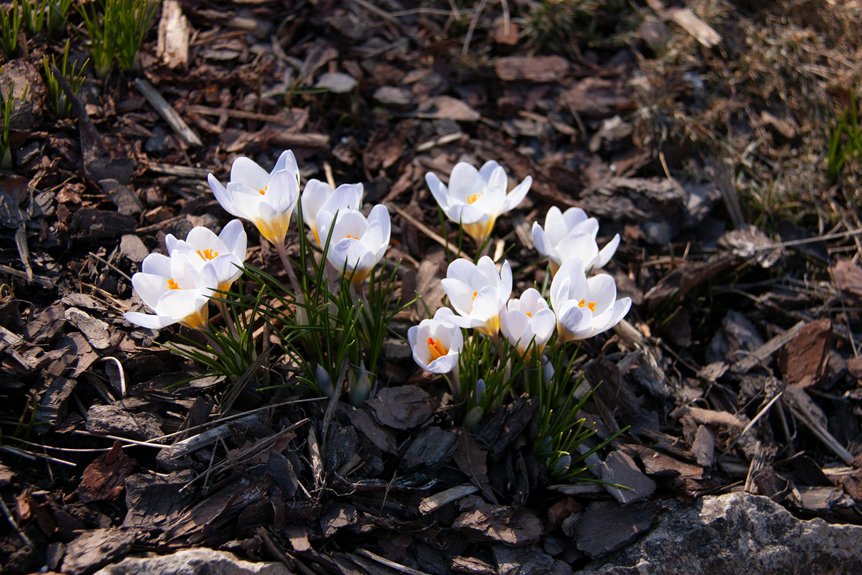
I’ll create a successful flowers-in-mulch guide, starting with soil preparation.
Clear mulch from a circle twice your pot’s diameter, expose bare soil, and dig a hole twice as wide—matching depth to your root ball.
Break up compacted sides, backfill halfway with water, then finish filling.
Position mulch 1–2 inches from the stem in a 2–3 inch layer.
Water deeply using slow soaking, then monitor moisture weekly with the finger test.
You’ll discover the seasonal adjustments that keep flowers performing well throughout the year.
Clear Your Planting Zone and Check the Soil
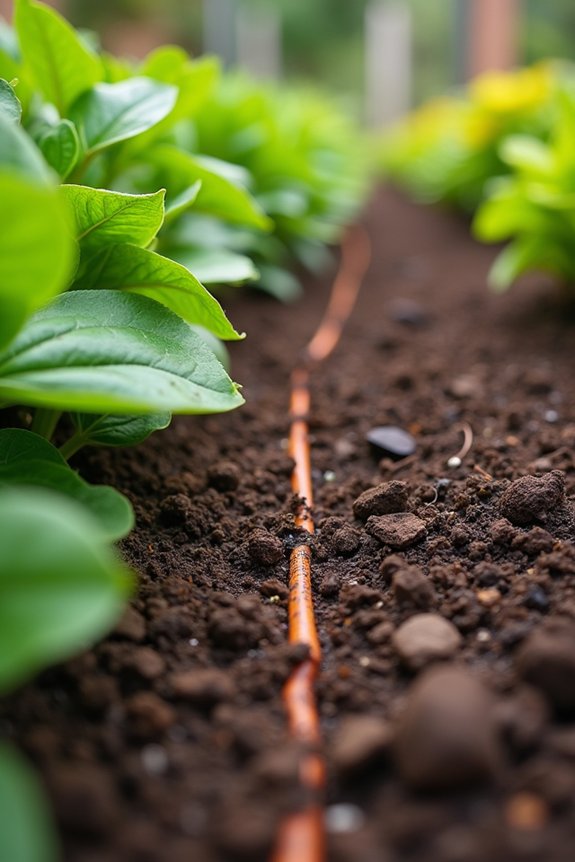
Before you dig, clear away the mulch surrounding your planting spot. Push mulch back in a wide circle—at least twice the diameter of your nursery pot—to create a generous planting zone for your flowers to establish themselves.
Next, expose the bare soil underneath. This step prevents debris from falling into your planting hole and allows you to inspect moisture levels before beginning. You’re preparing a clean workspace where roots can make direct contact with soil, which is necessary for long-term growth. Mulching alone won’t cut it—your flowers need that direct soil connection.
Take a moment to check how moist the soil feels. This moisture check guides your watering strategy moving forward, ensuring your flowers get exactly what they need.
Dig the Right Hole to Plant Flowers Properly
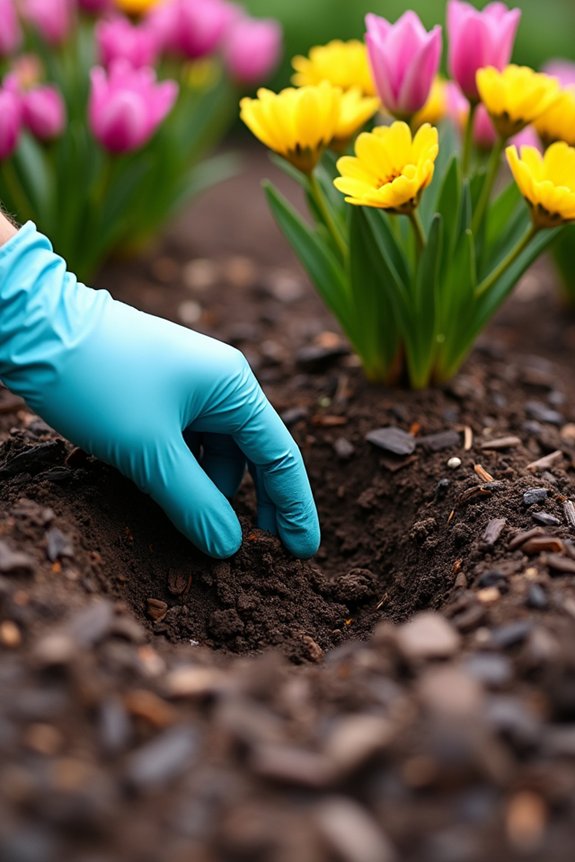
You’ll want to dig a hole that matches your root ball’s depth and is slightly wider to give roots room to spread without crowding. Use a sharp spade to create clean sides, then break up any glazed or compacted soil on the walls—this prevents roots from spiraling and encourages them to expand into looser soil around the planting area. Getting these dimensions right supports proper flower establishment and growth.
Hole Width and Depth
How wide should your planting hole be? Dig twice as wide as your nursery pot. This generous hole width gives roots room to spread naturally without resistance.
For depth, match it to your root ball—no deeper. Break up the hole’s sides thoroughly to prevent glazing, which stops roots from penetrating outward.
In Hilton Head’s sandy loam, sprinkle compost at the bottom for better water retention. When backfilling, avoid compacting soil excessively around the plant.
The root ball’s crown should sit at or just above soil level. Planting too deep kills establishment. Direct soil contact matters far more than mulch alone for long-term growth success.
Breaking Up Glazed Sides
Why does the hole’s interior matter as much as its width and depth? When you dig, the sides become compacted and smooth—we call this glazing. This slick surface actually blocks water from soaking in properly, which stops root establishment before it starts.
Here’s what I do: I take a shovel or garden fork and deliberately roughen those glazed sides. Breaking them up creates tiny channels where roots can penetrate the surrounding soil. This direct soil contact is necessary for your flowers to establish properly.
Don’t let mulching tempt you to skip this step. Even with mulch protection, your plants need that damaged side layer broken apart. The rougher, more natural texture invites roots outward. It’s a small effort that produces real results in how successfully your flowers establish themselves.
Plant, Fill, and Reset Your Mulch Layer
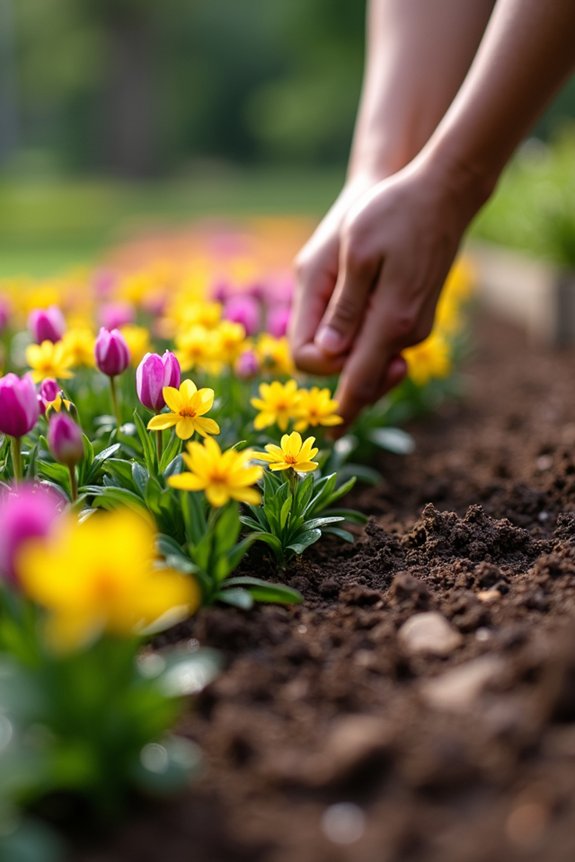
Before you dig that hole, push the mulch back in a circle that’s at least twice as wide as your nursery pot—this exposes the bare soil so you can check if the area’s actually moist before you start.
Now lower your plant so the crown sits level with the surrounding soil. Dig your hole just as deep as the root ball and slightly wider. In Hilton Head’s sandy loam, sprinkle compost at the bottom to improve water retention and root establishment.
Backfill halfway, water thoroughly to settle the soil, then finish filling to eliminate air pockets. Finally, reset your mulch layer 1–2 inches away from the stem, building a 2–3 inch blanket with feathered edges. This mulch placement protects roots while maintaining proper moisture levels.
Water Flowers Thoroughly After Mulching
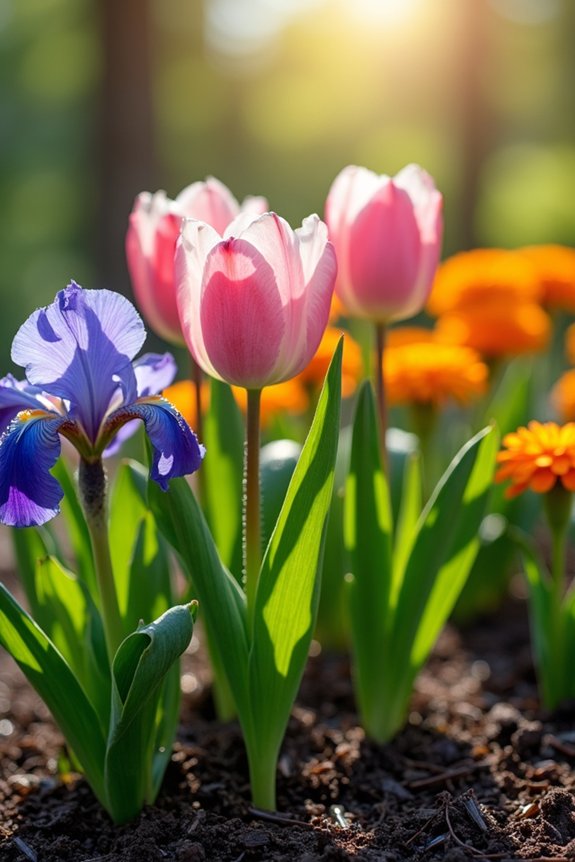
The real work begins right after you’ve settled that mulch layer in place—now’s the time to give your newly planted flowers a deep, thorough watering. I use a slow soak method that lets moisture penetrate the full root zone, not just the soil surface. This patient approach encourages stronger root systems.
To monitor your watering schedule, I check soil moisture using the finger test—when the top inch feels dry, it’s time to irrigate again. A moisture meter works well too if you prefer precision.
In warmer climates like Georgia, I’ve found that deep, less frequent irrigation beats surface watering every time. This strategy trains roots to grow deeper and builds resilience. Stick with your mulching and irrigation routine, and your flowers will develop well.
Avoid Volcano Mulching and Four Other Root-Killing Mistakes
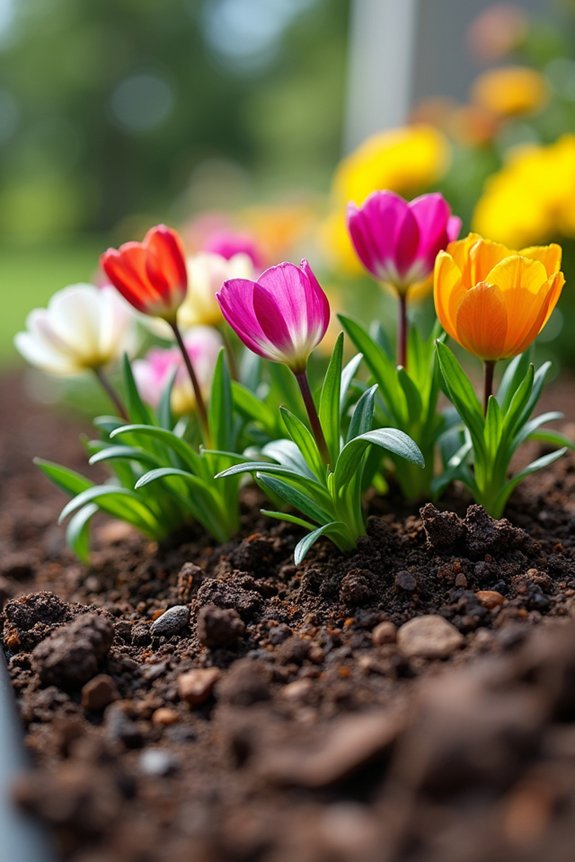
You’ve watered your flowers thoroughly, but common mulching mistakes can still undermine all that effort and damage your plants’ roots. I’m talking about volcano mulching—piling mulch high against the stem—along with planting too deep, using excessive mulch depth, disturbing roots during installation, and checking only surface moisture instead of watering deeply. Let me walk you through these five errors and show you exactly how to avoid them so your flowers perform well.
The Volcano Mulching Problem
Why do so many flowering plants struggle even when we’re trying to help them? Often, we’re inadvertently creating the perfect conditions for root rot and disease. Here’s what happens when we pile mulch too high:
- Moisture traps against stems, promoting stem rot and fungal issues
- Airflow gets blocked, preventing the crown from drying properly
- Soil contact breaks down, weakening root establishment
The solution? Create a donut-shaped mulch ring instead. Keep a gap around your plant’s base—think of it like giving your flowers breathing room. Spread mulch 2-3 inches deep, but pull it back several inches from the stem. This simple adjustment maintains airflow, keeps the crown dry, and ensures direct soil contact for roots. Proper mulch placement results in stronger growth and better flowering. We’re all learning together!
Other Root-Killing Errors
Beyond volcano mulching, I’ve found that several other common mistakes quietly damage our flowering plants’ root systems and stunt their growth. Planting too deep buries the crown, preventing proper emergence and weakening roots. I keep mulch depth around 2-3 inches for weed suppression without suffocating soil or reducing rainwater penetration. Thicker layers deprive roots of critical oxygen and create soggy conditions that encourage rot.
I’m careful during planting and maintenance to avoid root disturbance, which disrupts water uptake and slows establishment. Fresh wood chips are problematic too—they deplete soil nitrogen as they decompose, tying up nutrients your flowers desperately need.
These adjustments work together, creating healthier plants in your garden.
Top Up Your Mulch Layer Each Spring
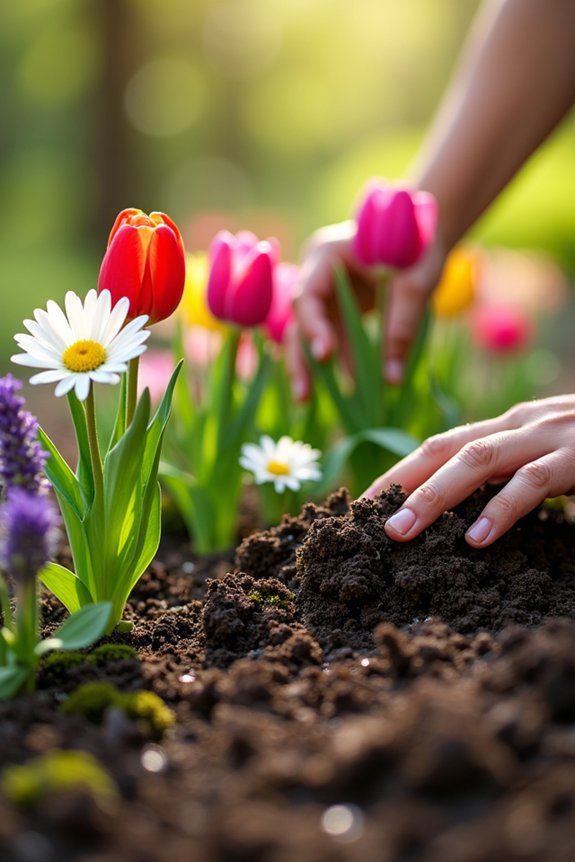
How does your mulch look come springtime? After winter’s wear, your beds need refreshing. I refresh my mulch layer each spring to keep my flowers healthy and my garden looking intentional.
After winter’s wear, refresh your mulch layer each spring to keep flower beds healthy and intentional-looking all season.
Here’s what I do to maintain my mulch layer:
- Add 2–3 inches of fresh, aged organic mulch (shredded hardwood or compost work great) to restore your soil moisture and weed suppression.
- Create a 2–3 inch mulch donut around each plant base, leaving stems clear to prevent rot.
- Water deeply after adding mulch so it settles and reaches your root zone.
Using organic mulches means feeding your soil as they decompose—a practical benefit for spring maintenance. Avoid fresh green chips; they deplete nitrogen. This simple routine keeps your flower beds healthy, hydrated, and weed-free all season.
Monitor Moisture Year-Round for Thriving Blooms
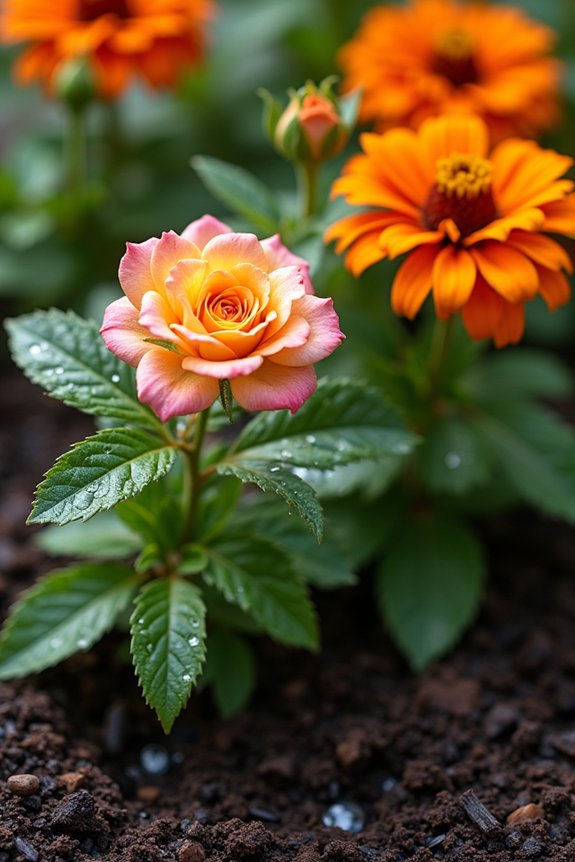
Once spring’s refresh is done, keeping tabs on your soil moisture becomes your most important job for consistent blooms. I check my flower beds regularly using the finger test—pushing one inch into the mulch to feel if soil’s dry or damp. This simple method beats guessing every time.
| Season | Watering Frequency | Mulch Moisture | Bloom Impact |
|---|---|---|---|
| Spring | 2–3 times weekly | Consistently moist | Strong growth |
| Summer | Daily or every other day | Keep evenly damp | Peak blooming |
| Fall | 1–2 times weekly | Moderately moist | Extended color |
| Winter | As needed only | Slightly dry | Dormancy support |
Deep, slow watering through organic mulch saturates your full root zone effectively. I water early morning to minimize evaporation. That consistent moisture keeps your flowers performing well all season long.