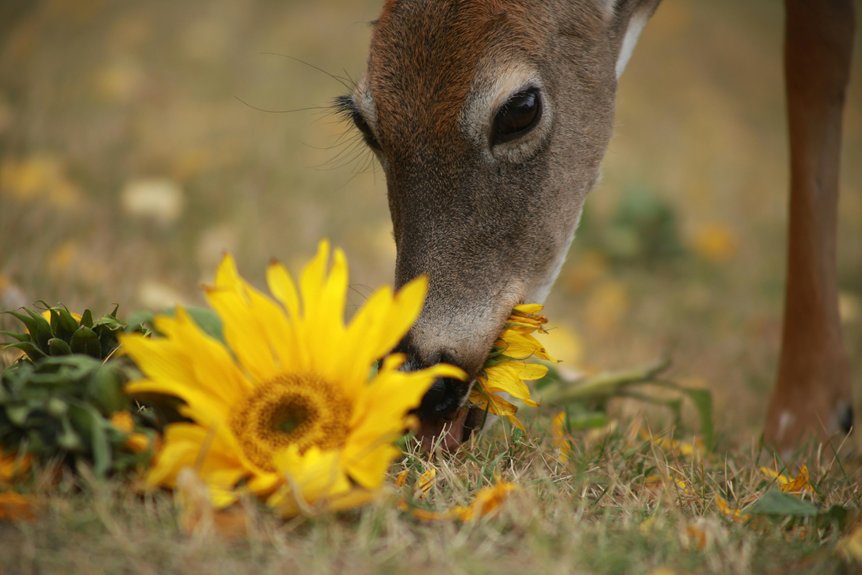
Deer avoid plants with strong scents, tough textures, or bitter tastes—and I’ve found seven reliable options for your garden without sprays.
Verbenas bloom continuously through frost in multiple colors.
Snapdragons create dramatic vertical interest deer skip.
Russian sage offers silvery foliage and late-season color.
Bee balm’s pungent fragrance inherently repels browsers while attracting pollinators.
Peonies are nearly untouchable, lasting for decades.
Black cohosh grows tall with bitter flavor deer hate.
Each combines beauty with built-in protection, and the specifics behind why they work will interest you.
Why Deer Avoid These Plants: Scent, Texture, and Toxicity
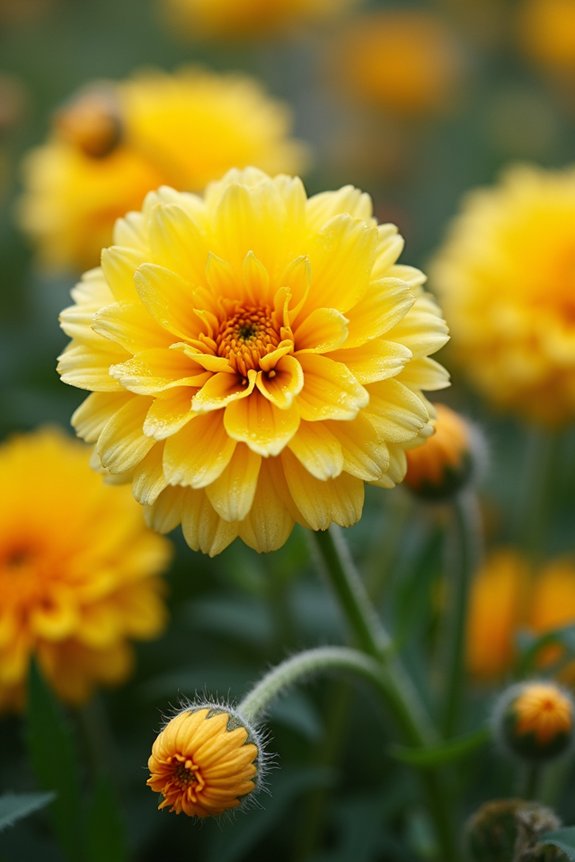
Why do deer browse certain plants while completely ignoring others? The answer lies in three powerful deterrents: scent, texture, and toxicity.
Deer rely heavily on their keen sense of smell to evaluate plants before eating. Strong-scented varieties like Russian sage and bee balm signal “don’t eat me” through their pungent aromas. Similarly, textural defenses make browsing unappealing—coarse, hairy, or leathery leaves found on coneflowers and dusty miller feel unpleasant in a deer’s mouth.
Deer evaluate plants through smell and texture—strong scents and coarse leaves make browsing unappealing.
Many deer-resistant plants combine multiple defenses. Marigolds, for instance, use a powerful scent alongside modest toxicity. Plants like monkshood present genuine risks, containing poisonous compounds that deer instinctively avoid. Silvery or fuzzy foliage like lambs ear signals unpalatability through appearance alone.
Understanding these natural defenses helps you select plants that protect your garden effectively.
Verbena: Colorful Annuals That Bloom Spring to Frost
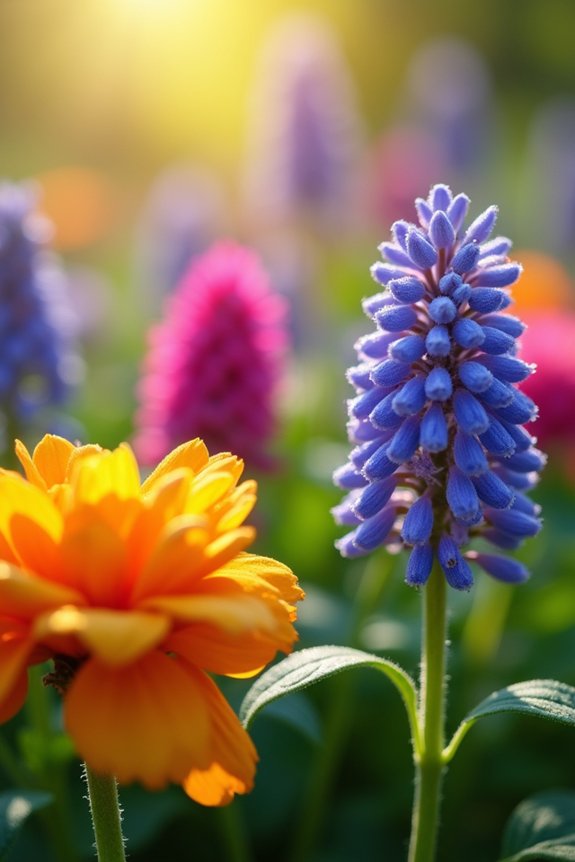
Verbenas are one of the most versatile deer-resistant options you can plant, offering an impressive range of colors from crisp white and soft pink to bold purple, red, and even cheerful yellow—plus striking bicolor combinations. You’re not locked into a single look; you can choose low-growing varieties perfect for edging borders or taller upright forms that anchor the back of your garden beds. These reliable bloomers require plenty of sunshine and well-draining soil, and in return they’ll provide months of continuous color that deer simply won’t bother.
Color Range And Variety
How do you create continuous garden color from spring through the first frost? Verbenas offer an impressive palette that’ll transform your landscape. These deer-resistant flowers come in white, pink, blue, lavender, purple, red, yellow, and striking bicolor combinations—giving you endless design possibilities.
What makes verbenas useful is their versatility. You can mix and match colors to suit your garden’s style, whether you’re after soft pastels or bold jewel tones. Pairing complementary shades together creates visual interest.
The variety extends beyond color too. You’ll discover low-growing spreaders perfect for borders and upright forms ideal for containers or focal points. This range means verbenas work in any garden setting, delivering reliable color from May through October without attracting deer.
Spring To Frost Blooming
Once you’ve chosen your color palette, you’ll want to understand what makes verbenas such reliable performers throughout the growing season. Here’s what I’ve discovered: these plants deliver continuous blooms from May through October, giving your garden color when you need it most. That’s nearly six months of uninterrupted flowers!
What makes this possible is verbenas’ natural vigor in full sun. They perform well in heat and actually seem to bloom harder during summer’s hottest stretches. I’ve found they benefit from a midsummer trim to maintain that impressive bloom production—just pinch back the stems slightly, and you’ll get bushier growth with even more flowers.
This extended blooming window means you’re investing in plants that earn their garden space. You’ll enjoy reliable color from late spring straight through frost!
Snapdragons: Dramatic Spikes Deer Consistently Skip
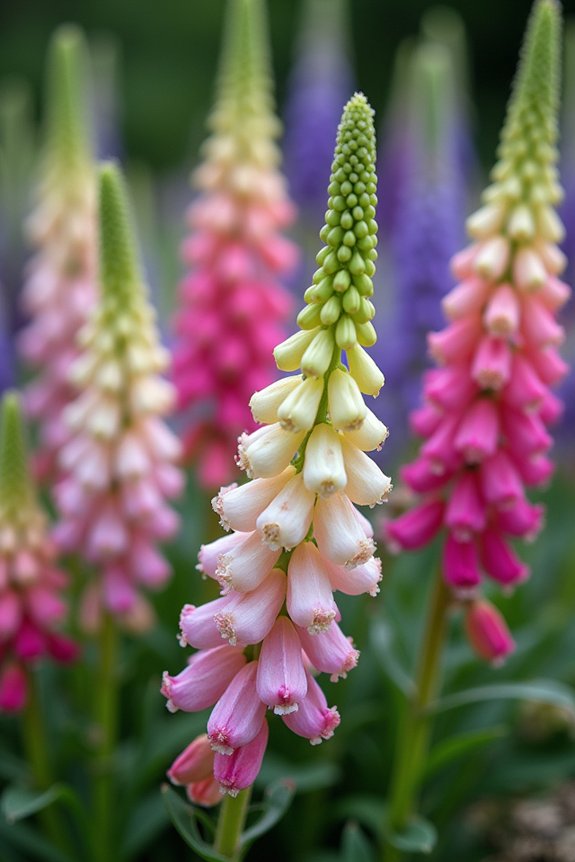
If you’re looking for vertical drama that deer won’t devour, snapdragons are your answer! I’ve found these beauties add architectural interest to garden spaces with their striking spikes reaching 6 to 30 inches tall.
What makes snapdragons perfect for our shared gardening goals:
- Extended blooms: They flower reliably from spring through fall, giving you consistent color
- Deer resistance: Growing them as annuals ensures deer skip right past your beds
- Flexible heights: Multiple cultivars let you customize your garden’s vertical layers
I plant snapdragons in full sun where they perform best, spacing them 10 to 18 inches apart. Their dramatic form creates that focal point every garden needs. You’ll appreciate how these reliable performers deliver season-long interest while protecting your investment from deer damage. They’re practical additions to any deer-resistant garden design.
Russian Sage: Silvery Perennial With Late-Season Color
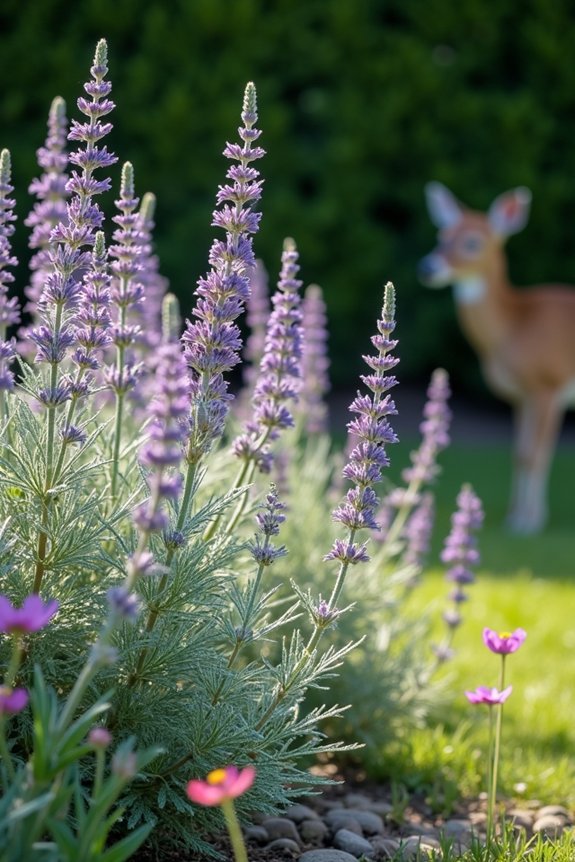
While snapdragons deliver that dramatic vertical punch, Russian sage brings a different kind of elegance to deer-resistant gardens. This perennial does well in zones 5-9, flourishing in full sun with minimal fuss.
What stands out? The silvery foliage remains attractive all season, even during hot, dry spells. Russian sage reaches 2 to 4 feet tall with a similarly wide spread, creating that airy, natural look borders need.
Your garden gains color from early summer straight through fall—that’s extended interest without replanting. The deer resistant nature means you’re protecting your investment. Plant it in sunny perennial beds where it’ll deliver consistent, long-lasting blooms. It’s low-maintenance beauty that performs.
Bee Balm: Fragrant Blooms That Repel Deer Naturally
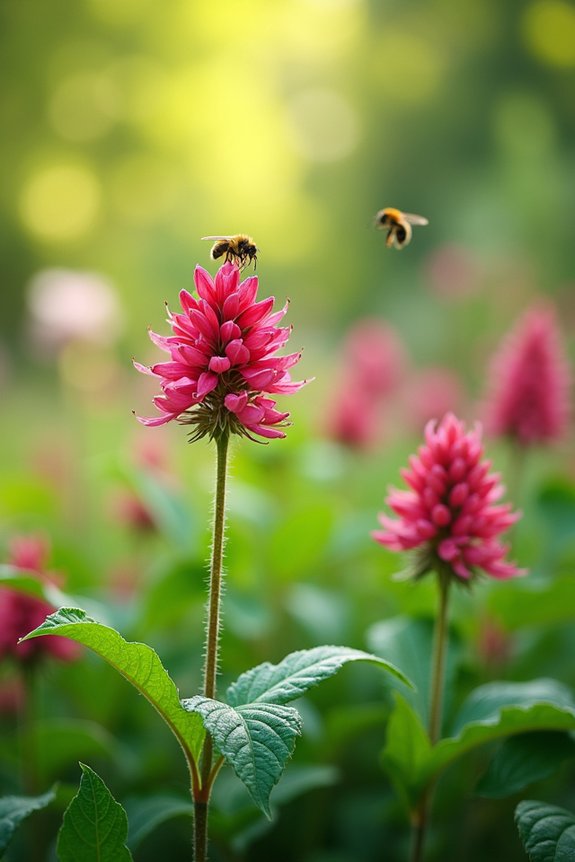
If you’re looking for a plant that deer’ll skip right past, bee balm’s strong herbal scent does the hard work—that pungent fragrance is simply unpalatable to them. You’ll also attract a steady stream of hummingbirds, bees, and butterflies to your garden. Plant bee balm in sunny to partially shaded spots with well-drained soil, and it’ll produce lavender-to-pink frilly blooms that add texture and long-season interest to your deer-resistant borders.
Pungent Fragrance Deters Deer
Why do deer consistently bypass bee balm while munching through nearby gardens? The answer lies in Bergamot (Bee Balm)’s potent herbal scent that makes it deeply unappealing to hungry deer.
This mint-family plant’s strong fragrance creates a natural barrier deer simply won’t cross. Here’s what makes it so effective:
- Pungent oils in the leaves release an intense aroma when brushed, signaling deer to look elsewhere
- Vigorous growth habit allows bee balm to recover quickly from any nibbling attempts
- Persistent scent remains active throughout the season, maintaining consistent deer protection
Even Monarda fistulosa, the wild relative, proves remarkably tough in deer country. This fragrant defense works without chemicals. Plant bee balm with confidence knowing deer will respect its boundaries while you enjoy the flowers it produces.
Pollinator Attraction And Benefits
Beyond its role as a deer deterrent, bee balm delivers something equally valuable: it attracts pollinators to your garden. When you plant Bergamot (Monarda fistulosa), you’re inviting hummingbirds, bees, and butterflies into your space. I’ve watched these creatures flock to the plant’s wild, frilly lavender-to-pink flowers throughout summer, drawn by abundant nectar.
You’ll appreciate how this native mint-family perennial works harder than most flowers. Its tough growth means it bounces back year after year, consistently supporting pollinators. In my experience, bergamot performs well in pollinator gardens and rugged landscapes alike, creating a space where beneficial insects flourish. You’re not just growing a plant—you’re building an ecosystem that attracts beneficial insects and provides lasting color.
Growing Zones And Conditions
Where should you plant bee balm to get the best results?
Bee balm grows best in zones 3-9, so check your region before planting. You’ll want to position it where it receives full sun to partial shade—at least six hours of sunlight daily is ideal. This deer-resistant plant performs well under these conditions.
What makes bee balm successful in your garden:
- Space plants 18-36 inches apart since they reach 1-4 feet tall and spread 8 inches to 3 feet wide
- Choose well-draining soil to prevent root rot and encourage healthy growth
- Provide afternoon shade in hotter zones to protect blooms during intense heat
These conditions help your deer-resistant bee balm perform well throughout the season, producing flowers that pollinators enjoy.
Peony: Long-Lived Perennials Deer Leave Untouched
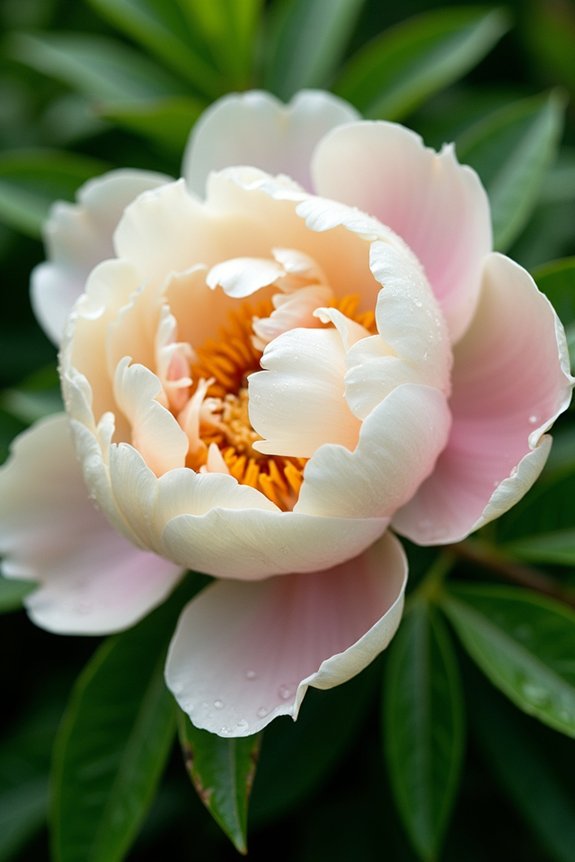
Peonies stand out as one of the most reliable deer-resistant perennials you can plant, and they deserve a place in any garden where deer pressure is a concern. These long-lived plants will remain undisturbed by deer, lasting for decades with minimal fuss.
You’ll find peonies adaptable across Zones 2-8, doing well in full sun to partial shade depending on the variety you choose. Shrub peonies reach 1 to 3 feet tall, while tree peonies stretch to 4 to 7 feet. Late spring brings those fragrant blooms you’re after.
What makes them valuable is their pest resistance and longevity. You’re investing in lasting ornamental value that actually improves with age.
Black Cohosh: Tall Spikes With Bitter Taste Deer Avoid
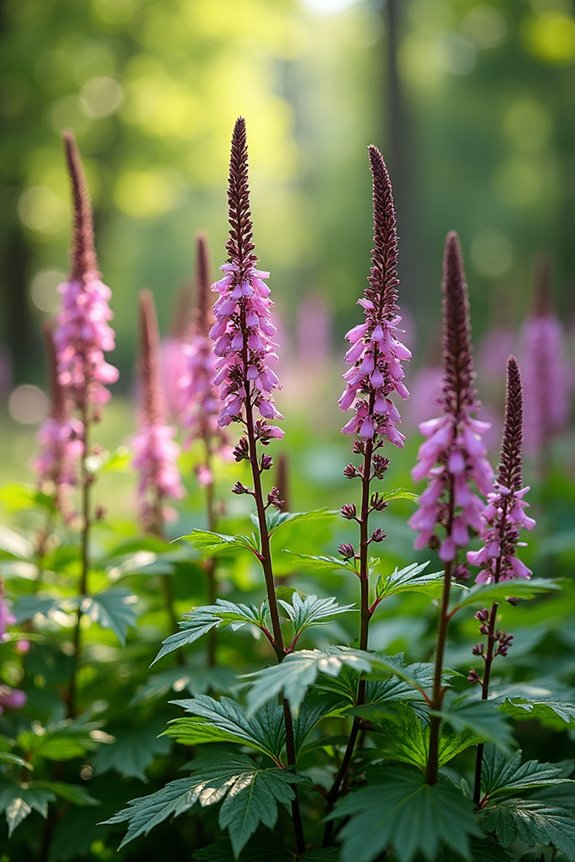
Looking for a shade plant that deer simply won’t eat? Black Cohosh is your answer. This deer-resistant perennial grows 4 to 6 feet tall, creating dramatic vertical interest in shaded borders. Its bitter taste and strong odor naturally repel deer, so you won’t worry about browsing damage.
Black Cohosh performs well in zones 4-9 with partial to full shade. The bottlebrush-like flower spikes bloom throughout summer, offering long-lasting color when many shade plants fade. Here’s why gardeners choose it:
- Dramatic height adds architectural interest to garden beds
- Low maintenance once established in appropriate conditions
- Reliable deer resistance without chemical sprays
Plant Black Cohosh among hostas and ferns for a protected shade garden. You’ll appreciate its dependable performance year after year.