

Flowers need five things to grow: well-structured loam soil (2 parts sand, 2 parts silt, 1 part clay) enriched with 2–3 inches of compost annually; consistent moisture tailored to each plant’s needs; full sun exposure, ideally south-facing with morning light to prevent fungal issues; stable temperatures between 65–75°F in spring and 70–80°F in summer; and regular feeding through compost rather than excess fertilizer. Daily garden visits let you monitor these conditions easily. Understanding timing and troubleshooting will improve your flowers’ performance.
Prepare Your Garden: Soil Testing and Planning
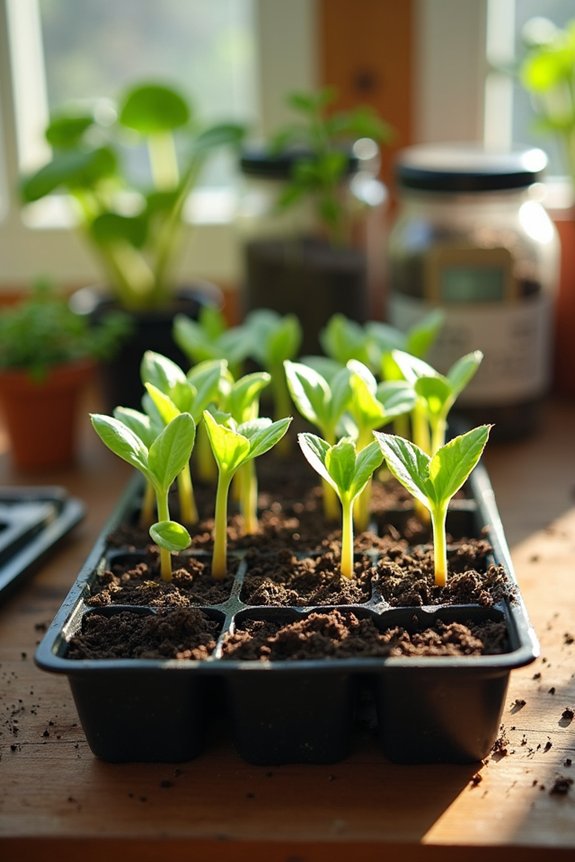
How’s your soil doing right now? I’d recommend getting it tested through your local extension agent—they’ll tell you exactly what nutrients you’re working with and how to improve it. This step saves time and money by tailoring your approach to your specific garden.
Good soil preparation is the foundation for flowers that perform well. I aim for a loam texture with a 2:2:1 ratio of sand, silt, and clay. If your soil drains too quickly, I amend it with compost and leaf mold to boost moisture-holding capacity. These organic materials create the ideal growing environment.
Consider raised beds if drainage remains problematic. Testing your soil now means you’ll understand what your flowers actually need, setting yourself up for success from the start.
Build the Right Soil: Loam, Organic Matter, and Structure
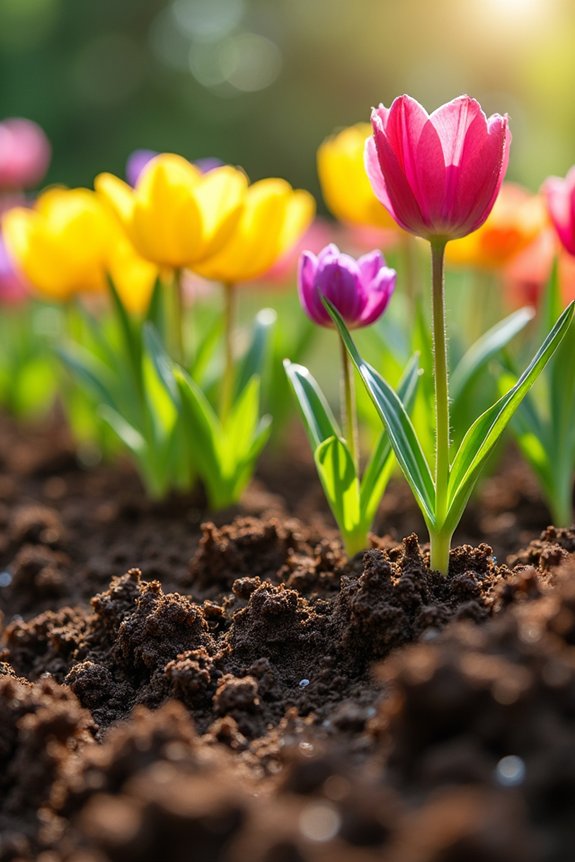
Why does soil texture matter so much for flower success? It’s the foundation everything else depends on. You need loam, that ideal balance of sand, silt, and clay that lets water drain while still holding nutrients your flowers crave.
| Component | Ratio | Purpose |
|---|---|---|
| Sand | 2 parts | Improves drainage |
| Silt | 2 parts | Balances texture |
| Clay | 1 part | Retains nutrients |
Organic matter transforms your beds into living habitats. Apply 2–3 inches of compost annually and till it in deeply. This feeds the microorganisms that support plant health and reduces your fertilizing needs. Avoid adding sand to clay—it creates concrete-like hardness. Instead, build beds with nutrient-rich soil and consider fall cover crops to naturally replenish what your flowers consume.
Water Flowers Correctly: Finding the Balance
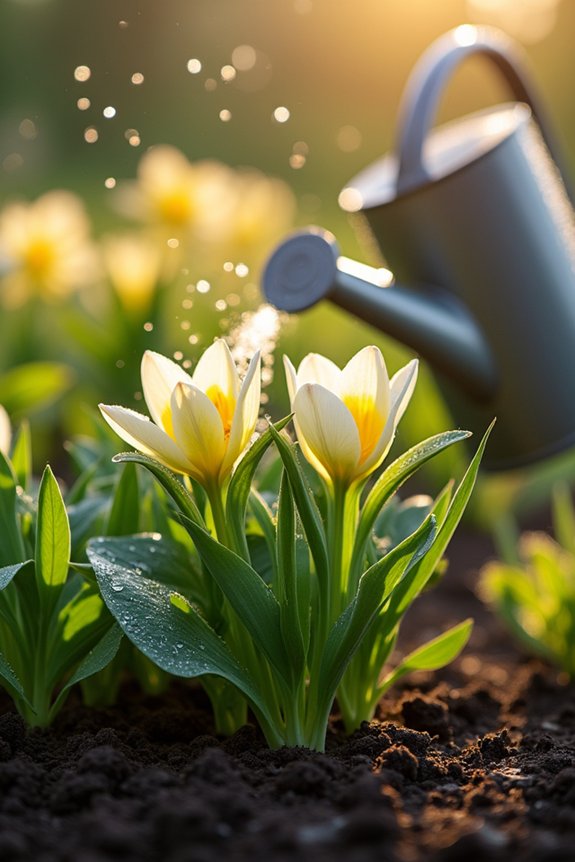
I’ve learned that watering isn’t one-size-fits-all—some flowers drink deeply while others prefer staying dry, and grouping plants by their water needs prevents the frustration of watching drought-lovers drown next to thirsty tropicals. When you separate these zones in your garden, you’ll give each plant exactly what it needs without constantly second-guessing your watering can. This simple strategy turns watering from guesswork into a manageable routine.
Drought-Adapted Plants Thrive
Once you’ve decided to grow drought-adapted flowers, you’re actually making your garden work smarter, not harder. I’ve found that grouping plants by their water needs transforms how efficiently your garden stays hydrated.
Here’s what works best:
- Group similar water needs together to prevent overwatering thirsty neighbors
- Use well-draining soil to stop root rot before it starts
- Place drought-tolerant species in low-water zones where they’ll perform well
- Keep fertilizer minimal since over-feeding causes leggy, water-hungry plants
- Daily garden walks help you spot moisture levels without guessing
When you match drought-adapted plants to their ideal spots, you’re building a resilient garden. I’ve noticed that shade-tolerant varieties do well in shadier areas while sun-lovers get full sun. This strategic placement means less watering, better plant performance, and more time enjoying your garden instead of managing it constantly.
Grouping By Water Needs
Strategic placement matters just as much as choosing the right plants—and grouping flowers by their water needs is where smart watering truly begins. I organize my garden into zones based on each plant’s irrigation requirements, which makes watering efficient and prevents both root rot and wilting.
I place drought-tolerant Mediterranean plants together in one area, requiring deep watering just weekly. Tropical flowers occupy their own section, needing consistent moisture every few days. This separation lets me tailor irrigation to each group’s actual needs rather than guessing.
I observe my plants daily, checking soil moisture by touch. Adding compost improves water retention in sandy soils, reducing how often I water overall. This strategic grouping approach transforms watering from tedious guesswork into purposeful garden care that maintains plant health.
Light Flowers Need to Bloom
I’ve found that light is honestly important when it comes to getting your flowers to actually bloom. Your plants need adequate light to power photosynthesis, the process that creates the energy they’ll use for flowering and growth, so positioning matters more than you might think. Sun-loving flowering plants do well in full sun locations—like south-facing windows or garden spots—where they can soak up direct light and reach their full blooming potential!
Full Sun Requirements
- South-facing locations receive the strongest, most consistent light
- Morning sun helps dry dew and prevents fungal issues
- Afternoon shade in hot climates protects delicate blooms
- Bold focal flowers like peonies and large zinnias perform best in full sun
- Light availability directly affects flowering quantity and plant vigor
Evaluate your yard’s light patterns throughout the day before planting. This simple step helps sun-loving varieties perform well and produce more flowers. When you match plants to proper light conditions, you set yourself up for real success.
Light’s Role in Flowering
Why do some flowers burst with blooms while others struggle to open even a few buds? The answer lies in understanding how light fuels your flowering plants’ development. Plants need light to convert water and carbon dioxide into the sugars that power growth and flowering. When you provide adequate light, you’re brightening your garden while energizing every aspect of plant vigor, from stem strength to leaf size.
Light quantity and quality work together, determining when and how intensely your flowers bloom. Insufficient light creates weak stems and delays flowering. Duration matters too; photoperiod influences bloom timing based on your plant species. By matching flowers requiring high light levels to bright locations and understanding each plant’s light needs, you’ll cultivate a garden with healthy blooms.
Plant at the Right Time: Seasonal Timing Matters
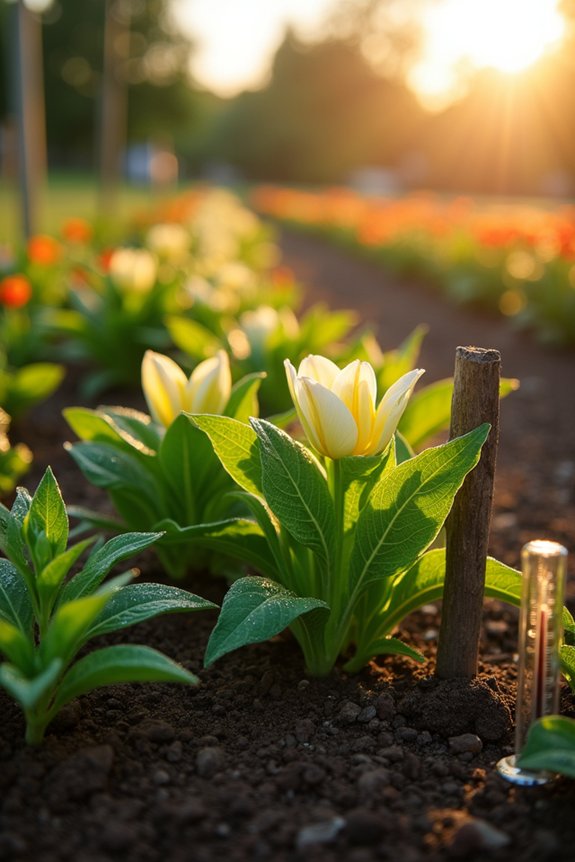
When you plant matters just as much as where and how—it’s the difference between flowers that perform well and ones that struggle.
Timing is everything in gardening—it separates thriving blooms from plants that merely survive.
I’ve learned that seasonal timing shapes your entire garden’s success. Your planting schedule should follow nature’s rhythm, dividing the year into distinct seasons:
- Early/mid-spring: Start cool-season bloomers
- Late spring/early summer: Plant heat-lovers like zinnias and sunflowers
- High summer: Maintain established plants and deadhead spent blooms
- Late summer/fall: Sow biennials like foxglove for next spring’s flowers
- Fall: Direct-sow love-in-a-mist and cornflowers for larger plants
I treat this like a recipe book—each ingredient and timing creates your finished garden. Fall planting gives certain varieties a jump start, while succession planting ensures continuous blooms. You’ll develop a steady workflow when you align plantings with each flower’s natural preferences.
Fix Common Soil Problems: Compaction and Drainage
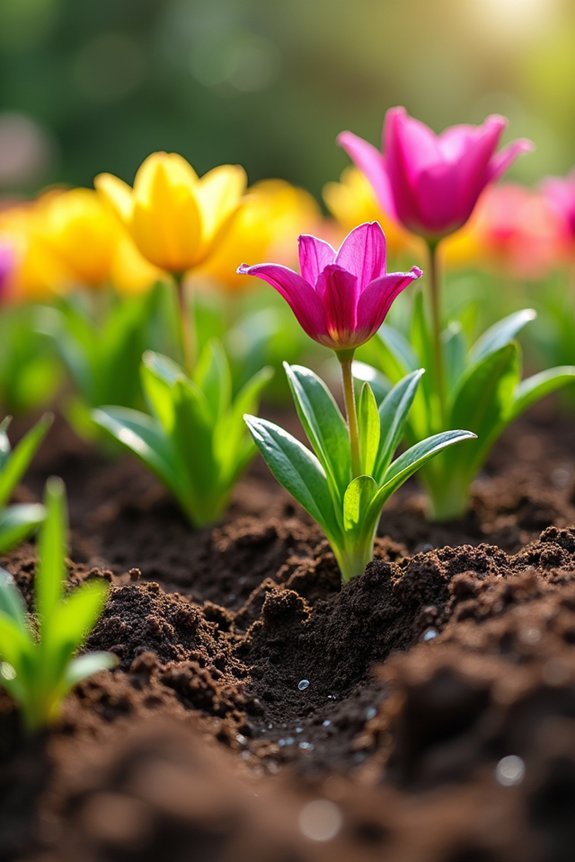
Have you ever noticed water pooling on your beds or plants struggling despite regular watering? You’re likely facing compaction or drainage issues—common problems we can fix together.
Compaction squeezes out air spaces, suffocating roots and blocking water movement. I recommend raised beds or light cultivation to restore soil porosity. For drainage problems causing waterlogging and root rot, add 2–3 inches of compost annually. This improves both moisture retention and water flow.
Avoid mixing sand into clay soils; it actually worsens drainage. Instead, incorporate organic matter and ensure beds sit slightly elevated. Consider fall cover crops that decompose over winter, naturally improving soil structure by spring.
Start with a soil test from your local extension agent. They’ll identify specific issues and guide your remediation plan, saving you guesswork and frustration.
Temperature Adjustments Throughout the Year
Just as you’ve fixed your soil to support healthy roots, temperature control shapes whether your flowers develop properly. I’ve learned that seasonal temperature cues trigger important plant responses—from breaking seed dormancy to initiating flowering. Here’s what I adjust throughout the year:
- Spring: Gradually increase warmth to 65–75°F as plants wake from dormancy
- Summer: Maintain 70–80°F while monitoring for heat stress
- Fall: Allow gradual cooling to prepare plants for rest
- Winter: Keep indoor flowers away from cold drafts and AC vents
- Year-round: Avoid sudden temperature swings that stress your flowers
Temperature stability is necessary for proper plant function. When I maintain consistent conditions matching each plant’s needs, I notice better growth, stronger blooms, and healthier foliage. Your flowers need steady conditions that support their natural rhythms.
Keep Flowers Blooming: Ongoing Watering, Light, and Feeding
Once your flowers are established, the real work of maintaining them begins—and it’s simpler than you might think.
Daily garden visits reveal what your plants actually need. Check soil moisture by touching it—some flowers prefer dry conditions, while others demand consistent moisture. Group plants by their water needs to simplify your routine.
For feeding, apply regular compost and skip extra fertilizer unless you’re growing cutting gardens. Over-feeding creates tall, lanky plants that flop over. When you do feed, use Milorganite organic fertilizer sparingly. Your flowers need observation more than schedules. Let what you see guide your watering and feeding decisions. This approach builds confidence and connection with your garden.